India’s highways are often seen as symbols of economic growth, faster travel and better connectivity. But for thousands of rural women living along these highways, they are now becoming pathways to something even more meaningful, financial independence, confidence and a better future.
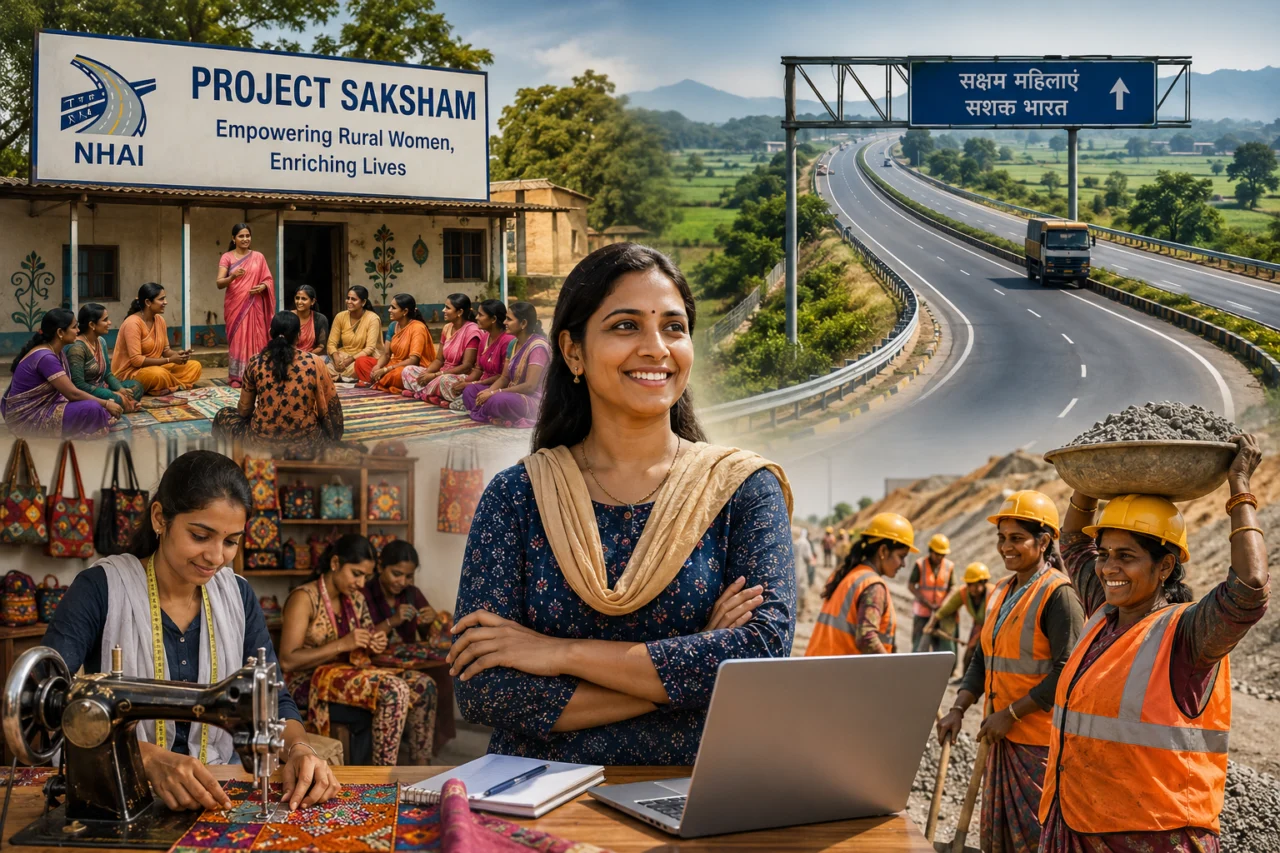
The National Highways Authority of India (NHAI), in partnership with the Vertis Foundation, is helping transform lives through its women-focused initiative called ‘Project Saksham’. The programme aims to provide skill development training and sustainable livelihood opportunities to rural women and underserved youth across the country.
According to the Ministry of Road Transport and Highways (MoRTH), the initiative focuses on ensuring that communities living near national highways also benefit from the economic growth created by large infrastructure projects.
For many women in rural India, finding employment opportunities remains difficult due to social restrictions, lack of education, financial struggles and limited access to skill training. Project Saksham is attempting to bridge that gap by taking training and employment opportunities directly to communities that are often left behind.
The programme currently operates through 12 training centres across India and has already trained more than 6,000 youth. Out of these, over 4,000 people have successfully secured jobs in different sectors.
What makes the initiative particularly significant is that more than 80 per cent of the beneficiaries are women. Many of them are first-time earners in their families.
Officials said participants who secure jobs through the programme are now earning average monthly incomes between Rs 13,000 and Rs 16,000. For several rural families, this income has become a major source of financial stability.
The programme offers practical and industry-relevant vocational training in fields such as tailoring, electrical work, plumbing, appliance repair, nursing assistance and multi-skill technician programmes.
Unlike traditional classroom education, the training focuses on hands-on learning and employability, helping participants gain skills that are directly useful in the job market.
However, the initiative is not only about employment. For many women, it has also become a story of personal transformation.
In several villages, women who once hesitated to step outside their homes are now travelling for training, attending interviews and contributing financially to household expenses. Families that earlier viewed women’s employment with hesitation are gradually becoming more supportive after witnessing the benefits.
According to NHAI, field teams regularly interact with rural communities to build trust and encourage participation. These teams also work to address social and cultural barriers that often prevent women from joining skill development programmes.
Officials said community-level engagement has been one of the most important aspects of Project Saksham. Rather than limiting itself to training centres, the programme actively reaches out to families to explain how skill development can improve livelihoods and create long-term economic security.
The Ministry of Road Transport and Highways said the initiative reflects NHAI’s larger vision of inclusive development, where infrastructure projects contribute not just to physical connectivity but also to social and economic empowerment.
“Project Saksham seeks to bridge this gap by enabling access to skills, employment and financial independence for communities that are connected, yet often excluded from the economic momentum surrounding infrastructure expansion,” the authority said.
For many beneficiaries, the impact goes beyond salaries. Women who once depended entirely on others for financial support are now helping pay for their children’s education, household expenses and healthcare needs. Some are even inspiring other women in their villages to pursue training and employment opportunities.
As India continues to rapidly expand its road and highway network, initiatives like Project Saksham are showing how infrastructure development can also create human stories of change and empowerment.
For these women, the highways passing near their villages are no longer just roads connecting cities. They have become roads leading towards self-reliance, opportunity and hope for a more secure future.