
The term scorching seems to have taken on a new meaning this year. Temperatures are soaring even in supposedly cooler places in Bharat giving the feel of being baked in an oven. The greenery is being reduced to make way for concrete roads that generate heat and make cities even warmer. However, we have known how to cope with summer heat for centuries, as our country lies between a temperate and a tropical region. Our genes are well adapted to handle it biologically, and our food habits and lifestyles have evolved in response to these climatic conditions, helping us sustain well.
When we are exposed to the sun, our body can lose more than 1 litre of water in a short time, leading to dehydration. Water lost through the skin as sweat is noticeable, but not as noticeable when lost through breathing, urination, and excretion. If this lost water is not replaced, and we are directly exposed to the sun for too long, heatstroke can occur which can even be fatal. Therefore, water intake should match water loss to help prevent dehydration. Along with water, the body also loses minerals such as sodium and potassium, which can disturb the acid-base balance and worsen dehydration. People working in air-conditioned rooms may tend to drink less water, which increases the risk of dehydration because sweating goes unnoticed.
What To Avoid
- Keep away from fried foods like papad, murukku, and packaged foods.
- Contrary to popular belief, aerated water will not quench thirst. Instead, it increases thirst by causing more dehydration due to the chemicals in it.
- Do not drink chilled water immediately after returning home from outdoors. Cool your body first and drink moderately cold water to avoid stomach pain and indigestion. Note that in tropical countries, people take hot, sometimes piping hot, freshly cooked foods, whereas people from colder countries eat cold foods. This is an age-old practice of mankind. The reason is that our body fluids, in particular digestive juices, are conditioned to the external climate. It is for precisely this reason that Ayurveda encourages the consumption of hot foods in this region.
- Avoid eating ice creams (even the branded ones) as they are stale. They may also contain substandard milk and cream, lots of additives like colours, flavours, and preservatives. During summer, the concentration of these chemicals in the body increases due to water loss from the body, which can make things worse.
- People who work in air-conditioned offices believe that they do not require fluids to maintain the water equilibrium. Contrary to this belief, Bharatiyas must drink water to make up for the water lost through perspiration, which is barely visible, but the loss is considerable.
- Replace blinds with vetiver root or khus curtains. Sprinkling water on this curtain keeps the room cool with its enchanting aroma.
- For Bharatiyas, the ideal attire is cotton dhoti or pyjama, jhabba, valli, saree, and loose-fitting salwar suit, as these allow good air circulation.
Once, while walking along the banks of the Ganga in Rishikesh, I was surprised to see yellowish fruits as large as a tender coconut. A man was busy scooping out the deep orange pulp to make juice. I could not resist trying that fruit juice for just Rs 20. While I was enjoying the large glass of Bael fruit juice, a woman also ordered a big glass of it. Her husband, seeing this, started scolding her for choosing what he considered an unhygienic fruit juice. He cancelled the order and instead bought 1 litre of cold drink to quench his thirst. I felt sorry for his choice of an unhealthy and more expensive drink over a healthy Bael juice, which was rich in carotenoid pigments, minerals, and beneficial carbohydrates.
Unfortunately, many of us reach for artificially sweetened drinks that, in fact, make us thirstier due to their chemical composition and lack of nutrients. These drinks not only fail to quench thirst but can also harm our health by dehydrating the body, leading to headaches, occasional vomiting, and gastrointestinal discomfort, especially in summer.
Choose your drink wisely
Our kitchen is well-equipped to tackle summer thirst. Grandmother’s recipes, such as buttermilk variants like jeera or pudina buttermilk, mattha, Tumbli with ginger, or with tender green leaves grown locally; fruit drinks like mango panha, tender coconut with subja or sweet basil seeds, Solkadhi, sugarcane juice with lemon or mint, lemon or mosambi or orange juice; cereal drinks like unpolished rice Ghanji, ragi ambli, Dal soup, rasam; vegetable drinks such as ash gourd, carrots, bottle gourd, banana stem juices with a pinch of salt; herbal drinks such as Jigar thanda, nannari, kokum, and the list goes on. These drinks are elegantly aromatic, and they are undoubtedly healthier, more eco-friendly, and more economical. The many preparations we make in our kitchens are deeply rooted in our cultural traditions, showing that our traditional foods are more sustainable than the hundreds of marketed beverages available today. However, do not confuse these with sweetened milkshakes or ice creams marketed as summer coolers or body-cooling drinks.
Seasonal Fruits Hold Magic
Nature has bestowed us with various fruits and vegetables to beat the summer heat. In Bharat, a variety of regional fruits are available only during the summer, helping to quench thirst. Jambu nerale or Malay apples (Syzygium malaccense), which are pinkish white berries, and red berries known locally as jambu fruit (Syzygium samarangense), are abundant in Kerala and in coastal Karnataka. These are a good source of water. Bael or Bilva (Aegle marmelos) is grown abundantly in areas like certain parts of UP and in the lower Himalayas. The fruits come with a thick greenish-yellow shell and golden yellow pulp and have 64 per cent water. Wood apple (Limonia acidissima), grown in Southern Bharat, comes with a thick black shell and dark brown pulp and contains 66 per cent of water; these fruits can beat the summer heat and take care of stomach problems caused during the season.
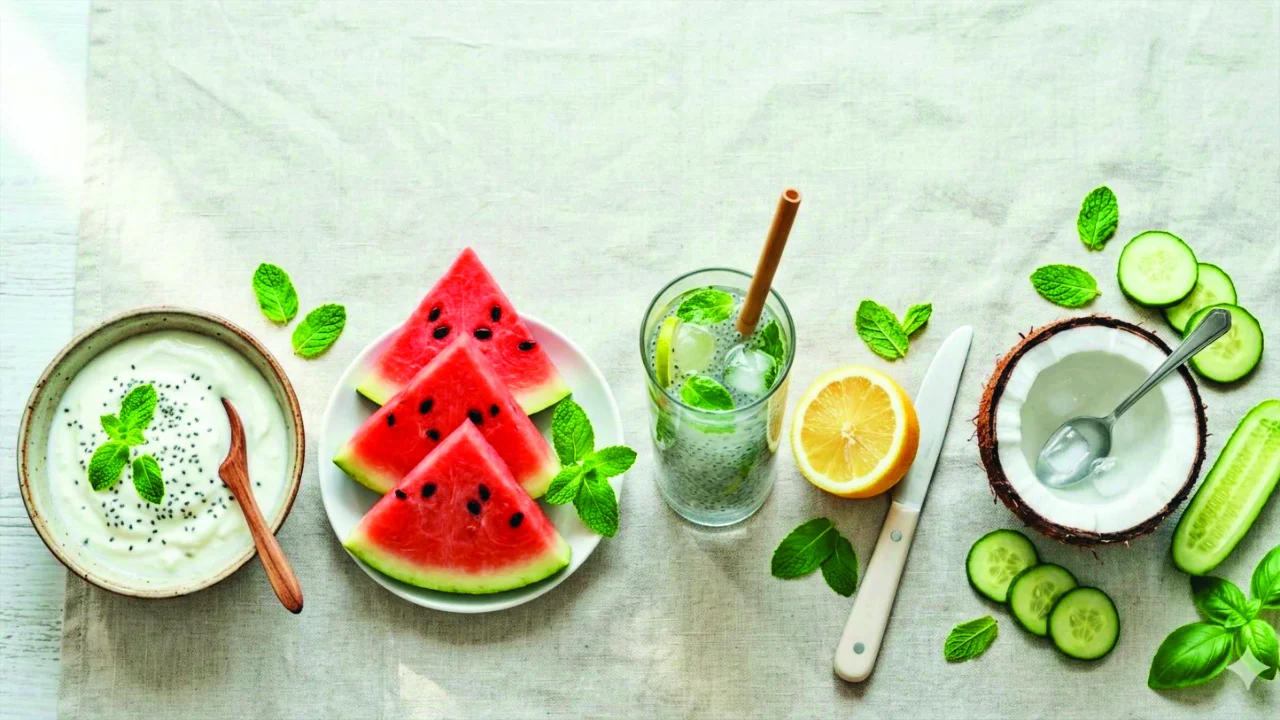
Melons are another popular summer fruit that are an excellent source of water. Watermelon and muskmelon contain 99 per cent and 90 per cent water respectively. Among vegetables, cucumber and tomato are ideal for replenishing water loss. In general, fruits and vegetables available in summer are suited well to the season. These seasonal fruits and vegetables can be used liberally to hydrate and maintain electrolyte balance in the body. An interesting thing about sugarcane juice is that, although it is not a source of minerals, the glucose present in it helps the sodium and potassium absorption in the intestine, making it another ideal drink for summer.
Summer Kitchen
Each meal of the day should serve enough water, containing recipes like rasam, sambar, buttermilk, and soups. It is advisable to eat well-cooked rice rather than rotis. You can replace dry sabji / Palya (stir-fry vegetable) with sambar. If summer is too severe and profuse sweating is noticed, add a pinch of salt to the water. For children who play outdoors in their summer holidays, carrying water with a pinch of salt, sugar, and lemon juice in a steel container is a must. If children wish to eat ice cream, it is advisable to prepare it at home to be sure of the quality. Make the children understand that ice-creams are not water substitutes.
Ultimately, thriving in Bharat’s scorching summers does not require expensive commercial beverages or artificial solutions. By returning to our rich culinary heritage, hydrating with seasonal fruits, and adopting breathable cotton attire, we can effortlessly beat the summer heat. Trust the time-tested wisdom of our ancestors, listen to your body’s needs, and choose natural, wholesome cooling methods to stay refreshed and healthy all season long.