Bengaluru: Fresh political controversy has erupted in Karnataka over the Congress government’s decision to award a ₹7.20 crore annual contract to a private company named “The Policy Front” for promoting government schemes and achievements on social media platforms. The issue has now snowballed into a major political flashpoint after details discussed in a Karnataka Legislative Council Privileges Committee meeting reportedly revealed close links between the company’s partners and the Chief Minister’s Office, while opposition members accused the agency of allegedly using government funds for content targeting the Union government and Prime Minister Narendra Modi.
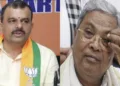
The controversy gained momentum after proceedings of the Privileges Committee meeting held on April 16, 2026, reportedly brought several details related to the company’s functioning, GST registration, financial capacity and political content under scrutiny. The matter had earlier been raised both in the Legislative Assembly and Legislative Council by opposition leaders, particularly BJP MLC N. Ravikumar, who questioned the process through which the contract was awarded.
According to discussions during the committee meeting, The Policy Front was awarded the contract to promote Karnataka government schemes and achievements through social media and digital platforms at a monthly payment of ₹60 lakh, amounting to ₹7.20 crore annually. However, opposition members alleged that the company was not merely promoting welfare schemes but was also allegedly involved in amplifying political narratives critical of the Union government.
During the meeting, committee members reportedly questioned whether posts targeting Prime Minister Narendra Modi or questioning central government projects could be considered official government publicity. BJP MLC K.S. Naveen is said to have specifically referred to social media posts titled “Five demands before Prime Minister Modi” and posts questioning the Centre over Mahadayi project approvals, asking whether such campaigns could legitimately be categorised as government programme promotion.
The issue became more contentious after KSMSCL Limited Managing Director informed the committee that advertisements to all media platforms were routed through The Policy Front. Opposition members then questioned the exact nature of the company’s role, financial transactions and the standards followed while awarding the tender.
Committee members also raised concerns regarding the timing of the company’s GST registration and its eligibility to secure such a large government contract within months of its formation. According to the discussion, The Policy Front was reportedly established in May 2023 and obtained GST registration in July 2023, while the government tender was awarded in September 2023. Opposition members questioned how a relatively new company with limited financial history and reportedly modest capital could secure a multi-crore government contract so quickly.
Another major point of contention was the alleged background of two partners associated with the company. During the committee proceedings, officials reportedly stated that one of the partners had earlier worked in branding-related firms before serving in Siddaramaiah’s office during his tenure as Leader of Opposition. Opposition members questioned whether prior political association played any role in the awarding of the contract.
Several committee members also demanded clarity regarding the company’s actual deliverables. Questions were raised over whether the agency itself made payments to newspapers, television channels or digital platforms, or whether it merely acted as a coordinating agency. In response, officials reportedly clarified that the company primarily handled digital and social media-related promotional work and submitted monthly reports of activities carried out.
However, opposition members alleged that the material submitted by the company largely consisted of newspaper cuttings, social media screenshots and political messaging rather than measurable government outreach campaigns. Concerns were also raised over whether public money allocated for government publicity was indirectly being used for politically motivated narratives.
The committee discussions also reportedly highlighted confusion surrounding GST-related documentation and address changes linked to the company. Opposition members argued that inconsistencies in registration timelines and company restructuring raised questions about transparency in the tender process.
Committee members further pointed out that although three applications were received for the tender, authorities appeared to have prioritised the lowest quotation over factors such as experience, performance capability and financial strength. Some members argued that large-scale public communication contracts should involve stricter scrutiny, including multi-year audit reports and stronger eligibility benchmarks.