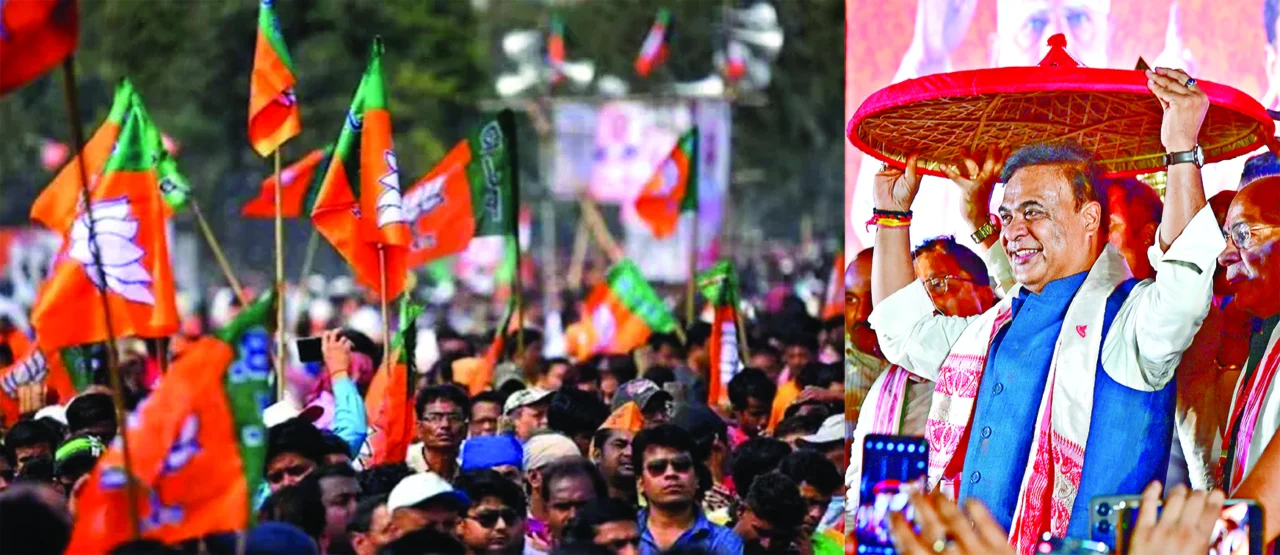
The 2026 Assam Assembly election results tell a story that goes far beyond mere numbers. Bharatiya Janata Party-led National Democratic Alliance’s sweep of 102 out of 103 Hindu-majority seats points to a quiet but decisive consolidation of Hindu votes in the State — cutting across Assamese tribal population and tea garden communities. This was the harvest of a decade-long effort by the BJP Government to protect indigenous identity, reclaim encroached lands and push back against what the party describes as the demographic aggression by Bangladeshi-origin Miya Muslims.
Rewarded by Assamese Voters
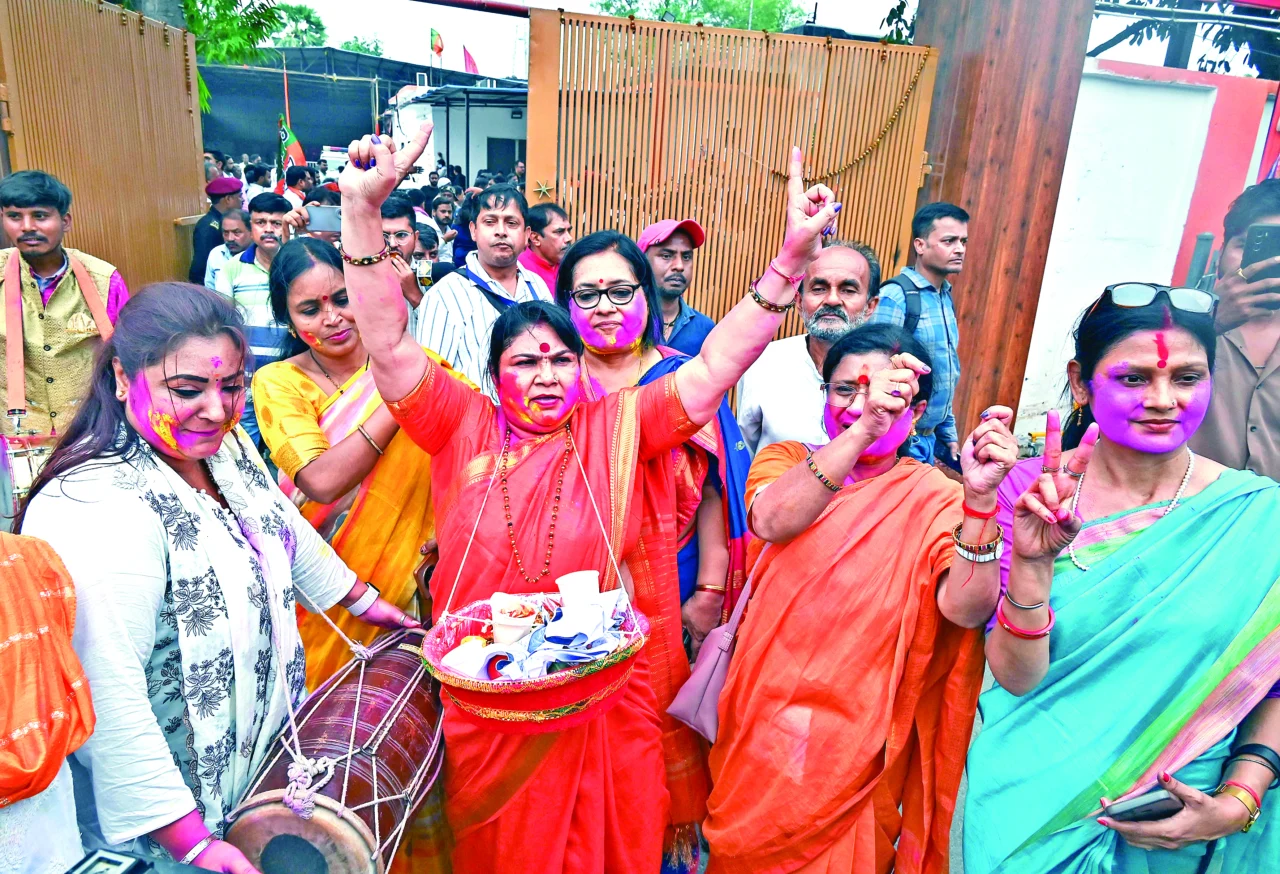
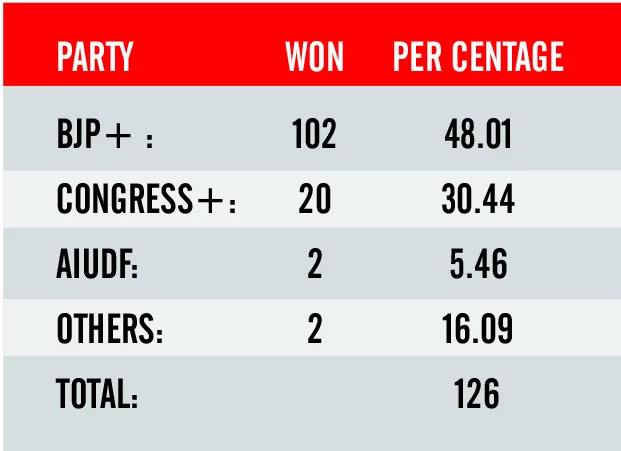
For State Chief Minister Himanta Biswa Sarma, the mandate is a vindication of a bold and often controversial political strategy — one that the people of Assam have now endorsed with an emphatic majority. BJP created history in Assam politics as NDA won 102 out of 126 seats in the State. On its hattrick of wins, the saffron party got absolute majority for the first time in the State winning 82 seats out of 90 it fought. And for the Bharatiya Janata Party, it does not get much better than this. CM Himanta Biswa Sarma said, “PM Modi ji’s passion for the development of Assam and BJP’s relentless effort to serve the people of the State has been rewarded by the people of Assam.”
As BJP-led NDA captured 102 Hindu majority seats in the State, the result shows a clear consolidation of Hindu votes even though the intensity is much lower than the regular Muslim vote consolidation. Huge numbers of Hindu voters voted for the saffron party resulting in a sweep for the BJP. CM Sarma said, “There are 103 seats in Assam where Hindu voters decide the mandate. We won 102 of these. Our plan was clear from the beginning that we could win these seats. The margin of victory varied in each constituency, but the mandate was only in favour of the BJP.”
Cong Changed Demography
After Independence, the Congress ruled Assam for nearly 60 years.From the very beginning, the party practiced minority-appeasement politics. As a result, it had no hesitation in opening the border for Bangladeshi infiltrators. The demographic profile of Assam underwent a significant change, with nine districts becoming Miya-Muslim-dominated.
The Congress party never cared for the problems of the State’s indigenous people. As a result, insurgency and unrest increased in Assam. Congress party plunged Assam into a dark period. Public anger against the Congress led to the formation of the first Bharatiya Janata Party Government in Assam in 2016 under the leadership of Prime Minister Narendra Modi, and the people began to punish the Congress for its decades of misrule in Assam. But Congress did not abandon its Muslim appeasement politics. When the BJP Government launched an eviction drive against illegal encroachments by Bangladeshi-origin Muslims in Assam, Congress defended the encroachers and promised that if they came to power in Assam, they would resettle the evicted Miya people.
Anger against Congress grew among voters in Assam. The Hindu vote consolidation was led by the relentless process of safeguarding the identity of indigenous people by the BJP Government for the past 10 years. After forming its first Government in 2016, the BJP began removing encroachments by Miya Muslims on forest and Government land. Additionally, evictions were also initiated on religious sites and lands belonging to Satras. Large-scale encroachments by Miya Muslims of Bangladeshi origin were removed from Batadrava Satras, the birthplace of Guru Shankardev.
Chief Minister Sarma said, “The indigenous people of Assam are applauding our Government’s bold stand against the aggression of Miya Muslims of Bangladeshi origin.”
The BJP Government created the ‘Sankardev Avirbhaav Kshetra’ on this land freed from encroachment. Over the past five years, the Himanta Biswa Sarma Government cleared approximately 150,000 bighas of land occupied by suspected Miyas. Encroachments were also removed from the Kaziranga National Park, a world heritage site. These actions against encroachments and aggression by Miya Muslims of Bangladeshi origin have instilled a sense of trust in the indigenous people of Assam for the BJP Government. And the result of this confidence is that BJP won 102 seats where Hindu Assamese, tribal and tea garden communities dominate. “Bharat is a Hindu nation and it will remain a Hindu rashtra till the sun and moon are there”, CM Sarma said.
Congress or Muslim League
Congress collapsed in the election. Deputy leader of the party in Lok Sabha and Chief Ministerial face, Gaurav Gogoi lost in Jorhat constituency, once a bastion of his late father and former CM Tarun Gogoi, to three-time BJP MLA Hitendra Nath Goswami by a crushing margin of 23,182 votes. Such was the rejection of the Hindu voters that Gaurav lost in his ward and booth where his family and relatives vote count is over hundred. Across upper Assam — in the districts of Dibrugarh, Tinsukia, Golaghat, Jorhat, and Sonari — Congress failed to win a single seat. Not one. In Sibsagar, the party’s ally Raijor Dal managed to scrape through by a narrow margin, but that was the closest the opposition came to relevance in the entire upper Assam belt. In Southern Assam, the pattern repeated itself. BJP took all the Hindu-majority seats without exception. In the Barak Valley, the saffron party won nine seats while Congress managed four — all of which, significantly, came from constituencies with substantial minority populations.
In Bodoland Territorial Area, Bodo voters turned their backs on Congress comprehensively — the party won just one seat there, and that too from a constituency with over 60 per cent minority voters. In the hill districts of Karbi Anglong and Dima Hasao, tribal voters similarly rejected the grand old party. The tea garden communities of upper and north Assam, long considered a swing constituency, did not give Congress a single seat. Congress won 19 seats in total. Of those 19 winners, 18 are Muslim candidates. Just one Hindu Assamese Congress candidate managed to cross the finishing line anywhere in the State.
Fifteen of those victories came from Miya-Muslim dominated constituencies spread across Dhubri, Barpeta, Goalpara, and Darrang districts in lower Assam — areas where demographic realities gave the party a floor it could not fall below regardless of the broader wave against it. AIUDF chief Badruddin Ajmal said, “Congress has fallen into the same pit it dug for us. Congress is now finished and has become the ‘Muslim League’ in Assam.”
Development Dynamics
Along with the safeguard of the identity of Assam, the double engine BJP Government worked relentlessly for the development of the State. Infrastructure development including roads, national highways, bridges, rail connectivity and air connectivity, Assam saw an unprecedented development phase under the NDA Government. which was once a dream for the people of Assam. Broken roads were converted to the Emergency Landing Facility of the Indian Air Force in Dibrugarh.
Along with this, the women centric schemes of the BJP Government increased the credibility of the Government amongst the women voters. Interestingly, of 2.50 crores voters in Assam, 1.25 crores are women.
Women benefited hugely from the monthly stipend scheme ‘Orunuday’ started from 2021 which provided Rs1250 to nearly 40 lakh women. Moreover schemes like ‘Udyamita Asoni’ provided a one time grant of Rs 10,000 to women for setting up small businesses. 1.65 lakhs Government jobs were given on a completely transparent and merit basis. Grant of Rs 20,000 lakhs were provided to 2 lakhs youths to start business. These are some of the schemes which changed the electoral field for the ruling party. Assam’s voters, it appears, endorsed the development initiatives of the BJP Government — rewarded the party for what it built.
The Modi-Mama Magic
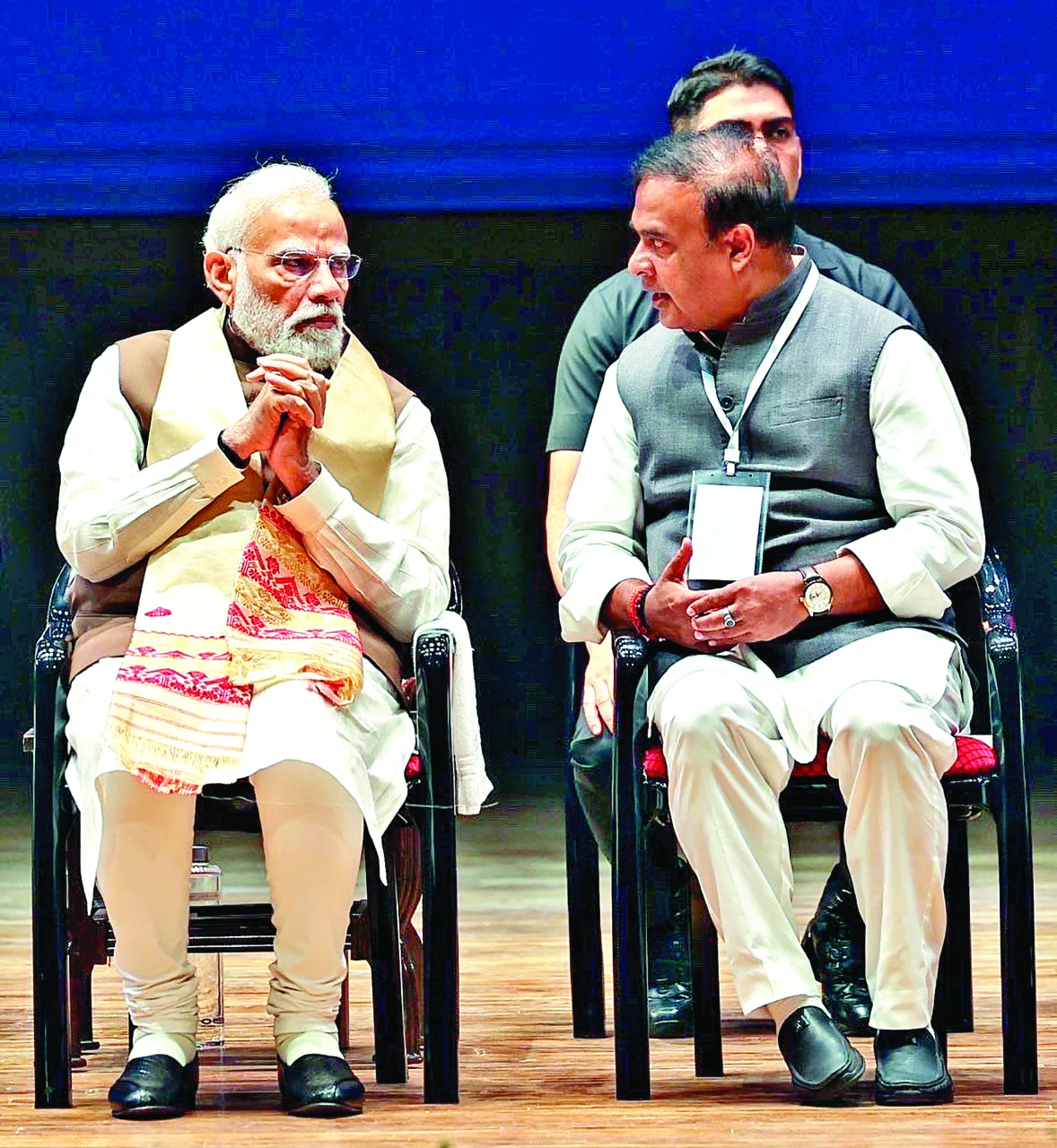
Behind every decisive electoral mandate, there is often one face that the voters ultimately trust. In Assam’s case, that face is Prime Minister Narendra Modi. The architect of BJP’s historic hat-trick in the State, Modi visited Assam at least 40 times over the last 11 years, cementing a bond with the people that goes well beyond political optics. His vision of a peaceful and developed North East has translated into a string of fast-tracked development projects across the region, giving people tangible reasons to trust the saffron dispensation.
For Chief Minister Himanta Biswa Sarma, who is popularly known as Mama, this is a result that cements his status as the dominant political figure in the North East and arguably one of the most consequential regional leaders in the country. Six consecutive Assembly wins from Jalukbari. The man himself provided the evening’s most emphatic personal statement — winning his traditional Jalukbari constituency in Guwahati by a staggering margin of over 89,000 votes, returning to the Assembly for a sixth consecutive term. The opposition’s CM candidate was defeated in his own backyard. The AIUDF was reduced to irrelevance.