As war intensifies across West Asia and global crude oil prices surge to their highest levels in years, countries around the world are battling fuel shortages, rationing, and soaring petrol prices. Yet, India has so far managed to avoid panic buying, supply disruption, and steep fuel price hikes.
Behind this apparent stability lies a complex balancing act involving massive tax cuts, aggressive diversification of oil imports, emergency energy planning, and enormous financial absorption by the government and public sector oil companies.
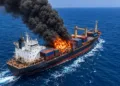
The ongoing conflict in West Asia, particularly around the strategically critical Strait of Hormuz, has triggered one of the most severe global energy crises in recent decades.
The Strait of Hormuz is among the world’s most important energy corridors, carrying nearly a fifth of global oil trade. Partial disruption in the region due to escalating conflict immediately sent shockwaves across global oil markets.
Crude oil prices reportedly surged from around $70 per barrel to nearly $126 per barrel within weeks. The impact was felt worldwide.
Countries heavily dependent on imported energy began imposing emergency restrictions to reduce fuel consumption and stabilise domestic supply chains.
Bangladesh introduced fuel rationing measures. Sri Lanka shifted government offices to a four-day work week to reduce fuel usage. Pakistan reduced working days for public offices, while the Philippines declared a national energy emergency. South Korea imposed fuel price controls for the first time in nearly three decades.
In many developed economies, petrol prices crossed unprecedented levels. Hong Kong saw petrol nearing Rs 295 per litre. Prices in Singapore touched around Rs 240 per litre, while several European countries including the Netherlands, Germany, Italy, France, and Britain witnessed petrol prices crossing Rs 200 per litre.
Amid this global turmoil, India’s relatively stable fuel pricing has attracted significant attention.
India avoids immediate fuel shock
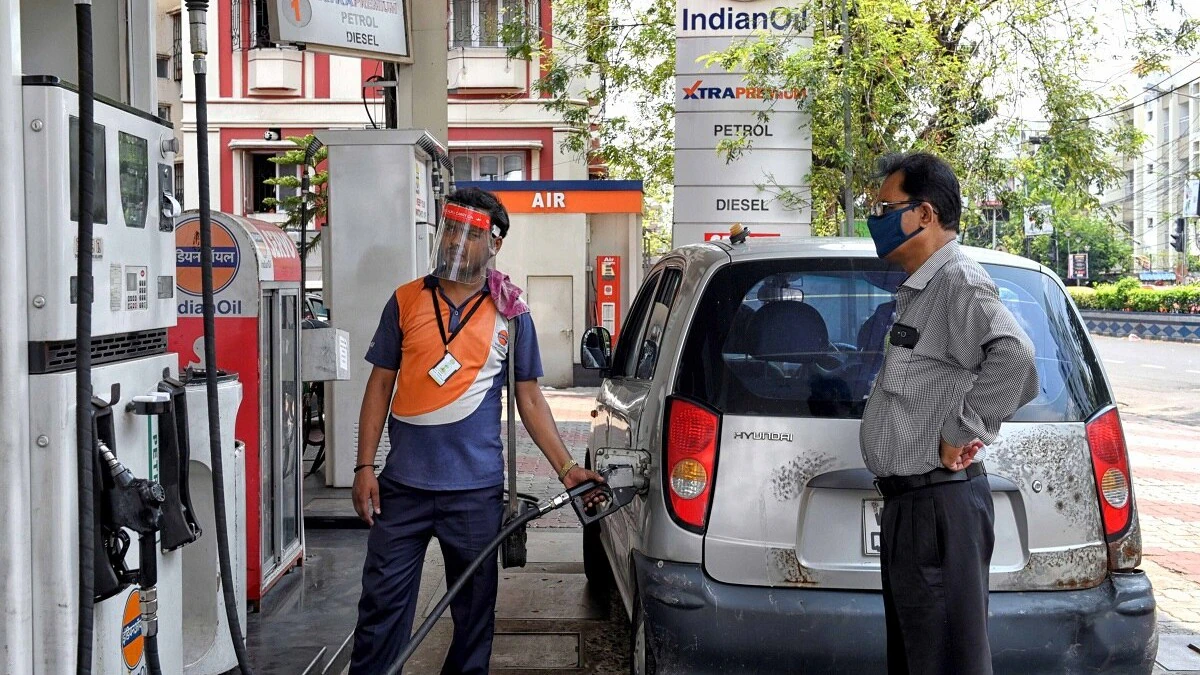
Despite the international crisis, petrol prices in several Indian cities have remained around Rs 95 per litre without any immediate major increase.
This has helped India avoid long queues outside petrol pumps, fuel rationing, and widespread public panic seen in several neighbouring countries.
However, government reports indicated that the pressure on the system is rapidly increasing.
According to reports, the Centre is currently reviewing proposals that could increase petrol and diesel prices by Rs 4 to Rs 5 per litre, while domestic LPG cylinders may witness a hike of Rs 40 to Rs 50.
If approved, this would mark the first major fuel price increase in nearly four years.
The possibility of a hike underlines the growing strain on India’s oil marketing companies and public finances.
The Government’s rapid response strategy
According to officials and energy experts, the Indian government moved swiftly after the crisis escalated in West Asia.
Within days of the disruption, emergency measures were reportedly initiated to secure domestic supply and shield consumers from sudden price shocks.
One of the most significant steps was the implementation of the LPG Control Order. The government reportedly instructed refineries to dramatically increase domestic LPG production to prevent shortages.
Daily LPG production reportedly increased from around 36,000 tonnes to nearly 54,000 tonnes.
Simultaneously, the Centre slashed excise duty on petrol from Rs 13 to Rs 3 per litre, while excise duty on diesel was almost entirely removed.
The strategy was aimed at absorbing a large part of the global price rise at the government and oil company level instead of immediately passing it on to consumers.
At the peak of the crisis, officials estimated that public sector oil companies and the government were absorbing nearly Rs 24 per litre on petrol and around Rs 30 per litre on diesel.
Government absorbed global price shock
One of the biggest reasons India avoided a fuel crisis was the government’s decision to absorb a substantial portion of the global price increase rather than immediately transferring the burden to consumers.
At the peak of the crisis, the government and public sector oil companies were reportedly absorbing nearly Rs 24 per litre on petrol and around Rs 30 per litre on diesel.
This intervention prevented sudden price spikes at petrol pumps and helped maintain economic stability at a time when global inflation pressures were rising sharply.
State-run oil companies including Indian Oil Corporation, Bharat Petroleum, and Hindustan Petroleum played a central role in maintaining uninterrupted supply across the country.
The coordinated effort between the Centre and oil marketing companies ensured that India avoided the scenes witnessed in several countries where consumers faced rationing and fuel scarcity.
How India avoided fuel shortages
Apart from managing prices, India also faced the challenge of maintaining uninterrupted supply across a country of over 1.4 billion people.
Despite major shipping disruptions globally, India managed to avoid severe fuel shortages or widespread LPG scarcity.
Refineries reportedly began operating at more than 100 per cent capacity.
At the same time, India aggressively diversified its crude oil imports to reduce dependence on West Asia.
Purchases reportedly increased from countries including Russia, the United States, West African nations, Nigeria, Angola, and other alternative suppliers.
India’s relatively stable situation is also the result of years of long-term energy planning and infrastructure expansion.
Years of energy planning helped India
In 2014, India had only 11 LPG terminals. That number has now reportedly increased to 22.
Similarly, India’s crude oil sourcing network expanded from 27 countries to nearly 40 countries. Ethanol blending also rose significantly from around 1.5 per cent to nearly 20 per cent.
Strategic petroleum reserves established over the last decade have also helped India cushion immediate supply disruptions.
Former Indian Oil Corporation chairman B Ashok said the government’s immediate priority was to shield ordinary consumers from the direct impact of the conflict.
According to Ashok, the Centre reduced excise duties, imposed temporary export restrictions, and prioritised domestic LPG and PNG supply.
He noted that LPG production had increased by nearly 50 per cent in response to the crisis.
However, he cautioned that the present system may not remain financially sustainable if the conflict continues for several more months.
“This level of crisis has never been seen before,” Ashok reportedly said, warning that prolonged disruption could eventually force India to raise prices, rationalise taxes, or impose stricter energy management policies.
He also warned that failure to adapt could weaken the energy sector and affect broader economic growth.
India’s continued dependence on West Asia
Former Indian ambassador to the UAE, Sunjay Sudhir, pointed out that despite diversification efforts, India still remains deeply dependent on West Asia for energy needs.
According to him, nearly 50 per cent of India’s crude oil, 90 per cent of LPG, and 60 per cent of natural gas still come from Gulf countries.
This means India remains highly vulnerable to prolonged instability in the region.
Sudhir said India has already started shifting part of its imports toward Russia, the US, Iran, Nigeria, and Angola to reduce immediate dependence on Gulf supply chains.
He also noted that certain policy shifts by Gulf producers such as the UAE may help soften global prices in the future.
However, he stressed that the government cannot indefinitely absorb losses through tax cuts and subsidies.
“At some point, fuel prices may rise in India as well,” he warned.
The real test may still lie ahead
For now, India has managed to avoid the panic and disruption seen across many parts of the world.
There have been no widespread fuel queues, rationing measures, or severe shortages despite one of the worst global oil shocks in recent years.
But the coming weeks may prove critical.
If the conflict in West Asia continues and the Strait of Hormuz remains unstable, India may eventually have to pass at least part of the burden onto consumers.
The current calm, therefore, may be less a sign of immunity and more the result of an expensive and carefully managed balancing act that cannot continue forever.