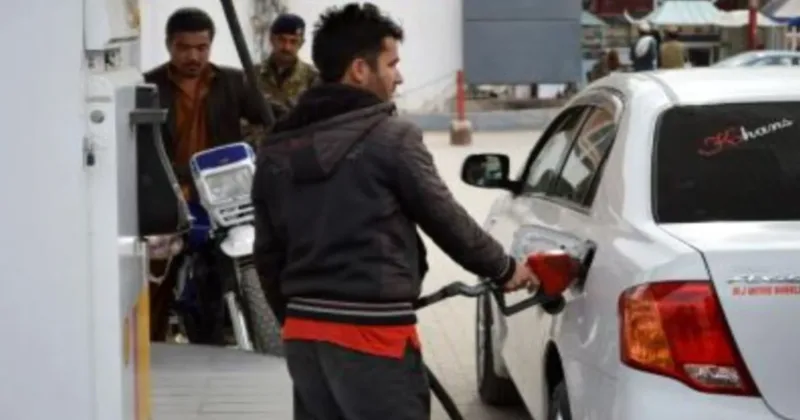
A man filling petrol in the car
The Pakistan government raised the price of petrol by Rs14.92 per litre and that of high-speed diesel (HSD) by Rs15 on Friday. Following the increase, the price of petrol stands at Rs 414.78 per litre and HSD’s at Rs 414.58. But on the pumps, the consumers get it for over Rs 415 due to some adjustments.
After the US-Israeli war on Iran began on February 28, the government initially hiked petrol and diesel prices by Rs 55 per litre in less than a week on March 6, followed by austerity measures on March 9.The Petroleum Division’s press release notifying the increase said the new prices would be effective from midnight, May 9. This is the n-th time that the Pakistan government of Prime Minister Shehbaz Sharif has effected a steep hike in the prices of all petroleum products.
The prices of cooking gas have also risen substantially but they are not being notified on regular basis. This has created panic among consumers and led to substantial scaling down of dishes being served at wedding feasts all across the nation. Small restaurants and eateries have been hit very hard and in many areas, women are forced to use firewood or waste material for cooking.
Petrol is mostly used in private transport, small vehicles, rickshaws and two-wheelers and has a direct bearing on the budget of the middle and lower-middle class. In Pakistan, diesel is mainly used in the heavy transport sector and for large generators, according to a report in Dawn newspaper.
The government has been revising petroleum prices every week on Friday night following the now-paused US-Israeli war on Iran, which began on February 28. The war also led to a global fuel crunch caused by the closure of the Strait of Hormuz, through which one-fifth of the world’s supply of oil and gas used to pass in peace time. The next tranche of credit from the International Monetary Fund (IMF) has meant that the Pakistan government has no room for making politically popular but economically ruinous decisions regarding price hikes.
PM Shehbaz has claimed that he had rejected recommendations to increase fuel prices despite an increase in the global market on three occasions. On April 2, Petroleum Minister Ali Pervaiz Malik and Finance Minister Muhammad Aurangzeb announced a shockingly high hike of 43 per cent and 55 per cent in the prices of petrol and high-speed diesel, respectively. The ministers had also announced a targeted fuel subsidy programme.
The flip-flops by the government on price hike have become legendary now as a day after the stiff hikes, PM Shehbaz slashed the petroleum levy by Rs 80 per litre and brought the price of petrol down to Rs 378 per litre. On April 10, PM Shehbaz further announced slashing of diesel and petrol prices by Rs 135 and Rs 12 per litre, respectively.
Last week, on May 1, the government had raised the price of petrol by Rs 6.51 per litre and that of high-speed diesel (HSD) by Rs 19.39. This resulted into both the fuels crossing Rs 400 per litre.
Last Friday, irked by the repeatedly steep hikes being put in place by the government, a citizen approached the Federal Constitution Court (FCC), seeking relief against the recent increase in prices.
Moved under Article 175(E) of the Constitution, the petitioner, Advocate Zulfikar Ahmed Bhutta, called on the court to direct the government to withdraw the recent price hike in the petroleum products.
The petition requested that directions be issued to the government to provide petrol and diesel at the rate of Rs 200 per litre. It said that the government should also ensure the import of petroleum products from Iran through all available sources, including pipelines, on an urgent basis.
The petition said that the US government announced withdrawal of sanctions on purchasing petrol/diesel from Iran in early April. However, Pakistan had failed to arrange imports from the neighbouring country. He claimed that this simple trick could have provided fuel at less than Rs 150 per litre.
The petition argued that the government has maintained that the price hike was unavoidable due to global crude oil markets, the International Monetary Fund’s (IMF) conditions and the regional conflict. However, these were mere “smoke screens” to allegedly conceal wasteful government expenditures, including salary hikes for judges and ministers, and tax policies that burden common citizens.
