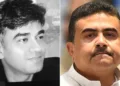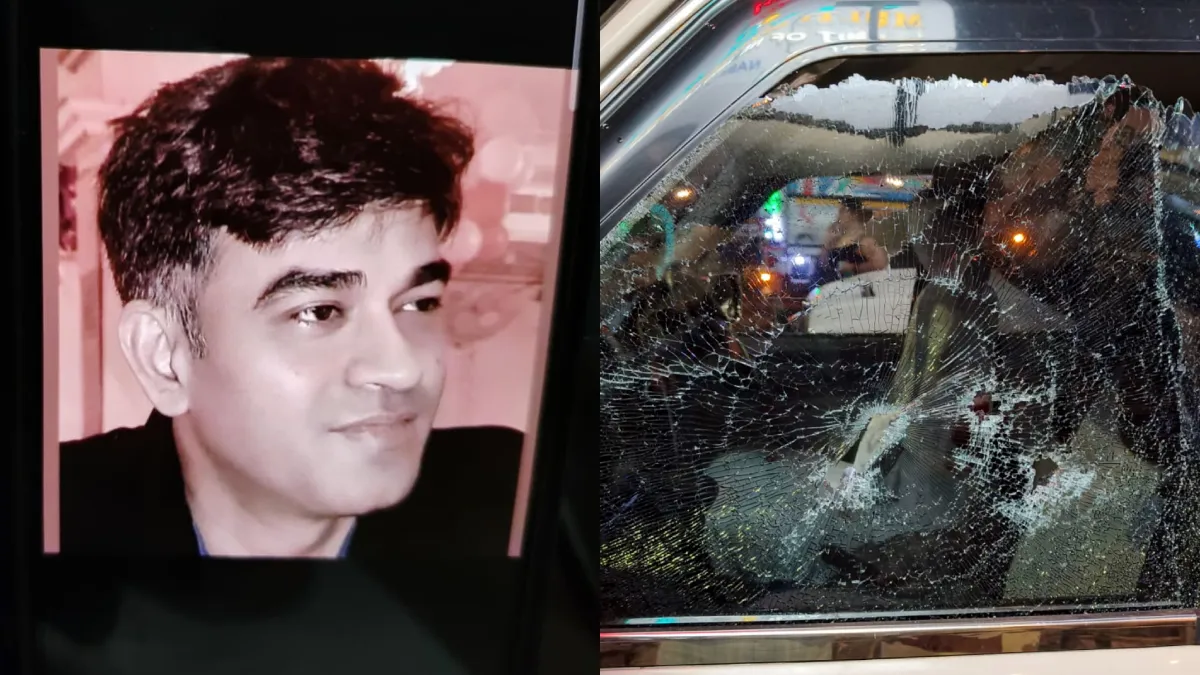
What began as another tense night in post-election Bengal quickly escalated into one of the most shocking political murder investigations in recent years after Chandranath Rath, close aide and personal assistant to senior BJP leader Suvendu Adhikari, was shot dead less than 48 hours after the BJP’s historic victory in West Bengal.
According to senior police officials involved in the probe, the attack was allegedly planned over a span of at least three days, during which Rath’s movements, travel patterns and daily schedule were carefully monitored.
“The conspiracy was hatched over the last three days. It was planned and rehearsed. Chandranath Rath was followed, his schedule was closely monitored and his movements were marked,” a senior police official associated with the investigation told News18.
The killing took place just two days before the swearing-in ceremony of Bengal’s new BJP government, an event expected to be attended by Prime Minister Narendra Modi and Union Home Minister Amit Shah.
Was Chandranath Rath specifically targeted?
Investigators now believe Rath was the sole target of the attack.
The case has officially been handed over to the CID, which has formed a Special Investigation Team (SIT) comprising officers from the homicide wing along with senior local police officials.
Police sources said 9mm bullet shells were recovered from the crime scene, indicating the use of sophisticated firearms in what investigators described as a close-range execution.
“A sophisticated revolver for close-range shooting was used. At least four rounds were fired at him. We have some leads and a special CID team is probing the incident,” the senior officer stated.
Preliminary findings suggest that at least three to four assailants directly participated in the operation, while others may have been involved in tracking Rath’s movements beforehand.
Investigators suspect the operation involved extensive planning rather than being a sudden political clash or mob attack.
How did the attack unfold near Madhyamgram?
According to the investigation, Chandranath Rath was travelling in a West Bengal Legislative Assembly vehicle around 10 pm on Wednesday night when another car intercepted his route near Madhyamgram.
Moments later, bike-borne assailants allegedly approached the left side of the vehicle and opened fire at close range.
Police sources said four bullets struck Rath in the head, chest and abdomen, killing him on the spot.
His driver, Buddhadev Bera, also sustained multiple bullet injuries and was rushed to hospital for treatment.
Investigators have since collected CCTV footage from multiple locations along Rath’s travel route and are tracing the movement of the vehicle allegedly used to intercept his car.
Officials are also probing the registration details of the suspect vehicle and examining whether fake number plates were used during the operation.
‘This Was Rehearsed’: Why Investigators Believe The Attack Was Professionally Planned
Even in Bengal’s long history of post-poll violence and political killings, investigators admitted that the nature of Rath’s assassination appeared unusually coordinated.
Police officials said the attackers used a sophisticated firearm designed for close-range shooting and executed the operation with precision.
The sequence, surveillance, interception, targeted firing and coordinated escape, has led investigators to believe the killing resembled a professionally planned hit rather than spontaneous political violence.
Investigators are examining whether Rath’s movements were leaked by insiders or tracked through sustained observation in the days leading up to the attack.
The possibility that the attackers conducted reconnaissance and rehearsed the operation beforehand is also being probed.
Bengal’s post-poll violence returns to national spotlight
Rath’s murder comes amid a fresh wave of post-poll violence reported from multiple districts across West Bengal following the Assembly election results.
Political clashes, vandalism and targeted attacks have continued to surface after the BJP ended the Trinamool Congress’s 15-year rule in the state.
Historically, Bengal has witnessed recurring cycles of post-election violence, often involving clashes between rival political workers, arson attacks, forced displacement and killings intended to establish territorial dominance after a shift in political power.
The 2021 Assembly elections had also witnessed widespread violence, with more than 70 political workers allegedly killed in the post-poll phase. The Calcutta High Court later transferred investigations in several murder cases to the CBI after concerns over politically influenced policing.
However, investigators now believe Rath’s murder represents a more dangerous shift in the pattern of Bengal’s political violence.
Unlike mob-driven revenge attacks or local clashes, the killing appeared methodical and targeted at a politically significant individual.
Officials believe the objective may not merely have been local intimidation but the sending of a larger political message through a high-profile assassination.
Another BJP Worker, Rohit Roy was killed hours later
Hours after Rath’s murder, another BJP worker, Rohit Roy alias Chintu, died after being shot during a clash over BJP flag placement in Basirhat’s Gotra area in North 24 Parganas district.
According to BJP sources, Roy was allegedly attacked while BJP workers were putting up party flags in the locality.
He sustained bullet injuries to the abdomen and was rushed to Basirhat state-run hospital, where he later succumbed to his injuries.
BJP leaders alleged that “TMC-backed miscreants” were behind the attack, while police have launched an investigation into the incident.
The back-to-back killings have sharply escalated political tensions in Bengal and intensified allegations of targeted post-poll violence following the BJP’s electoral victory.