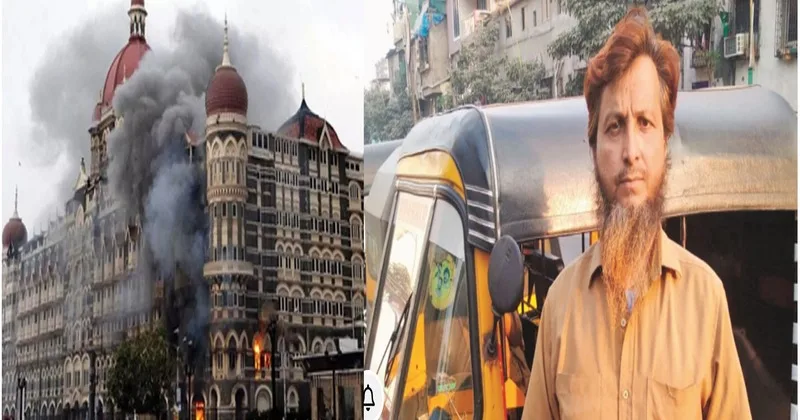
MUMBAI: In a significant order, the Bombay High Court has refused to direct authorities to issue a Police Clearance Certificate (PCC) to Fahim Ansari, who was acquitted in the 2008 Mumbai terror attacks case.
A bench of Justices AS Gadkari and Ranjitsinh Bhonsale dismissed Ansari’s petition, holding that the authorities were justified in denying the certificate. The detailed order is awaited.
Ansari had approached the court after his application for the mandatory PCC, required to obtain a badge and permit for driving an autorickshaw, was rejected.
State Cites Security Concerns, Ongoing Surveillance
The Maharashtra government opposed the plea, stating that Ansari continues to remain under surveillance. Authorities had earlier informed him through a Right to Information (RTI) reply that the certificate could not be issued due to allegations of his association with the Pakistan-based terror outfit Lashkar-e-Taiba.
The court accepted the state’s position, effectively prioritising security considerations over the petitioner’s request for livelihood clearance.
Ansari’s Argument: Right to Livelihood Violated
In his plea, Ansari argued that the denial of the PCC was “arbitrary, illegal and discriminatory,” and infringed upon his fundamental right to livelihood.
He contended that his acquittal by all courts in the 26/11 case should remove any barriers to employment. According to the petition, merely being tried in the case cannot be used as a blanket disqualification for earning a living.
After his release from prison in 2019, Ansari worked at printing presses in Mumbai and later in Mumbra. However, citing low income, he applied for an autorickshaw licence, which was granted in January 2024. The PCC remained the final hurdle.
Background: 26/11 Attacks and Acquittal
The 2008 Mumbai attacks saw ten Pakistani terrorists carry out coordinated strikes across Mumbai, including at Chhatrapati Shivaji Terminus, the Taj Mahal Palace Hotel, and the Oberoi Trident. The attacks lasted nearly 60 hours and claimed 166 lives.
While Ajmal Kasab was convicted and later executed, Ansari and another accused, Sabauddin Ahmed, were acquitted by the trial court due to lack of evidence. Their acquittal was subsequently upheld by both the High Court and the Supreme Court.
Prosecutors had alleged that the two had prepared maps of Mumbai for the attackers, but the court noted that more detailed maps were readily available online.
Separate Conviction in Rampur CRPF Attack Case
Despite his acquittal in the 26/11 case, Ansari was convicted in a separate case related to the 2008 Rampur CRPF camp attack in Uttar Pradesh.
He served a 10-year sentence for offences including forgery (possession of a fake Pakistani passport) and violations under the Arms Act. He was released in 2019 after completing his sentence.
In earlier interactions, Ansari claims he is innocent and that he wants a peaceful life with his family after years of incarceration.
Livelihood vs Security: A Continuing Legal Tension
The case highlights the complex legal and ethical tension between an individual’s right to livelihood and the state’s obligation to ensure national security.
While Ansari argued that acquittal should restore his ability to rebuild his life, the court’s decision underscores that security assessments by authorities can still weigh heavily, even in the absence of a conviction in a particular case.