India’s industrial production, measured by the Index of Industrial Production, recorded a 4.1 percent increase in March 2026, according to data released by the Ministry of Statistics and Programme Implementation.
This growth is positive but slightly lower than February’s revised 5.2 percent. The moderation indicates that while industrial activity remains on track, some sectors are not growing as strongly as before.
Manufacturing remains the backbone
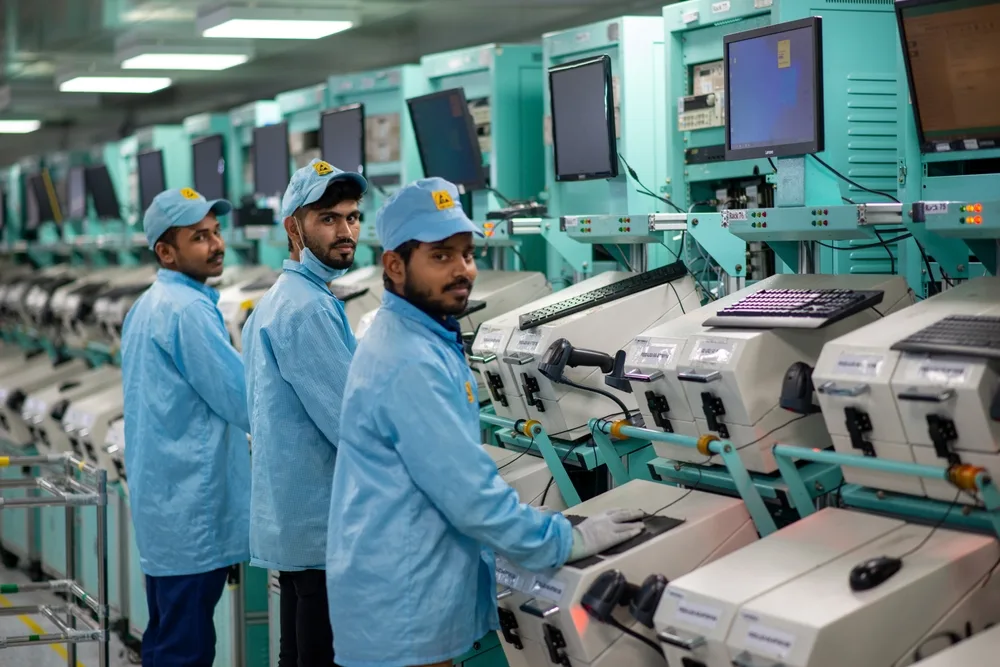
Manufacturing, which has the largest share in industrial output, grew by 4.3 percent in March. This sector plays a crucial role in job creation and overall economic stability.
Out of 23 industry groups in manufacturing, 14 showed positive growth. Some of the strongest performing segments were:
1) Basic metals: grew by 8.6 percent, reflecting strong demand from construction and infrastructure
2) Motor vehicles: recorded a sharp rise of 18.1 percent, indicating recovery in automobile demand
3) Machinery and equipment (including tractors): expanded by 11.2 percent, showing increased industrial activity and rural demand
This broad-based growth suggests that manufacturing continues to support India’s industrial momentum.
Mining sector shows stable expansion
The mining sector grew by 5.5 percent in March, indicating steady extraction of coal, minerals, and other resources. This growth is important because mining supports key industries like power, steel, and cement.
In contrast to manufacturing and mining, electricity generation grew by only 0.5 percent. This was the weakest performing sector and acted as a drag on overall industrial output.
Lower growth in electricity can impact industries that depend heavily on power, and it also reflects fluctuations in demand and supply conditions.
Capital goods surge signals future investment
Data based on use of goods shows encouraging signs for the future. Capital goods, which include machinery used for production, grew by a strong 14.6 percent.
This is an important indicator because it shows that companies are investing in expanding their capacity. Higher investment today often leads to stronger economic growth in the coming months.
Consumer durables, such as electronics and household appliances, recorded a growth of 5.3 percent. This indicates that demand from households remains stable, supported by improving incomes and spending.
Infrastructure growth supports economy
The infrastructure and construction goods segment grew by 6.7 percent. This growth is largely driven by government spending on highways, railways, ports, and other public projects.
A strong infrastructure sector not only boosts industrial output but also creates jobs and supports long-term economic development.
The March data shows that India’s industrial sector remains on a stable growth path. Manufacturing and investment activity are providing strong support, while mining continues to perform steadily.
However, the slowdown in electricity generation highlights the need for balanced growth across all sectors.
If the current momentum in manufacturing and capital goods continues, India’s industrial growth is likely to remain steady in the coming months, supported by both domestic demand and ongoing infrastructure development.