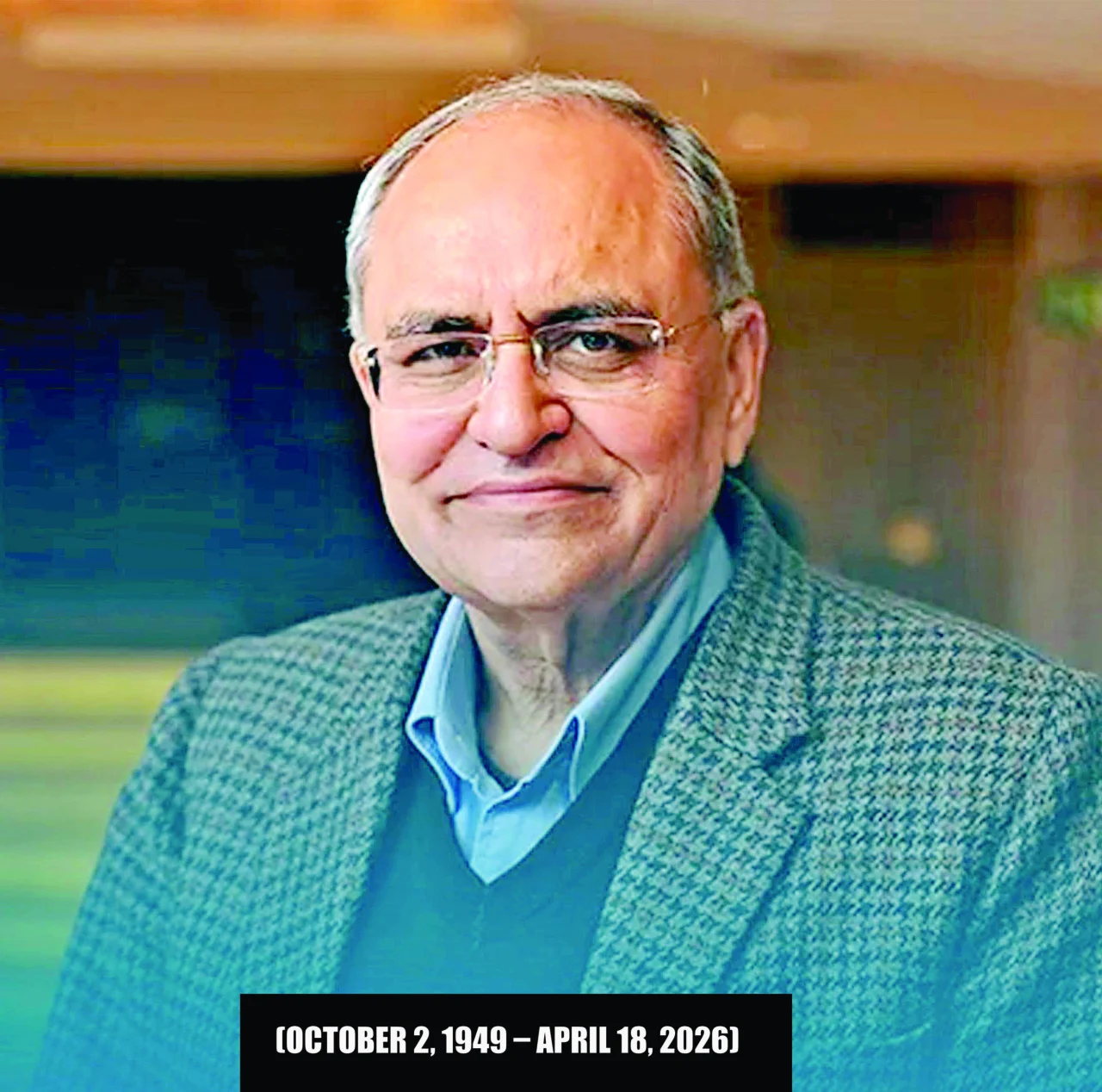
My acquaintance with Balbir Punj was not very old. I believe it was around 2012–13, when I took on the responsibility of Prant Prachar Pramukh, that I began meeting columnists and writers as part of a regular process. From many quarters, his name kept coming up, that I should meet him as well. At that time, among those who are today called patriotic writers, there were very few who wrote consistently and regularly. In Northern Bharat especially, a few names stood out: him, Dinanath Mishra, S Gurumurthy, and TVR Shenoy.
Dinanath Mishra’s health was not good, and I could not develop much familiarity with the others. But when I first met Balbir ji to invite him to a meeting, an immediate connection was formed. After that, I met him frequently.
His journey into writing and journalism is itself very interesting. He came from a family of lawyers, and naturally, the expectation was that he too would become a lawyer and pursue it as his profession. He did become one, but he had a deep inclination towards reading and writing. He often mentioned Vaidya Gurudutt, whose writings greatly influenced him and encouraged him forward. He would also speak of Madhavrao Muley, a senior functionary of the Sangh. Whenever Madhavrao ji visited during his travels, he would observe Balbir ji’s writing ability, give him topics to write on, review them during the next visit, suggest corrections, and guide him further. This cycle continued and played a significant role in shaping him.
There were many occasions when, if any issue or dilemma arose in Sangh work, one could go to Balbir ji for guidance. Discussions with him on matters concerning what is broadly called the Sangh Parivar such as the BJP, RSS, and VHP, and their internal dynamics were always insightful. Referring to earlier times, especially the Ram Janmabhoomi movement, he would recount how leaders like Atal Bihari Vajpayee, LK Advani, Ashok Singhal, KS Sudarshan, HV Seshadri and others engaged with each other and resolved issues.
He would explain how discussions evolved, what conclusions emerged, and how the idea of narrative-building, so widely spoken of today, was already a concern then. He often mentioned how there was a recognition that while presence on the ground was strong, narrative space needed strengthening. He had regular interactions with Sudarshan ji and insights into how leaders like Rajendra Singh and Sudarshan ji viewed these matters. Balbir ji absorbed much from them, and his advice, in turn, was also respected.
During his tenure as a Rajya Sabha member, the Ram Janmabhoomi movement stood out as a defining moment. In that period, he often acted as a bridge between different spheres—political, organisational, and ideological—helping facilitate communication among leaders. Conversations with him about those experiences were always engaging. We repeatedly felt that his experiences from that period should be documented, perhaps through a podcast or a detailed publication. He had agreed but mentioned that he was occupied with ongoing book projects.
An Insatiable Researcher
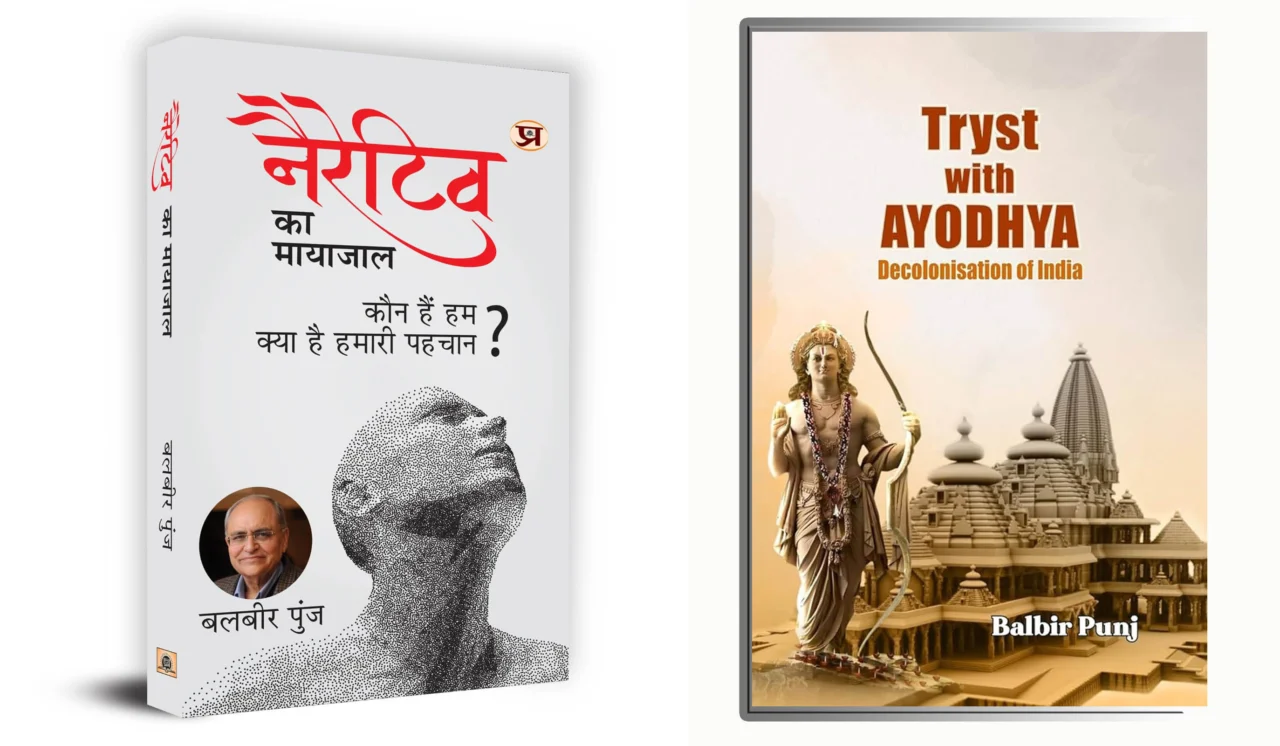
Around that time, he completed two major works—Narrative Ka Mayajaal and Tryst with Ayodhya: Decolonisation of India. The speed with which he wrote these, even at the age of 72–73, was remarkable. For Tryst with Ayodhya, he consulted over a hundred books.
A few months ago, at a programme organised in Indore by the legal cell of the Vishva Hindu Parishad on demographic change, Alok Kumar suggested that Balbir ji’s lecture should be turned into a booklet for wider dissemination. When I discussed this with him, he agreed to expand his lecture originally around 5,000 words to about 10,000 words. But once he began, the scale grew significantly. By the time I last spoke to him, he had already consulted around 350 books and uncovered new facts relating to the Partition of India.
For this research, he even travelled to London to consult archival material and libraries. At the same time, he was working on two other books. Even at the age of 77, he was simultaneously engaged in three major writing projects. One of these, Demography is Destiny, is nearly complete, with about 100,000 words already written. It will be published soon. He took great joy in seeing the growing acceptance of national thought in a democratic framework. I recall an event organised at Indira Gandhi National Centre for the Arts by a Delhi-based organisation called Udaan. He was invited there for a session on creative writing. He was visibly very happy and told me that he had never imagined that such programmes representing this stream of thought would take place at such a venue. He felt deeply satisfied witnessing it. Whenever I urged him to complete his books faster, he would simply say, “It will happen as Ram ji wills. As long as He keeps me going, I will continue.” Speaking about his Ayodhya book, he would say that writing it within a month was beyond his own capacity, it happened by divine will.
In January, during the planning of a literary event called Shabdotsav organised by Suruchi Prakashan, I shared the concept note with him. He offered invaluable suggestions and expressed great happiness that such large-scale intellectual programmes were being organised in spaces where earlier only other ideological streams dominated.
He wrote regularly—on average, three articles a week. We requested him to allow us to compile his writings into books through Suruchi Prakashan. He agreed and suggested that his articles could be categorised into multiple volumes. That work remained incomplete, but we intend to carry it forward with his family.
Initiatives such as making books available at airports and bookstores were inspired by his guidance. He consistently emphasised that literature should reach beyond organisational spaces and become accessible to a wider audience.
He also expressed concern that intellectual work does not always receive due recognition within our own circles, unlike in other ideological streams. Yet, as a true Swayamsevak, he continued writing with self-motivation, without seeking recognition. Beginning to write seriously in his youth, he sustained this discipline for over five decades which is a rare achievement.
He maintained regular contact with many writers. Whenever someone’s article reached him, he would read it and immediately call the writer—encouraging them, offering suggestions, and emphasising the importance of references and rigorous writing. Such guidance and mentorship were a constant part of his engagement with others.
Among the handful of prominent patriotic writers and columnists in the country, his place was firmly established and will remain so. Wherever he is now, it feels as though he continues to guide and encourage.
Balbir ji always used to say, when asked about his writings and on which book he was working. He would always reply, as Ram ji wished. So perhaps it was Ram ji’s wish that he left some work for others to do, and if Ram ji wishes, those tasks will be completed. And all those tasks will continue to receive Balbir ji’s blessings.