India has, for decades, confronted terrorism in both its overt and covert manifestations. This is not a new battle for us; however, its character today is far more complex, diffuse, and insidious than ever before. What was once largely confined to border regions and conventional methods has now evolved into a technologically driven, globally networked threat. Terrorist actors no longer rely solely on weapons and explosives; they operate through digital ecosystems, clandestine financial channels, and sustained ideological propaganda. Any response that fails to recognise this transformation is bound to be inadequate.
It is in this context that the Ministry of Home Affairs’ introduction of PRAHAAR must be viewed as a decisive and timely intervention. This is not merely another policy initiative; it represents a fundamental shift in strategic thinking. The emphasis is no longer on post-incident response, but on anticipatory action—identifying threats at inception and neutralising them before they manifest. This, by any standard, is the hallmark of a mature and capable security architecture.
India’s counter-terrorism journey has yielded valuable lessons. The 2017 anti-Naxal doctrine of Ministry of Home Affairs, SAMADHAN, stands as a notable example of how clarity of intent, strategic coherence, inter-agency coordination, and robust intelligence can significantly curb insurgent activity. It demonstrated that well-articulated policy, backed by strong political willpower and effective execution, delivers tangible results on the ground.
However, the present challenge extends well beyond earlier paradigms. Terrorism, often externally sponsored, has fragmented into smaller, decentralised modules—lone actors, micro-cells, and digitally connected networks. It now operates simultaneously across physical, virtual, and financial domains. Fragmented or siloed responses will not suffice against such a multidimensional threat.
PRAHAAR is designed precisely to address this complexity. It integrates technology, intelligence, law enforcement, financial oversight, and international cooperation into a unified framework. Its objective is clear and uncompromising: detect threats early, prevent their escalation, and, where necessary, respond with speed and severity.
The most defining feature of this doctrine is its holistic approach. It recognises that terrorism is not merely an act of violence, but a manifestation of ideology, organisation, and deliberate strategy. Consequently, the response too must be comprehensive and multi-layered.
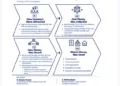
PRAHAAR rests on seven core pillars
- Prevention: Intelligence-led, proactive measures to neutralise threats at inception
- Response: Swift, coordinated action in the event of an incident
- Analysis: Data-driven decision-making based on precise intelligence assessment
- Human Rights Compliance: Ensuring all actions remain within the constitutional and legal framework
- Action against Terror Financing: Systematic dismantling of financial support networks
Awareness and De-radicalisation: Countering extremist narratives through societal engagement - Resilience and Recovery: Rapid restoration of normalcy post-incident
Together, these pillars create a strategy that not only counters terrorism effectively but also strengthens societal resilience.
Contemporary terrorist groups are increasingly leveraging advanced technologies—encrypted communications, the dark web, drones, and cryptocurrencies—to evade detection. Traditional policing methods, in isolation, are no longer sufficient. PRAHAAR addresses this gap by embedding cyber capabilities, advanced surveillance technologies, and financial intelligence into its operational framework.
India’s posture against terrorism has, in recent years, become markedly more assertive. The Balakot Air Strike, Operation Sindoor and sustained operations against domestic terror networks underscore a clear shift: India is no longer confined to a defensive stance. The capability and resolve to undertake pre-emptive and decisive action are now firmly established.
PRAHAAR institutionalises this approach. It ensures that such actions are not ad hoc or situational, but guided by a structured and consistent policy framework.
At the heart of this doctrine lies the Prevention pillar. Its strategic focus is unambiguous: identify and neutralise threats at the earliest stage. This necessitates strengthening intelligence-led policing, ensuring real-time information sharing among agencies, dismantling recruitment pipelines, and disrupting support infrastructures. Monitoring digital radicalisation and exerting stringent control over terror financing are integral to this effort.
Prevention, however, has now transcended conventional boundaries. It is increasingly technology-driven. Artificial intelligence enables predictive threat analysis; big data analytics helps identify suspicious patterns; drone surveillance enhances border security; and cyber-forensics allows tracking of encrypted communications. In an era where terrorism is rapidly digitising, expanding cyber capabilities is no longer optional—it is imperative.
The proliferation of deepfakes, fabricated digital content, and AI-driven misinformation has further complicated the threat landscape. Digital vigilance must, therefore, be accorded the highest priority to detect and neutralise risks at their nascent stage. At the same time, it must be recognised that radicalisation cannot be countered by security forces alone. It demands active participation from society—educators, community leaders, religious institutions, and civil organisations.
The Response pillar ensures swift and coordinated action during crises. Local police serve as the first responders, supported by specialised agencies such as the National Security Guard and the National Investigation Agency. This multi-tiered mechanism not only ensures immediate containment but also strengthens investigation and prosecution.
PRAHAAR also enhances national preparedness. Investments in modern equipment, drone surveillance, AI-enabled command systems, specialised training, cyber capabilities, and standardised operational procedures are aimed at ensuring seamless coordination between states and agencies. Strengthening international cooperation is equally critical, given the transnational nature of contemporary terrorism.
Equally important is the role of society. Radicalisation cannot be countered through force alone; it requires awareness, engagement, and credible counter-narratives. Preventing youth from straying into extremist pathways is as vital as any enforcement action. Countering adversarial propaganda—particularly in the digital domain—must be pursued with clarity and consistency.
Effective prevention demands a robust cyber-intelligence architecture, decisive control over AI-driven misinformation, and deep penetration into terror networks. Effective response, on the other hand, requires seamless coordination among police, intelligence agencies, armed forces, and civil administration.
Ultimately, no policy succeeds on intent alone. Its effectiveness depends on sustained effort, clarity of leadership, and disciplined execution.
Conclusion
PRAHAAR marks a significant evolution in India’s counter-terrorism strategy. Its architecture is sound, and the intent of the government is clear. However, its success will rest squarely on implementation. Policy formulation is only the first step; translating it into measurable outcomes on the ground is the real test.
Alongside governmental efforts, citizens too must assume an active role in this collective endeavour. The Ministry of Home Affairs has, through PRAHAAR, delivered a long-awaited and necessary doctrine—one that has the potential to significantly strengthen India’s national security framework and decisively counter the menace of terrorism.