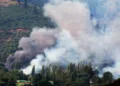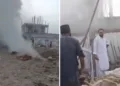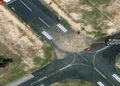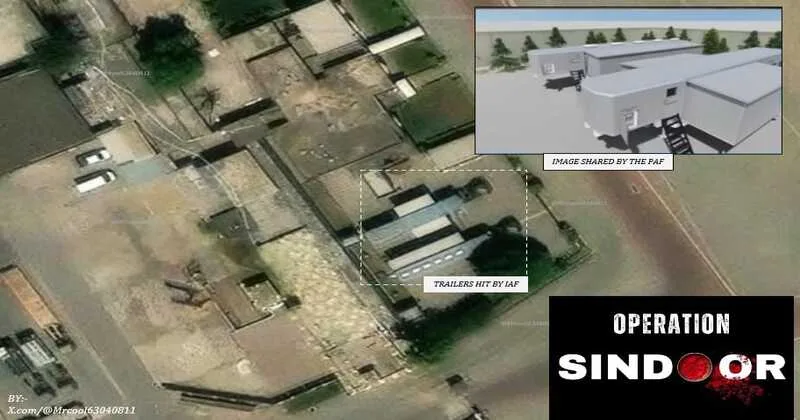
New Delhi: In a newly released public relations video by the Pakistan Air Force, visuals have emerged showing what appear to be advanced command and control trailers. These units closely resemble the two specialised vehicles destroyed by the Indian Air Force during a precision strike on Nur Khan Airbase on 10 May 2025 as part of Operation Sindoor. This development challenges Pakistan’s earlier claims that only “logistical trailers” were damaged, instead reinforcing assessments that high-value Next-Generation Mobile Mission Control Centres (NG-MMCC) were successfully neutralised. Satellite imagery and open-source intelligence at the time had already suggested that the assets targeted at Nur Khan were far more sophisticated than routine support vehicles. The newly surfaced visuals now strengthen that conclusion.
High-value targets and strategic impact
These trailers developed in collaboration with Turkiye, were equipped with advanced AI-assisted decision-support systems. They functioned as mobile command nodes, enabling coordination of air operations, drone missions, and potentially wider battle management roles. Their destruction marked a significant setback to Pakistan’s network-centric warfare capability, particularly by disrupting real-time command and control functions at one of the PAF’s most critical bases near Rawalpindi.
The Nur Khan strike formed part of a broader series of coordinated Indian precision attacks targeting multiple Pakistani airbases during the final phase of Operation Sindoor. By focusing on mobile command-and-control platforms, the IAF exploited their operational vulnerability, such systems must often be deployed in exposed or semi-open environments to maintain connectivity. This not only resulted in the physical loss of critical assets but likely also involved the destruction of sensitive equipment and the loss of highly trained personnel, both of which are difficult to replace.
Operational setback exposed by PAF’s own footage
The elimination of these Turkish-origin mobile command centres had immediate operational consequences. It forced the PAF to rely more heavily on fixed infrastructure and placed additional strain on airborne early warning systems. This vulnerability had already been highlighted earlier with the S-400-linked engagement involving the Saab 2000 Erieye. Ironically, the PAF’s own PR video, intended to convey stability and continuity, has provided visual evidence supporting claims that the destroyed assets were central to its operational architecture. While Pakistan has acknowledged only limited damage at Nur Khan in official statements, the apparent match between the trailers in the video and those previously identified as destroyed underscores the scale of the impact.
Reconstruction at the base has been ongoing for months. However, the absence of these advanced mobile C2 systems continues to limit operational flexibility. This episode also highlights the IAF’s evolving SEAD/DEAD doctrine, which increasingly prioritises high-value enablers such as mobile command posts, AWACS platforms, and integrated air defence systems. With capabilities including the S-400, Su-30MKI equipped with R-37M, India retains the capacity to conduct deep, precise strikes targeting the adversary’s core command and coordination infrastructure.