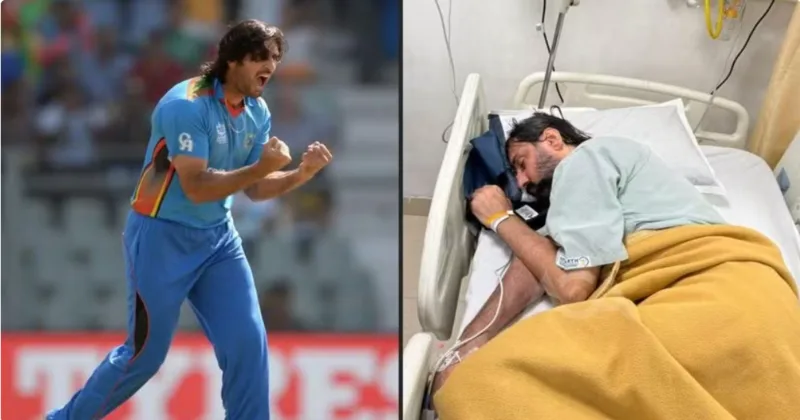
NEW DELHI: Former Afghanistan pacer Shapoor Zadran is battling for his life in the ICU of a New Delhi hospital after being diagnosed with Hemophagocytic Lymphohistiocytosis (HLH), a rare and life-threatening hyperinflammatory syndrome.
The 38-year-old left-arm fast bowler, who played 80 international matches for Afghanistan between 2009 and 2020, was admitted in January after his visa was expedited with help from Rashid Khan and Afghanistan Cricket Board officials.
Former Afghanistan pacer Shapoor Zadran battles life-threatening disease, critical in ICU at a New Delhi hospital
Read @ANI Story I https://t.co/o2pMf2LISq#ShapoorZadran #AghanistanCricket pic.twitter.com/ek9BRz8tgQ
— ANI Digital (@ani_digital) April 20, 2026
Former Afghan cricketer Shapoor Zadran’s brother, Ghamai Zadran, took to Facebook to request Shapoor’s fans to keep him in their prayers, as his condition has deteriorated and he is currently admitted to the Intensive Care Unit.
Afghanistan’s first-ever ICC World Cup victory was… pic.twitter.com/uzG5Vl9NXY— Bashir Gharwal غروال (@bashir_gharwall) April 15, 2026
He initially responded to treatment but relapsed after about 20 days, developing dengue on top of an underlying severe infection that included tuberculosis, which had spread throughout his body and to his brain.
Rashid Khan and Noor Ahmad visited Shapoor Zadran in hospital pic.twitter.com/QbAp1Dgzlr
— Sports Production (@SportsProd88208) April 16, 2026
WHAT IS Hemophagocytic lymphohistiocytosis (HLH)?
Hemophagocytic lymphohistiocytosis (HLH) is a severe, systemic condition in which the body’s immune system, specifically histiocytes and lymphocytes, becomes dangerously overactive and begins attacking its own tissues and organs instead of fighting infection.
According to Johns Hopkins Medicine, HLH can be primary (familial/genetic, most common in infants and young children) or secondary/acquired (far more typical in adults), the latter often triggered by infections such as tuberculosis, dengue, Epstein-Barr virus, or other illnesses, as well as by malignancies or autoimmune diseases.
This uncontrolled “cytokine storm” leads to persistent fever, enlarged liver and spleen, low blood cell counts, and rapid damage to bone marrow, liver, lymph nodes, and other organs; without swift intervention it can progress to multi-organ failure.
How is Hemophagocytic lymphohistiocytosis (HLH) treated?
Treatment focuses on immediately suppressing the hyperactive immune response while addressing any underlying trigger. Renowned U.S. centers such as Cleveland Clinic and Johns Hopkins describe standard care as following established protocols (e.g., the HLH-2004 regimen), which combine high-dose corticosteroids like dexamethasone, chemotherapy agents such as etoposide, and drugs like cyclosporine; antibiotics or antivirals are added when an infection like TB or dengue is the trigger.
In severe or primary cases, hematopoietic stem cell transplantation may be needed for a lasting cure. With early diagnosis and aggressive treatment at a specialized facility, prognosis can range from fair to good depending on the patient’s age, overall health, and how quickly the disease is controlled; however, HLH remains life-threatening, with high mortality in untreated or relapsed adult cases, especially when complicated by concurrent infections, emphasizing the need for rapid, expert-level care.
Other sportspersons with Hemophagocytic Lymphohistiocytosis (HLH):
Prasanta Dora, a former Indian national team goalkeeper who played for clubs like Mohun Bagan, East Bengal, and Mohammedan Sporting, was diagnosed with Hemophagocytic Lymphohistiocytosis (HLH) in December 2020. He passed away on January 26, 2021, at the age of 44 (some reports say 45), after a brief but aggressive battle with the disease.
Dora developed an unremitting high fever, after which his condition rapidly worsened with a drastic drop in platelet count and other blood parameters. Diagnosis was delayed, which is common with HLH due to its rarity in adults and overlapping symptoms with infections or other conditions. He was eventually treated at the Tata Medical Centre (a specialized cancer care facility) in Kolkata, where he received blood transfusions and supportive care, but he could not recover and succumbed to complications from the hyperinflammatory syndrome.
His elder brother, Hemanta Dora (also a former India and Mohun Bagan goalkeeper), noted that the disease severely affected his immune system and blood counts. HLH in adults like Dora is typically secondary (acquired), often triggered by an underlying infection, malignancy, or autoimmune issue, though specific triggers in his case were not widely detailed in public reports. He is survived by his wife Soumi and young son Adi.
Dora’s case highlights the aggressive and life-threatening nature of adult-onset HLH, especially when diagnosis is delayed. It drew attention in Indian sports circles to this rare condition, which is far more commonly reported in children.
Indian fans of Zadran will be praying for strength to Shapoor Zadran and his family in their ongoing fight.
https://www.instagram.com/p/DXURdfGAZMs/
Shapoor’s younger brother Ghamai Zadran has via Instagram posted a picture of the former cricketer in hospital and sought the prayers of his countrymen. He says prayers can bring on miracles and that the family is hopeful as treatment continues in Delhi.