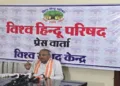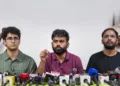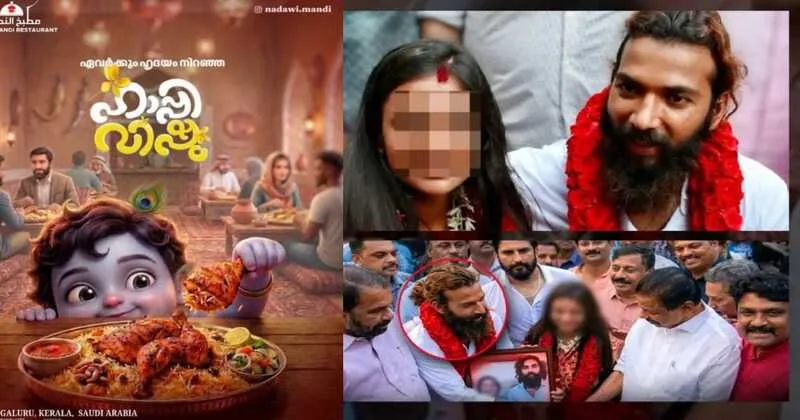
Kochi: Hindus in Keralam are being turned into “secular scapegoats,” said Hindu Aikyavedi state president RV Babu. He cited the marriage of Kumbh Mela viral minor girl and the recent Vishu Kani controversy as the latest examples. He further demanded that an investigation by the National Investigation Agency (NIA) be conducted into issues that have hurt religious sentiments. Babu was addressing the media at the Ernakulam District Press Club following a state office-bearer’ meeting of the organisation held in Aluva.
Allegations of cultural insult and administrative bias
The meeting strongly condemned what it described as the deliberate insulting of Hindu culture and beliefs under the guise of Vishu greetings. It alleged that Bhagwan Krishna and the Vishu Kani were insulted in a similar manner across the state as part of coordinated messaging linked to Vishu celebrations. According to the organisation, such acts did not occur in isolation but reflected a planned attempt. It further claimed that religious extremist organisations were behind these incidents, with the intention of disrupting Keralam’s social harmony and triggering communal unrest. In this context, the meeting reiterated its demand that the NIA take over the investigation into the matter.
The organisation also criticised what it termed as “criminal silence” from both political fronts, LDF, UDF and cultural leaders on the issue. It described this silence as an “ostrich policy” that becomes visible whenever Hindus are targeted.
Strong objections were raised against the actions of the Alappuzha Superintendent of Police, who, the meeting said, had adopted a stance of targeting those who protested against the controversy. The registration of cases against peaceful protesters was condemned, with the organisation asserting that such actions amounted to suppression of legitimate dissent. Additionally, allegations were raised that the Alappuzha SP attempted to reopen a hotel that had been shut down following the controversy, under pressure from religious extremist groups.
The meeting, chaired by RV. Babu, was inaugurated by senior leader KP. Sasikala Teacher. Other speakers at the office-bearers’ meeting included K. P. Haridas, C Babu, V Sushikumar, K. Shine, and Manjappara Sumesh. During the discussions, the organisation sharply criticised the state government, stating that it was projecting a distorted version of secularism. It referred specifically to the case of a 16-year-old girl from a Scheduled Caste being married to a Muslim youth, claiming that the government was presenting such instances as examples of Keralam’s secular achievements. According to the organisation, this amounted to making poor Hindu girls “scapegoats” in the name of secularism. The meeting further alleged that what was unfolding in the state amounted to “government-sponsored jihad,” and held the minister, Member of Parliament, and party secretary involved in the matter equally responsible.
Political, cultural and legal concerns raised
The meeting also raised objections to a publication by Deepika newspaper, stating that it carried content insulting Thunchaththu Ezhuthachan, widely regarded as the father of the Malayalam language. The organisation claimed that the publication reflected malicious intent, pointing to narratives that questioned Ezhuthachan’s historical existence while attributing the origins of Malayalam language development to missionaries. It further argued that attempts to present the belief that St. Thomas came to Keralam as historical fact were being used to undermine the legacy of Ezhuthachan by portraying it as myth. The meeting described such interpretations as part of a broader cultural distortion.
On the political front, the meeting accused both the Left and Right Fronts of entering into open alliances with organisations such as PFI-linked Social Democratic Party of India (SDPI) and Jamaat-e-Islami. It alleged that while these fronts sought the support of groups that openly prioritise religion in politics, they simultaneously labelled Hindus as communal during election campaigns. The organisation described this as a contradiction and warned that such political strategies posed a threat to societal balance.
It urged “true patriots” to remain vigilant against what it characterised as the gradual surrender of Keralam to religious extremism. The meeting also called for the immediate implementation of the Foreign Contribution Regulation Act Amendment (FCRA Amendment Bill) introduced by the Central Government, stating that it should be enforced without yielding to pressure from church groups. It alleged that several religious organisations receiving foreign funds under the guise of service activities were diverting a significant portion of these funds towards conversion efforts targeting Hindus. Reiterating its concerns, the meeting concluded by emphasising that the political and social trajectory of Keralam required careful scrutiny. It warned against what it described as growing appeasement of religious extremist forces and called for decisive action to preserve cultural integrity and social harmony.