Vishu ad controversy, Deepika row, and minor marriage issue fuel sharp debate over secularism and cultural respect in Keralam
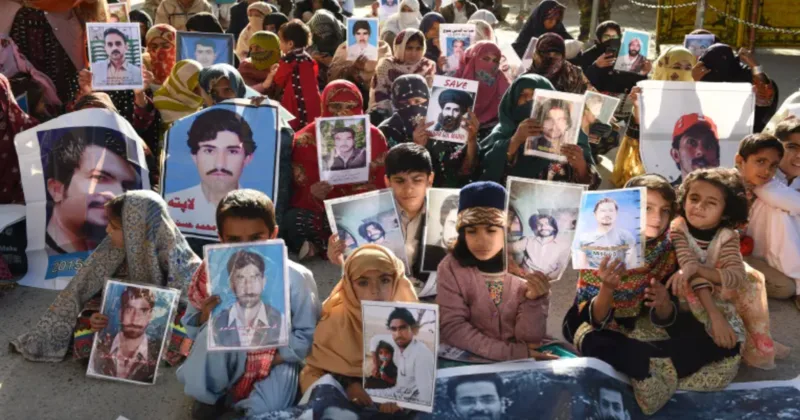
Three individuals were reportedly forcibly disappeared by Pakistani forces in Kech and Panjgur districts of Balochistan, while family members of another missing youth staged a sit-in and blocked the CPEC highway in Kech on Monday. The missing men were identified as Nadeem, son of Hasil Khan; Muhammad Taj, son of Taj Muhammad; and Sulaiman, son of Amanullah.
According to sources, Nadeem was detained during a late-night house raid in the Tump Malikabad area of Kech district and has been missing since. Muhammad Taj was detained on March 17 from the Sahpuk area of Kech district, sources said, while Sulaiman was taken into custody from the Khudabadan area of Panjgur. Both have remained missing since their detention, according to The Balochistan Post.
In another similar incident, a woman from Balochistan’s Awaran district forcibly disappeared from her home in Karachi on April 16, reports said. The name of the woman was given as Haseena Baloch, a housewife.
Meanwhile, in Kech district, family members staged a sit-in protest and blocked the CPEC highway against the enforced disappearance of a young man. Abdeen, a 25-year-old farmer and resident of Balghatar, was allegedly detained from Keelkor Road at around 7:00pm on April 19 and has since remained missing, according to his family.
The family and local residents blocked the highway at Balghatar, suspending traffic in the area. They said they were facing severe mental distress and called on authorities to take immediate steps for Abdeen’s recovery. Traffic flow remained disrupted due to the protest.
Meanwhile, a woman from Balochistan’s Awaran district forcibly disappeared from her home in Karachi on April 16, Dr Sabiha Baloch, a leader of the Baloch Yakjehti Committee (BYC), said.
She said Haseena Baloch, a housewife and mother, was taken from her residence in Karachi’s Naval area during the night, and that her family has received no information about her whereabouts since then. Dr Sabiha said the case reflected what she described as an increasingly “systematic pattern,” adding that the enforced disappearance of Baloch women was “no longer an anomaly” but had become “deliberate policy”.
“Enforced disappearances constitute crimes against humanity under customary international law,” she wrote, adding that any statement obtained during secret, incommunicado detention carried “zero legal weight” and amounted to “coercion, not evidence”.
She cited international legal protections and Pakistan’s Constitution as prohibiting such practices, and alleged that despite these safeguards, authorities had responded not with accountability but with what she described as “coordinated propaganda campaigns” targeting activists and human rights defenders.
“No smear campaign will silence us. We will continue documenting. We will continue speaking truth to power,” she wrote, demanding the “immediate and unconditional release” of Haseena Baloch.
The Baloch Women Forum (BWF) expressed “grave concern” over the case, saying Haseena Baloch was “forcibly disappeared by Pakistani forces” on April 16. The group said her family has received no information regarding her whereabouts, adding that the absence of due process and transparency raised serious legal and humanitarian concerns.
It said cases involving women reflected what it described as a “dangerous escalation,” warning that such incidents formed part of an increasingly visible pattern of targeting women in enforced disappearance cases. “These actions … leave families in prolonged anguish, forced to endure silence, uncertainty and psychological suffering in the absence of accountability or justice,” the statement said.
The BWF called for the immediate disclosure of Haseena Baloch’s whereabouts and urged authorities to ensure that no individual, particularly women, are subjected to actions outside legal frameworks.
