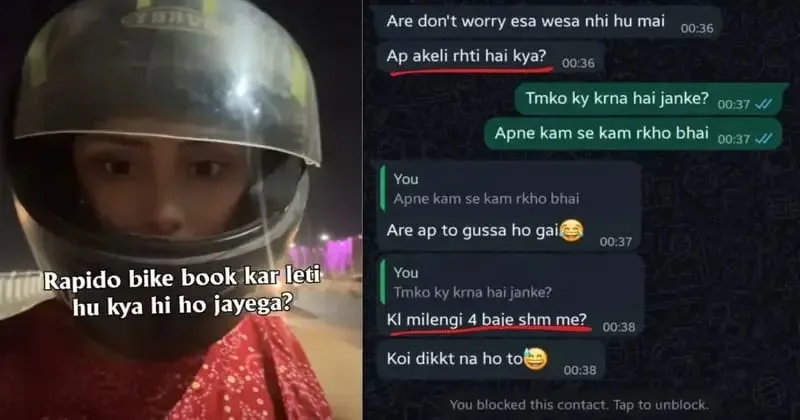
Ghaziabad: Rapido has responded after a woman in Ghaziabad alleged that a bike taxi rider sent her inappropriate messages following a trip. In an Instagram post, Anushka shared screenshots of the messages along with a short clip from that ride.
The clip opens with the caption, “Rapido bike book kar leti hoon, kya hi ho jaayega (I’ll just book a Rapido bike, what could possibly go wrong),” followed by, “Ho gaya (Well, this happened).” She later posted screenshots of a WhatsApp chat that was allegedly initiated by the driver who had dropped her off.
Rapido Rider’s Alleged Misconduct Sparks Safety Concerns After Viral Ghaziabad Incident
A recent incident involving a Rapido bike taxi rider has sparked widespread concern about passenger safety after a woman from Ghaziabad alleged that the driver sent her inappropriate messages after a completed ride. The issue gained traction after the woman, identified as Anushka, shared screenshots of the WhatsApp conversation along with a video clip of her journey on Instagram. The post quickly went viral, amassing over 14.7 million views and prompting a response from the company.
How the Incident Unfolded
According to Anushka’s details, the incident occurred after she booked a Rapido bike taxi for a routine trip. In her Instagram Reel, she included a short clip from the ride, paired with captions that read: “Rapido bike book kar leti hoon, kya hi ho jaayega (I’ll just book a Rapido bike, what could possibly go wrong),” followed by “Ho gaya (Well, this happened).” The video then transitioned to screenshots of a WhatsApp chat allegedly initiated by the rider shortly after dropping her off.
As per the screenshots, the driver began the conversation with a casual “Hi.” When the woman asked who it was, he responded, “Pehchana nahi? Abhi to drop karke aya hu (Didn’t recognise me? I just dropped you off).” She then confirmed whether he was the Rapido rider.
The conversation soon took an uncomfortable turn. The driver allegedly complimented her appearance, calling her “very cute” and saying she looked good in traditional attire. Caught off guard, the woman responded with confusion.
Despite her reaction, the driver continued messaging. He reportedly attempted to reassure her by saying he was “not that kind of person,” but then proceeded to ask if she lived alone, a question widely seen as intrusive and inappropriate. When the woman firmly asked him to mind his own business, the driver allegedly persisted. Before she blocked his number, he reportedly sent another message asking if she would be willing to meet him the following day, around 4 pm.
Why the Incident Raises Concerns
The case has reignited debate around data privacy and passenger safety in ride-hailing and bike taxi services. A key concern raised by users online is how drivers are able to access passengers’ personal contact details after a ride is completed, and whether sufficient safeguards are in place to prevent misuse.
While platforms like Rapido typically mask phone numbers during trips, incidents like this suggest potential gaps, either through temporary number access, manual saving of contact details, or misuse of in-app communication systems. The nature of the messages has also been widely criticised as inappropriate and invasive, particularly the question about whether the woman lived alone and the unsolicited request to meet again.
Following the viral spread of the video, Rapido issued a public apology. In its response, the company described the behaviour as “unethical” and stated that it does not reflect the standards it aims to uphold.
“Hi, we sincerely apologise for the captain’s unethical behaviour. This is completely unacceptable and does not reflect the service standards we aim to provide,” the company said. Rapido also requested the woman to share additional details through direct messages so that the matter could be investigated on priority and strict action could be taken if necessary.
The incident adds to a growing list of safety-related concerns surrounding app-based mobility services in India. While these platforms have made transportation more accessible and convenient, they have also faced repeated scrutiny over passenger safety, driver verification, and grievance redressal mechanisms.
For many users, especially women, such incidents reinforce apprehensions about using bike taxis or cabs alone. The episode has prompted renewed calls for stronger safeguards, including stricter background checks, better monitoring of driver behaviour, enhanced privacy protections, and faster response mechanisms to complaints.