PM Modi Highlights 89% Drop in Railway Accidents
July 21, 2026
  • Read Ecopy
  • Circulation
  • Advertise
  • Careers
  • About Us
  • Contact Us
Android AppiPhone AppArattai
Organiser
  • ‌
  • Bharat
    • Assam
    • Bihar
    • Chhattisgarh
    • Jharkhand
    • Maharashtra
    • View All States
  • World
    • Asia
    • Europe
    • North America
    • South America
    • Africa
    • Australia
  • Editorial
  • International
  • Opinion
  • RSS @ 100
  • More
    • Op Sindoor
    • Analysis
    • Sports
    • Defence
    • Politics
    • Business
    • Economy
    • Culture
    • Special Report
    • Sci & Tech
    • Entertainment
    • G20
    • Azadi Ka Amrit Mahotsav
    • Vocal4Local
    • Web Stories
    • Education
    • Employment
    • Books
    • Interviews
    • Travel
    • Law
    • Health
    • Obituary
  • Subscribe
    • Subscribe Print Edition
    • Subscribe Ecopy
    • Read Ecopy
  • ‌
  • Bharat
    • Assam
    • Bihar
    • Chhattisgarh
    • Jharkhand
    • Maharashtra
    • View All States
  • World
    • Asia
    • Europe
    • North America
    • South America
    • Africa
    • Australia
  • Editorial
  • International
  • Opinion
  • RSS @ 100
  • More
    • Op Sindoor
    • Analysis
    • Sports
    • Defence
    • Politics
    • Business
    • Economy
    • Culture
    • Special Report
    • Sci & Tech
    • Entertainment
    • G20
    • Azadi Ka Amrit Mahotsav
    • Vocal4Local
    • Web Stories
    • Education
    • Employment
    • Books
    • Interviews
    • Travel
    • Law
    • Health
    • Obituary
  • Subscribe
    • Subscribe Print Edition
    • Subscribe Ecopy
    • Read Ecopy
Organiser
  • Home
  • Bharat
  • World
  • Operation Sindoor
  • Editorial
  • Analysis
  • Opinion
  • Culture
  • Defence
  • International Edition
  • RSS @ 100
  • Magazine
  • Read Ecopy
Home Bharat

Beyond the Tracks: PM Modi highlights data-driven railway transformation, safety improves by 89% in a decade

Prime Minister Narendra Modi highlighted a comprehensive transformation of Indian Railways, showcasing major gains in safety, infrastructure, and technology over the last decade. The data reflects a structural shift positioning Indian Railways among the most modern and rapidly improving transport networks globally

Shashank Kumar DwivediShashank Kumar Dwivedi
Apr 17, 2026, 09:30 am IST
in Bharat, Economy
Follow on Google News
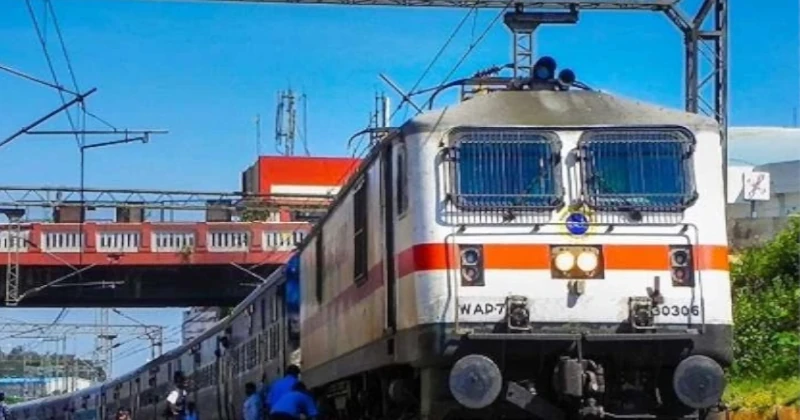
Representative Image- Indian Railways

Representative Image- Indian Railways

FacebookTwitterWhatsAppTelegramEmail

Prime Minister Narendra Modi on Thursday underscored what he described as a “fundamental shift” in the Indian Railways system, highlighting data-driven reforms that have significantly improved safety, infrastructure, and passenger experience over the last decade. Sharing an article by Union Railway Minister Ashwini Vaishnaw, the Prime Minister noted that Indian Railways is no longer undergoing incremental changes but is now setting global benchmarks through large-scale modernisation, technological adoption, and sustained policy focus.

The transformation, according to the data presented, reflects a combination of record investment, digital innovation, and systemic safety upgrades that have reshaped one of the world’s largest railway networks serving over two crore passengers daily.

89% Drop in Railway Accidents Marks Major Safety Milestone

At the heart of the railway transformation is a sharp improvement in operational safety. Over the last decade, consequential train accidents have fallen dramatically from 135 incidents in 2014-15 to just 16 in 2025-26, marking an estimated decline of nearly 89 percent.

The Consequential Accident Index, which measures accidents per unit of train running distance, has also improved significantly, dropping from 0.11 to a record low of 0.01. This reflects not just fewer accidents but also a systemic strengthening of operational protocols, signalling systems, and monitoring frameworks.

The government has attributed this progress to a “Safety First” mission, which has guided investments and infrastructure planning across zones and divisions.

Record Rise in Safety Expenditure

One of the most significant drivers of this transformation has been the unprecedented increase in safety-related spending. Annual safety expenditure has nearly tripled over the past decade, rising from approximately Rs 39,200 crore in 2013-14 to nearly Rs 1.2 lakh crore in the 2026-27 budget allocation.

These funds have been deployed across critical safety infrastructure projects, including the elimination of unmanned level crossings, expansion of rail-road connectivity, and strengthening of track and signalling systems.

Nearly 9,000 unmanned level crossings have been eliminated, significantly reducing accident risk in rural and semi-urban regions. In addition, more than 14,000 road overbridges and underpasses have been constructed to ensure safer movement of both rail and road traffic.

Technological Leap: Kavach 4.0 and Digital Railways

A major highlight of the railway transformation is the deployment of indigenous safety technology. Kavach 4.0, India’s Automatic Train Protection system, has emerged as a key milestone in reducing human error and enhancing operational safety.

As of April 2026, Kavach has been implemented across more than 1,450 route kilometres, particularly on high-density corridors such as Delhi–Mumbai and Delhi–Howrah. The system is designed to automatically control train speed and prevent collisions, significantly improving real-time safety response.

Alongside Kavach, Indian Railways has expanded its digital backbone with nearly 4,000 digitally enabled stations and around 30,000 GPS-based fog safety devices. These systems ensure smoother operations during low visibility conditions, especially in northern India where fog-related disruptions are frequent during winter months.

Modern rolling stock upgrades have also played a key role. The large-scale induction of LHB (Linke Hofmann Busch) coaches has improved passenger safety, offering better crashworthiness, ride comfort, and operational efficiency compared to older designs.

Passenger-Centric Modernisation and New Train Services

Beyond safety, the transformation has also focused on passenger convenience and speed. The introduction of Vande Bharat Sleeper trains in early 2026 marks a major expansion of India’s high-speed rail ecosystem into overnight travel.

These trains have reduced travel time significantly on key routes, including a nearly three-hour reduction on the Howrah-Guwahati corridor. This development is seen as a major step in bringing semi-high-speed travel within reach of long-distance overnight passengers.

The government has also emphasised inclusivity in railway modernisation. Nearly 70 percent of new coach production is focused on General and Sleeper class coaches, ensuring that affordability remains central to expansion plans.

Services such as Amrit Bharat and Namo Bharat trains have further strengthened regional connectivity, combining affordability with modern features such as improved seating, cleaner interiors, and enhanced safety systems.

A Structural Shift in Indian Railways

Officials and policy observers describe the ongoing transformation as a structural shift rather than a series of isolated reforms. The integration of safety systems, infrastructure expansion, and digital technologies has created a more resilient railway ecosystem.

The Prime Minister’s remarks underline that the most significant achievement of these reforms is often invisible to the public. As he noted, “Trains that do not crash do not make news,” highlighting that improved safety outcomes are now being taken for granted due to consistent performance improvements.

The Indian Railways transformation over the past decade reflects a combination of scale, technology, and sustained policy focus. With record safety investments, a sharp decline in accidents, and rapid adoption of indigenous systems like Kavach 4.0, the rail network is undergoing one of the most significant modernisation phases in its history.

As India continues to expand its infrastructure footprint, the railway system remains a central pillar of connectivity, economic growth, and national integration, increasingly aligned with global standards of safety and efficiency.


Topics: Indian Railways transformationPM Modi railways speechrailway safety IndiaKavach 4.0 systemrailway accident reduction IndiaAshwini Vaishnaw railways
ShareTweetSendShareSend
✮ Subscribe Organiser YouTube Channel. ✮
✮ Join Organiser's WhatsApp channel for Nationalist views beyond the news. ✮
Previous News

Muslim Personal law under SC scanner: Supreme Court flags limits, seeks govt reply on 1937 act challenge

Next News

How Congress leveraged 2008 delimitation to tilt Keralam’s power balance towards Malabar and erode Southern Hindu clout

Related News

No Content Available
Load More

Latest News

New Delhi, Jul 20 (ANI): Protesters seen pelting stones at Delhi Police during CJP protest at Connaught Place, in New Delhi on Monday. (Delhi Police/ANI Video Grab)

Parliament March: CJP-led anarchy- Can these really be India’s youth?

NTA debunks five viral NEET 2026 OMR claims, forbids ai-edited answer sheets

NTA clears air on five viral NEET 2026 OMR cases, warns against fake answer sheets submission

VHP Central Committee Adopts Resolutions on Family Values, Kandhamal Probe

VHP’s Central Managing Committee passes resolutions on family system, seeks action in Swami Laxmanananda murder probe

Keralam Minister moves to stop free food distribution by NGOs in government hospitals, sparks backlash

NEET 2026 | Abhay Yadav Case: NTA warns against AI generated OMR sheets & scorecards; Reiterates strict legal action

Former Aam Aadmi Party (AAP) councillor Tahir Hussian with AAP leader and former Delhi Chief Minister Arvind Kejriwal. Notably, Delhi court convicted Tahir Hussain and four others for the 2020 murder of Intelligence Bureau (IB) staffer Ankit Sharma, who was brutally killed and his body was dumped into a drain in the Chand Bagh area during anti-Hindu Delhi riots

Anti-Hindu Delhi Riots 2020: When evidence outlasted narratives

NCUI Elections: Sahakar Bharati–BJP registers historic victory; Wins 19 of 20 seats & 10 candidates elected unopposed

Representative Image

Tamil Nadu: Authorities ‘demolish’ Annadaana Satram in Thiruvannamalai; Sparks outrage from public

India's BioE3 Policy aims to build a $2.6 trillion bioeconomy by 2047 through biotechnology-driven innovation, jobs and growth

India’s Bioeconomy Revolution: How NITI Aayog’s roadmap seeks to make the country a global biotechnology leader by 2047

Tri-Services Exercise 2025 was led by the Western Naval Command of the Indian Navy along with the Southern Command of the Indian Army and the South Western Air Command of the Indian Air Force as the principal participating formations

Theatre Command: Military reforms for integrated Actions

Load More
  • Privacy
  • Terms
  • Cookie Policy
  • Refund and Cancellation
  • Delivery and Shipping

© Bharat Prakashan (Delhi) Limited.
Tech-enabled by Ananthapuri Technologies

  • Home
  • Search Organiser
  • Bharat
    • Assam
    • Bihar
    • Chhattisgarh
    • Jharkhand
    • Maharashtra
    • View All States
  • World
    • Asia
    • Africa
    • North America
    • South America
    • Europe
    • Australia
  • Editorial
  • Operation Sindoor
  • Opinion
  • Analysis
  • Defence
  • Culture
  • Sports
  • Business
  • RSS @ 100
  • Entertainment
  • More ..
    • Sci & Tech
    • Vocal4Local
    • Special Report
    • Education
    • Employment
    • Books
    • Interviews
    • Travel
    • Health
    • Politics
    • Law
    • Economy
    • Obituary
  • Subscribe Magazine
  • Read Ecopy
  • Advertise
  • Circulation
  • Careers
  • About Us
  • Contact Us
  • Policies & Terms
    • Privacy Policy
    • Cookie Policy
    • Refund and Cancellation
    • Terms of Use

© Bharat Prakashan (Delhi) Limited.
Tech-enabled by Ananthapuri Technologies