The Red Sea, Persian Gulf and the Sea of Oman form the lifeline and bedrock for global maritime trade. They are the strategic maritime chokepoints that facilitate cross continental trade. The global economic landscape stands on these maritime bridges that ensures a resilient supply chain to consolidate national priorities. And Iran threatens to block these maritime pillars of global trade in retaliation to the US Naval blockade of the Strait of Hormuz. Iran in a strategic counterplay warns to encapsulate the Red Sea, Sea of Oman and the Persian Gulf. If espoused, the geopolitical and geo-economic latitude will witness serious fissures disrupting the fundamentals of transnational maritime trade.
US tactic to pressurize Iran & Tehran’s counterplay to secure strategic deterrence
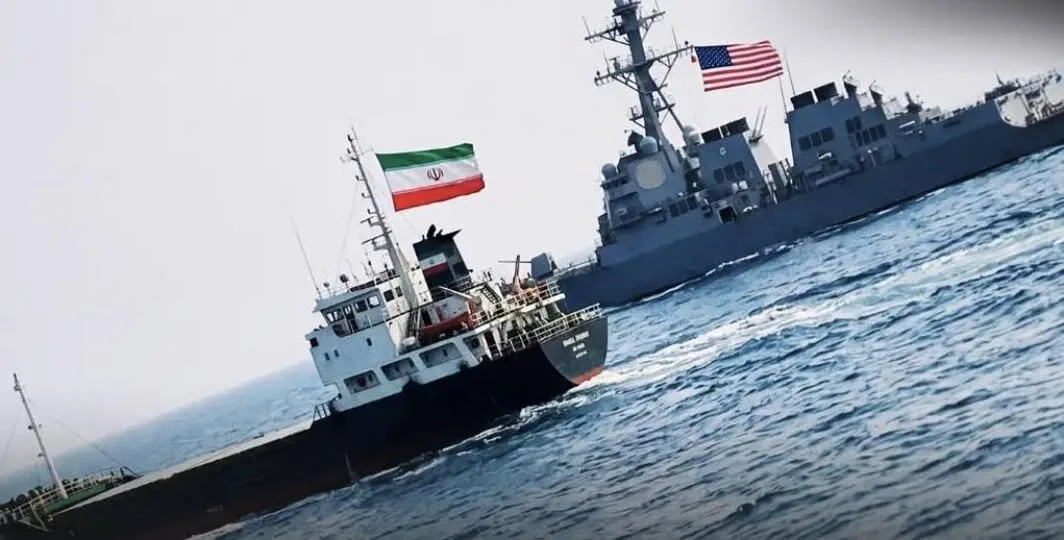
The Iranian Revolutionary Guard Corps(IRGC) has called the US Naval blockade of the Strait of Hormuz a “grave violation of its sovereignty”. In retaliation, Tehran has threatened to block critical maritime trade corridors. The Head of the Central Command of the Iran Military has exclaimed that if the US continues its naval blockade across the Strait of Hormuz and creates disruption in the movement of the commercial vessels and oil tankers of Iran, it will be a clear violation of the ceasefire. As a strong response, “the powerful armed forces of the Islamic republic will not allow any exports or imports to continue in the Persian Gulf, the Sea of Oman and the Red Sea”.
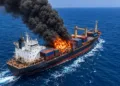
Since the war broke out between Iran and the US-Israel axis, Tehran has potentially blocked the vessels passing through the maritime passage. It has targeted the oil tankers, vessels and the seafarers especially from the adversary countries who are in the US camp, while traversing through the Strait of Hormuz. However, Tehran has been shipping its oil and other goods freely through the narrow maritime chokepoint without being prone to any bombardment or restrictions.
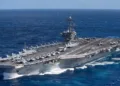
However, post the collapse of the ceasefire talks in Pakistan, US has accelerated naval blockade of the Strait of Hormuz, as a tactical measure to pressurize Iran to accept the terms of the peace negotiations. The US military is targeting the Iranian ships passing through the Strait and is directly attacking it. Apparently, the US naval blockade of the Strait of Hormuz has significantly hit the Iranian economy which is predominantly dependent on oil exports and maritime trade. The US military has thwarted all the vessels going out and coming into Iran.
Tehran has asserted that it will be disrupting trade via the Red Sea, Gulf of Oman and the Persian Gulf as a symbol of defending its sovereignty. If espoused, the decision will be a significant peril on the global maritime trade which is hitherto massively disrupted as an impact of the West Asia crisis. The Iran blockade of the Strait of Hormuz has caused major disruption to global energy flows and has adversely affected the global economy. The cascading effect of the conflict into the Red Sea and other maritime trade routes will further strain the global economic regime as it creates huge fissures in the energy supply chain and will spike energy prices.
The Iranian strategy that might disrupt global maritime trade
Iran controls a vast stretch of the Strait of Hormuz as a littoral state of the maritime passage. However, it doesn’t have a coastline with the Red Sea. Yet, the strategic posturing expressed by Tehran illustrates the intensity of the conflict. Iran threatens to block the most vital global maritime trade networks, thus escalating a sweeping disruption on global trade and security. Tehran intends to counter the US strategy of isolating Iran with the blockade of the Strait of Hormuz into a global risk by warning to halt global maritime traffic across critical sea lanes.
The US offensive on Iran is a much anticipated military escalation in Tehran. Thus, the IRGC has been preparing to this day since decades, to counter the US attack. In this direction, the IRGC Navy has built its naval capabilities to pose strong deterrence agianst the cutting edge maritime power of the United States. IRGC has developed asymmetric maritime tactics that will yield to stand firm in front of the US naval superiority. Iran has fast attack boats that are capable of swarm and swift attacks. They also have naval mines that can be covertly attached to the Iranian commercial vessels and also the drones packed with the explosives that can launch surprise attack from the coastal regions. These are indeed low-cost technology, but causes significant risk.
Iran can also take the aid of Houthis militants who have launched severe attacks on the merchant vessels and other oil tankers in the Red Sea since the Israel-Hamas conflict broke out in 2023. They have attacked vessels near Bab el-Mandeb Strait in the Red Sea, which is one of the most narrow and vulnerable maritime chokepoints in the world. Thus, Iran aims to create counter pressure or strategic deterrence against the US and other allies by threatening to block other maritime routes beyond the Strait of Hormuz.
Strategic significance of the critical maritime chokepoints
The Red Sea is responsible for 10 to 12 per cent of global trade. Moreover, Suez canal, a waterway connecting the Mediterranean Sea and the Red Sea handles 30 per cent of the global container traffic. It is a critical maritime route that connects Asia and Europe and is responsible for cross continental transhipment. It is a vital route to transport crude oil and LPG from West Asia to Europe and North America. The maritime traffic through the Red Sea generates huge revenue for countries such as UAE and Saudi Arabia. It is indeed a key pillar that handles international trade.
The Persian gulf is also a critical hub for the production and transportation of oil and gas. The Persian Gulf is encircled by Iran, Iraq, Kuwait, Saudi Arabia, Bahrain, Oman, UAE. The gulf houses 66 per cent of the world’s oil reserves and about one-third of natural gas. The Strait of Hormuz, is part of the larger Persian gulf, which is responsible for 20 to 25 per cent of global oil. On the other hand, the Gulf or Sea of Oman, is also a critical maritime chokepoint to ensure energy security. It handles 20 per cent of the world’s daily oil consumption. It is also a key maritime corridor connecting Asia, Europe and Africa, facilitating global trade.
Iran threatening to block these critical chokepoints as an impact of the US blockade of the Strait of Hormuz is thus a testament to major bottlenecks persisting in the ceasefire negotiations. The two week ceasefire announced by the Trump administration is set to end on April 22. Pakistan, the puppet mediator, is aiming for a second round of peace talks in Iran, as the initial round of negotiations collapsed in Pakistan, triggering US to espouse naval blockade. However, the military posture by both Iran and the US and continued military buildup in West Asia and across maritime corridors raises serious doubt about the solidness and continuity of the ceasefire as the geopolitical landscape dwindles in the heat of the great powerplay of West Asia with global energy and larger economic ramifications.