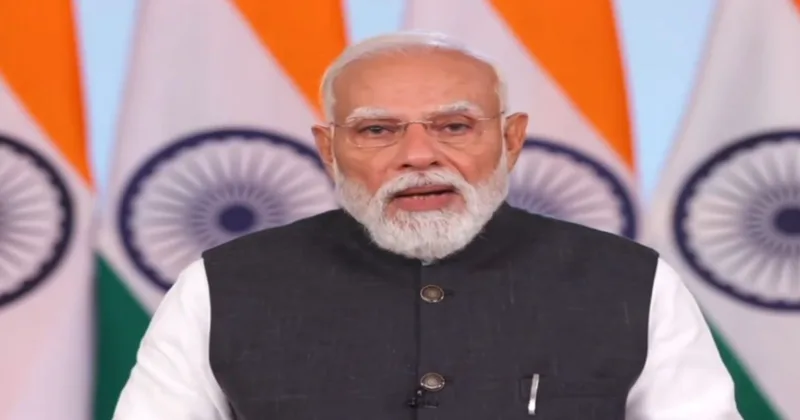
As geopolitical tensions in West Asia ripple through global markets, India has responded with a multi-layered economic strategy designed to cushion the impact of disruptions in energy, trade, and supply chains. Despite a temporary pause in hostilities between the United States and Iran, uncertainty surrounding critical routes like the Strait of Hormuz continues to influence oil prices, freight costs, and commodity flows. Recognising the cascading risks, the government led by Narendra Modi has moved swiftly to deploy targeted interventions across key sectors.
At the core of this response lies an understanding that global shocks transmit unevenly, impacting farmers, consumers, industries, and exporters in different ways. The government’s approach, therefore, has not been singular but diversified, combining fiscal support, regulatory easing, and supply-side management to maintain equilibrium across the economy.
One of the most immediate concerns has been the agricultural sector, particularly fertiliser availability and pricing. India’s heavy dependence on imports of critical inputs such as phosphoric acid, ammonia, and potash makes it vulnerable to global volatility. In response, the government has approved a substantial increase in subsidy allocation under the Nutrient Based Subsidy (NBS) scheme for the Kharif 2026 season. The outlay of Rs 41,533 crore, an increase of over 11 per cent from the previous year, signals a clear intent to shield farmers from rising input costs. By absorbing the price shock at the policy level, the government aims to ensure uninterrupted agricultural activity and protect rural incomes during a sensitive sowing period.
Parallel to this, the aviation sector—another area highly exposed to fuel price fluctuations has been offered immediate relief. With aviation turbine fuel (ATF) costs under pressure, the government has directed a 25 per cent reduction in landing and parking charges for domestic flights for a period of three months. This move, implemented through regulatory bodies overseeing airports, is expected to ease operational costs for airlines and prevent a sharp escalation in ticket prices. The intervention builds on earlier steps to cap the pass-through of fuel cost increases, reflecting a conscious effort to maintain affordability in air travel and avoid demand contraction.
Beyond sector-specific measures, the government is also preparing a broader financial safety net for businesses. A proposed Rs 2.5 lakh crore credit guarantee scheme, modelled on the pandemic-era Emergency Credit Line Guarantee Scheme, aims to ensure liquidity flows remain uninterrupted. By offering high levels of sovereign backing on loans, the scheme is expected to reduce lending risks, encourage credit expansion, and support enterprises facing cost pressures and uncertainty. Such a move is particularly significant at a time when global instability can tighten financial conditions and constrain investment.
For consumers, the most visible relief has come in the form of fuel tax reductions. With crude oil prices reacting to geopolitical tensions, the government has stepped in to limit the burden on households. Petrol excise duty has been cut significantly, while diesel excise has been reduced to zero. This intervention ensures that fluctuations in global crude prices do not fully translate into domestic retail prices, thereby protecting purchasing power and controlling inflationary pressures. The strategy reflects a balancing act, absorbing fiscal costs in the short term to preserve economic stability in the long run.
Simultaneously, the government has prioritised domestic fuel availability by imposing export levies on key petroleum products. Diesel and ATF exports now attract additional duties, discouraging overseas sales and ensuring that domestic supply remains adequate. This move becomes particularly crucial in times of global supply constraints, when exporting refined products could lead to domestic shortages or price spikes.
India’s refining and energy distribution systems have also been operating at heightened capacity to ensure uninterrupted supply. Refineries are running at high utilisation levels, supported by adequate crude inventories. Domestic LPG production has been scaled up, with millions of cylinders delivered to households, while commercial LPG allocation has been increased significantly. These measures collectively aim to stabilise energy availability across both domestic and industrial consumption.
In addition to conventional fuels, the government has strengthened the supply of alternative energy sources such as piped natural gas (PNG) and compressed natural gas (CNG). By ensuring full-capacity supply and expanding network coverage, the policy reduces dependence on volatile liquid fuels and provides consumers with more stable and affordable energy options. The rapid addition of new PNG connections further underscores the push toward long-term energy resilience.
Exporters, another critical segment affected by global disruptions, have been given a comprehensive relief package. With shipping routes facing uncertainty and freight costs rising, the government has introduced multiple measures to sustain trade momentum. Special Economic Zone (SEZ) units have been allowed to divert a portion of their output to the domestic market at concessional duties, providing an alternative revenue stream. At the same time, export incentive schemes such as RoDTEP have been extended, ensuring continued reimbursement of embedded taxes.
Financial relief has also been extended through the banking system, with the Reserve Bank of India easing credit timelines and payment norms for exporters. By extending the period for export credit and allowing longer timelines for realisation of proceeds, the RBI has provided breathing space to businesses dealing with logistical delays and uncertain demand conditions. These measures help maintain liquidity and prevent disruptions in export cycles.
To further support manufacturing, the government has temporarily waived customs duties on key petrochemical inputs. These feedstocks are essential for industries ranging from plastics and textiles to pharmaceuticals and automotive components. By reducing input costs and ensuring availability, the policy aims to prevent production slowdowns and maintain industrial output despite global supply constraints.
Taken together, these interventions reflect a comprehensive and pre-emptive strategy rather than a reactive one. The government’s approach acknowledges that while geopolitical conflicts may originate far from India’s borders, their economic consequences are deeply interconnected with domestic realities. By acting across multiple fronts, agriculture, energy, aviation, finance, and trade, India is attempting to insulate itself from external shocks while sustaining growth momentum.
The coming weeks will test the effectiveness of these measures, particularly if global tensions persist or escalate. However, the current policy response indicates a clear shift toward proactive economic management, where stability is maintained not through isolated decisions but through coordinated, system-wide interventions.