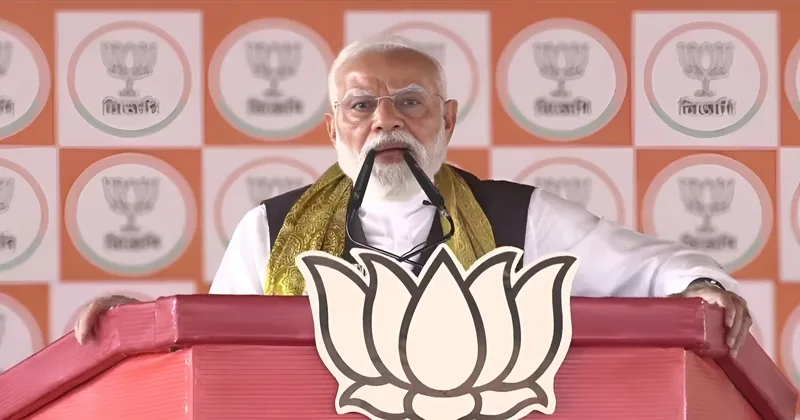
Haldia: Prime Minister Narendra Modi, on April 9, 2026, launched a sharp attack on the Trinamool Congress government in West Bengal, accusing it of misrule and urging voters to remove it from power in the upcoming Assembly elections.
Haldia’s energy reflects a strong wave for change across West Bengal. People are placing their trust in the BJP. @BJP4Bengal https://t.co/uNp6tEPlf3
— Narendra Modi (@narendramodi) April 9, 2026
Addressing a rally in Haldia, a stronghold of Leader of Opposition Suvendu Adhikari, PM Modi alleged that the current administration led by Chief Minister Mamata Banerjee was “pulling Bengal backwards” while the rest of the country progresses.
The Prime Minister outlined six key guarantees, promising that a BJP government would replace what he described as a culture of “bhoy” (fear) with “bharosa” (trust), and ensure accountability among public servants. He also pledged to reopen cases of corruption and crimes against women allegedly suppressed by the ruling party, asserting that those found guilty would face strict action.
PM Modi said welfare benefits would be delivered only to genuine citizens and warned that “infiltrators” would not be allowed to remain in the country. He further promised implementation of the 7th Pay Commission for state government employees, teachers, and related sectors if the BJP comes to power.
Targeting the state government’s development record, he accused it of stalling progress and undermining opportunities for youth by damaging private sector growth and allegedly selling government jobs for money. He argued that investment thrives in an environment of trust, which the BJP would seek to establish.
The Prime Minister also criticised the ruling party over what he called religion-based reservation policies aimed at vote-bank politics. He claimed that a strong public turnout at the rally, despite bad weather, signalled a growing desire for political change in the state.
Referring to the 2021 Assembly elections, PM Modi recalled Adhikari’s victory over Banerjee in Nandigram and expressed confidence that a similar outcome could be seen in Bhabanipur, where the two leaders are now contesting.
Advocating for a “double-engine government,” he said West Bengal would benefit more if the state and central governments worked in alignment. He also highlighted plans to boost the fisheries sector, promising to make the state self-reliant while pointing to increased central support and a dedicated ministry for fisherfolk welfare.