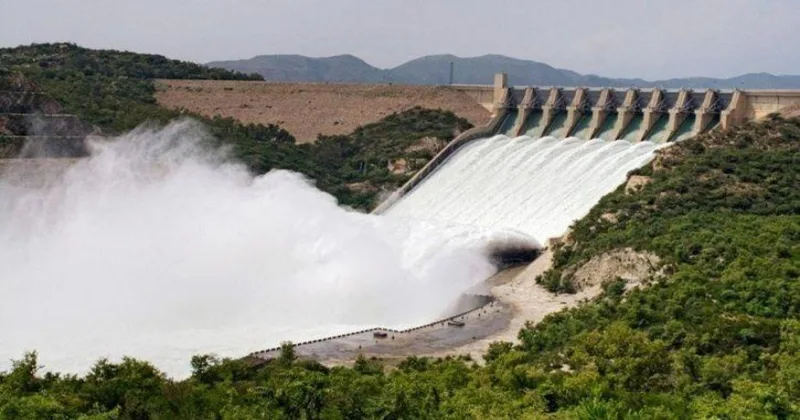
Chief Minister Omar Abdullah has said that a comprehensive roadmap for hydropower for the next decade has been drawn and is under implementation. The Union Territory(UT) of Jammu & Kashmir is on a fast track to triple its installed hydropower capacity by 2035 and approximately in excess of 11,000 MW., according to official estimates presented to him by the Power Development Department (PDD) of which he is the minister in charge.
“The roadmap includes 3,063.5 MW from six under-construction hydroelectric projects and 4,507 MW from eight projects in the tendering, award, DPR or clearance stages. An additional 100-150 MW is expected to come from private sector projects during this period”, he said in reply to a written question of MLA Javaid Iqbal in the Legislative Assembly a couple of days ago.
He said that in the backdrop of the Indus Waters Treaty (IWT) being kept in abeyance by the government, construction on ongoing projects has accelerated and efforts are underway to identify potential storage projects to maximize the remaining hydropower potential. The UT, he said, possesses an estimated hydropower potential of about 18,000 MW, of which nearly 15,000 MW has been identified and that it is on a fast track to triple its installed capacity to around 11,000 MW by 2035.
Power potential
“J&K has an estimated hydropower potential of around 18,000 MW out of which around 15,000 MW has been identified,” Omar Abdullah said. In all, only around one-fourth(or 24 per cent), of this potential, 3,540.15 MW, has been harnessed so far. This includes 13 projects with an aggregate capacity of 1,197.4 MW in the UT sector, six projects totaling 2,250 MW in the Central sector, and 12 projects with a combined capacity of 92.75 MW in the Independent Power Producer(IPP) or private sector.
Consequently, the total installed hydropower capacity of Jammu and Kashmir is projected to reach around 11,000 MW within the next decade, he stressed. At present, the peak demand of J&K stands around 3,000 MW or around that. Within the next decade, after the completion of several ongoing projects, it will produce power more than three times its requirement. From a net importer of power, it will become a net exporter.
Water usage charge
Apart from the revenue generated by various power plants, the enhanced production will also bring thousands of crores of rupees to the UT government by way of water usage charges. For eample, by a conservative estimate, Salal power project of 690 MW capacity, may have contributed more than Rs 10,000 crore to the revenue of the UT, one official posted at Salal said.
On the existing operational capacity, UT-owned hydropower projects contribute 1,197.4 MW, including major plants such as Baglihar-I and II(450 MW each), Lower Jhelum(105 MW) and Upper Sindh projects. Central sector projects operated by NHPC account for 2,250 MW, including Salal(690 MW), Uri-I(480 MW), Dul Hasti(390 MW), Kishenganga(330 MW) and Uri-II(240 MW), according to the papers presented in the Legislative Assembly. Private sector projects contribute 92.75 MW through smaller installations across districts such as Doda, Poonch, Bandipora, Baramulla, Ganderbal, Budgam, Anantnag and Ramban.
Pakal Dul Project
If all goes well in the coming months and no disruptions are caused during rainy season, the UT may see completion of 1,000 MW(250×4) Pakal Dul project located north of Kishtwar town. The officials associated with the project hoped that by December 2026, or a couple of months later, this project will start commercial power production. It was started in Feburary 2018 and was expected to be completed by the end of 2025. Unforeseen circumstances have already delayed it but the pace of work has picked up after Union Power Minister ML Khattar’s visit some months ago.
Mahura Project
Regarding Mahura(also called Mohra), it is being said that its capacity of 10.5 MW will also be utilised fully once it is revived. It is considered a heritage project, one of the first projects anywhere in India, started over 120 years ago. Built in 1905 during Maharaja Pratap Singh’s rule, this power plant was one of Asia’s first hydroelectric projects. At that time, most big cities in India had no electricity but Srinagar city was provided electricity connections due to Mahura. Over time, due to a number of factors, it was neglected and stopped working altogether.
The project had suffered some damages in 1959 floods but was resurrected thereafter. It was extensively damaged in 1992 again and the government failed to revive it after then. It is actually a project the 10 km canal of which comprises wooden deodar logs shaped like an aquaduct. This is a most striking feature of this power project and theft of the wooden structures has created problems in its revival. The go-ahead for its revival was given by the government on February 9 this year.
Meanwhile, high aggregate technical and commercial losses, estimated at around 45 per cent, are aggravating the power crisis of J&K. According to PDD officials, nearly half of the electricity supplied either goes unbilled or remains unpaid, severely affecting revenue recovery and forcing the government to bridge the deficit through budgetary support.