
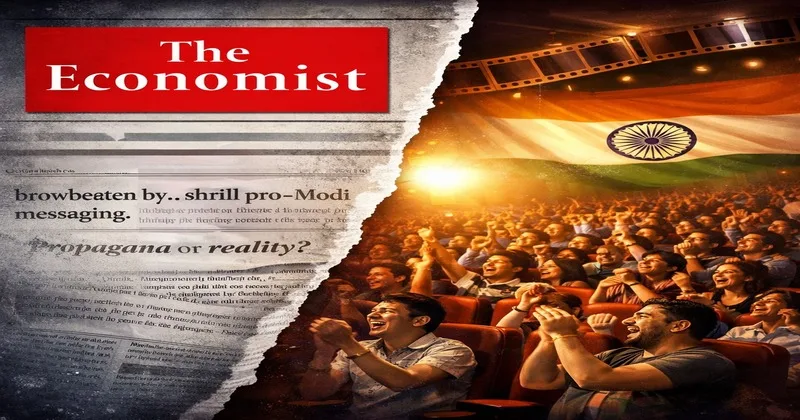
The Economist review of Dhurandhar backfires
June 10, 2026
  • Read Ecopy
  • Circulation
  • Advertise
  • Careers
  • About Us
  • Contact Us
Android AppiPhone AppArattai
Organiser
  • ‌
  • Bharat
    • Assam
    • Bihar
    • Chhattisgarh
    • Jharkhand
    • Maharashtra
    • View All States
  • World
    • Asia
    • Europe
    • North America
    • South America
    • Africa
    • Australia
  • Editorial
  • International
  • Opinion
  • RSS @ 100
  • More
    • Op Sindoor
    • Analysis
    • Sports
    • Defence
    • Politics
    • Business
    • Economy
    • Culture
    • Special Report
    • Sci & Tech
    • Entertainment
    • G20
    • Azadi Ka Amrit Mahotsav
    • Vocal4Local
    • Web Stories
    • Education
    • Employment
    • Books
    • Interviews
    • Travel
    • Law
    • Health
    • Obituary
  • Subscribe
    • Subscribe Print Edition
    • Subscribe Ecopy
    • Read Ecopy
  • ‌
  • Bharat
    • Assam
    • Bihar
    • Chhattisgarh
    • Jharkhand
    • Maharashtra
    • View All States
  • World
    • Asia
    • Europe
    • North America
    • South America
    • Africa
    • Australia
  • Editorial
  • International
  • Opinion
  • RSS @ 100
  • More
    • Op Sindoor
    • Analysis
    • Sports
    • Defence
    • Politics
    • Business
    • Economy
    • Culture
    • Special Report
    • Sci & Tech
    • Entertainment
    • G20
    • Azadi Ka Amrit Mahotsav
    • Vocal4Local
    • Web Stories
    • Education
    • Employment
    • Books
    • Interviews
    • Travel
    • Law
    • Health
    • Obituary
  • Subscribe
    • Subscribe Print Edition
    • Subscribe Ecopy
    • Read Ecopy
Organiser
  • Home
  • Bharat
  • World
  • Operation Sindoor
  • Editorial
  • Analysis
  • Opinion
  • Culture
  • Defence
  • International Edition
  • RSS @ 100
  • Magazine
  • Read Ecopy
Home Bharat

The Economist’s Misreading of Bharat: A response to its ‘Dhurandar’ critique

In an era where storytelling increasingly shapes global perceptions, a recent review of the film Dhurandar by The Economist has ignited a wider debate that goes far beyond cinema. At the heart of the controversy lies a deeper question: does criticism of a film justify sweeping assumptions about the people who watch it? The tone and framing of the review have drawn scrutiny for appearing dismissive, raising concerns about whether sections of Western commentary continue to view Indian society through an outdated and patronising lens

Siddhartha DaveSiddhartha Dave
Apr 5, 2026, 05:30 pm IST
in Bharat, World, Analysis, Entertainment
Follow on Google News
FacebookTwitterWhatsAppTelegramEmail

In a world where narratives shape geopolitics as much as policies do, even a film review can become a site of ideological contestation. A recent critique by The Economist on the Indian film Dhurandar is one such example—not because it criticises cinema, but because it appears to question the very intellectual agency of the Bhartiya audience.

Criticism, in any vibrant democracy, is welcome. Debate is essential to the health of public discourse. However, what raises concern in this instance is not the act of critique, but its tone—one that many would interpret as dismissive, patronising, and rooted in a colonial hangover that continues to shape sections of Western commentary on Bharat.

The Underlying Assumption: Are Indians “Browbeaten”?

At the heart of the article lies a troubling assertion—that Indians cheering for Dhurandar are not engaging with storytelling, but merely responding to “shrill pro-Modi messaging.” This is not just a critique of a film; it is a sweeping generalisation about millions of viewers.

Such a claim assumes that Bhartiya citizens lack the discernment to differentiate between fiction and reality. It suggests that public opinion in Bharat is manufactured rather than formed—a notion that undermines the democratic consciousness of one of the world’s most politically aware societies.

This is where the problem lies. The issue is not disagreement with a film’s narrative, but the implicit dismissal of an entire nation’s intellectual autonomy.

Selective Sensitivity: Nationalism in the West vs Bharat

The critique becomes even more paradoxical when viewed in a global cinematic context.

Western Spy & War Narratives

James Bond
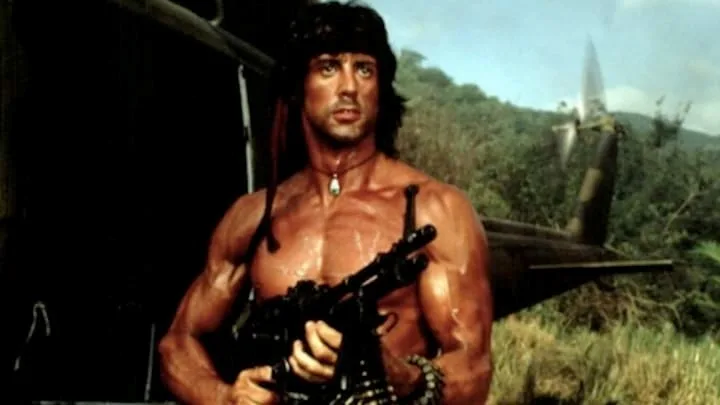
Rambo
American-Sniper

Western cinema has long celebrated nationalism, military power, and retaliatory justice. Films like James Bond, Rambo, American Sniper, and Zero Dark Thirty are not only accepted but often glorified as patriotic storytelling.

The character of James Bond, for instance, represents a state-sanctioned agent operating globally, often employing violence to protect national interests. Yet, these narratives are rarely labelled as “propaganda” in mainstream Western discourse.

Why then does a Bhartiya film, dealing with terrorism and national security, attract a fundamentally different standard of scrutiny?

The Context That Cannot Be Ignored

To understand why Dhurandar resonates with audiences, one must look beyond the screen and into Bharat’s lived reality.

India’s Tryst with Terrorism
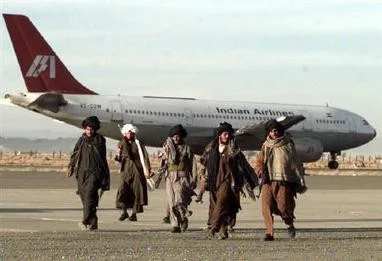
IC-814 Hijack
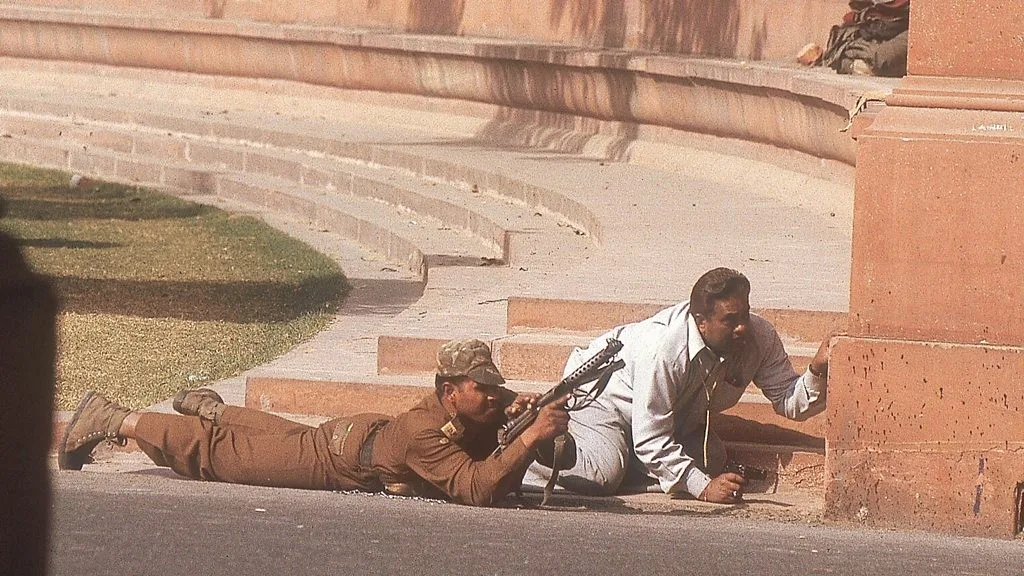
Security personnel at the time of 2013 parliament attack
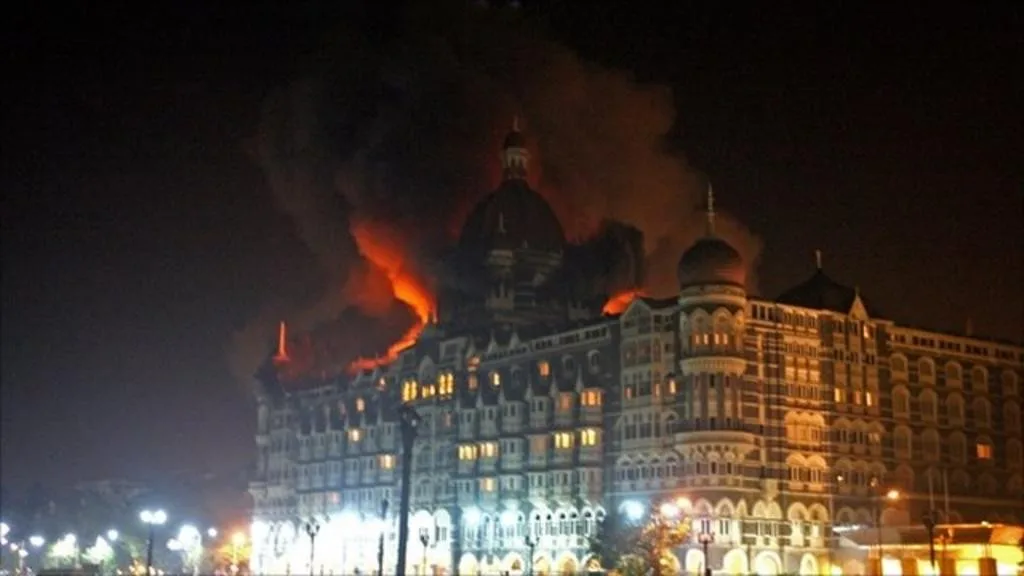
Taj-Mahal burning at the time of Mumbai terror attack on November 26, 2008

Bharat’s encounter with terrorism is not theoretical—it is deeply experiential. From the IC 814 hijacking to the 2001 Indian Parliament attack, and the devastating 2008 Mumbai attacks, the nation has endured repeated assaults on its sovereignty and civilian life.

These are not distant geopolitical abstractions. They are events etched into national memory—stories of loss, resilience, and the unending quest for security.

When a film portrays retaliation against terrorism, it does not manufacture sentiment; it reflects it. The audience response is not the result of indoctrination, but of lived experience.

Misreading Symbolism: Leadership and national security

The review’s reference to visuals of Narendra Modi—including his 2014 swearing-in and the 2016 demonetisation announcement—as religious symbolism further illustrates a misinterpretation of context.

These events are political and economic milestones, not religious markers. Their inclusion in a cinematic narrative tied to national security reflects the broader leadership framework within which such decisions are perceived, not an attempt to create religious imagery.

To interpret them otherwise is to impose an external lens that may not align with Bhartiya socio-political realities.

Cinema as civilisational expression

Cinema, at its core, is a reflection of the collective psyche of a society. Nations emerging from trauma often turn to storytelling that emphasises strength, resilience, and justice.

Bharat is no exception.

The success of Dhurandar—reportedly nearing Rs 1,500 crore within weeks—is not merely a commercial phenomenon. It is a cultural moment. It signifies a narrative that has struck a chord with the people, echoing their concerns, aspirations, and memories.

To reduce this resonance to “propaganda” is to overlook the deeper currents shaping public sentiment.

Also Read: From Dialogue to Deployment: Strategic outcomes of the India AI Summit

The Larger Question: Who controls the narrative?

This episode raises a broader and more significant question: Who gets to define what constitutes legitimate storytelling?

For decades, global narratives—especially in media and academia—have been disproportionately shaped by Western institutions. While this has brought certain advantages, it has also led to a persistent asymmetry, where non-Western perspectives are often scrutinised through a lens of scepticism.

The critique by The Economist appears to fit into this pattern—where Bhartiya narratives are not merely analysed but judged against standards that may not fully account for local realities.

A moment for introspection

The issue at hand is not whether Dhurandar is beyond criticism. No film is. The question is whether criticism respects the audience it addresses.

When a review crosses the line from critique to condescension, it risks revealing more about the reviewer than the subject itself. Perhaps it is time for sections of the Western media to reassess not just their conclusions, but their frameworks. Bharat today is not a passive recipient of narratives—it is an active creator of them.

And as its voice grows stronger, so too will its insistence on being understood on its own terms, not through inherited prejudices. In the end, the response to Dhurandar is not just about a film. It is about a civilisation asserting its right to tell its own stories—and to be heard with respect.

Topics: Mumbai terror attackThe EconomistDhurandhar
Siddhartha Dave
Siddhartha Dave
Siddhartha Dave is an alumnus of the United Nations University in Tokyo and a former Lok Sabha Research Fellow. He writes on foreign affairs and national security. [Read more]
ShareTweetSendShareSend
✮ Subscribe Organiser YouTube Channel. ✮
✮ Join Organiser's WhatsApp channel for Nationalist views beyond the news. ✮
Previous News

From Tragedy to Triumph: Odisha’s Payal Nag wins gold, redefines para-archery history in Bangkok

Next News

Rescuing Citizens from War Zones: India’s strategic resolve under Prime Minister Narendra Modi

Related News

Representative Image

What Have the Mughals Ever Done for India? A point-by-point rebuttal to The Economist’s selective narrative

Dhurandhar: The Revenge; Not Propaganda, but mirror

The Dhurandhar Strike: Unmasking the selective ‘propaganda’ outrage and the liberal hypocrisy in Bharat’s cinema

National Investigation Agency told to fast-track chargesheet against Tahawwur Hussain Rana in the Mumbai Terror Attack Case (Image generated by AI)

26/11 Mumbai Terrorist Attack Case: Delhi Court directs NIA to expedite supplementary chargesheet against Tahawwur Rana

Celebrating true Dhurandhars

Former chairperson of the Tata Group, Ratan Tata

26/11 Mumbai Terror Attack: Remembering Ratan Tata, who stood rock solid behind his people & rebuilt the Taj Hotel

Load More

Latest News

New update in Nashik TCS Coporate Jihad Case as accused were asked to read a book titled The Life of Muhammad

Nashik TCS Corporate Jihad: Investigators probe claims victims were asked to read book ‘The Life of Muhammad’

MEA hails 12 years of Modi government

MEA celebrates PM Modi’s 12 years in office, says India “witnessed remarkable transformation” in foreign policy

Hawkers protest in West Bengal

The Left’s Selective Morality: From Sainbari to Hawker protests

Odisha CM Mohan Charan Majhi and Union Minister of Law and Justice Arjun Ram Meghwal along with other dignitaries on the stage on the occasion of completion of 12 years of the Central Government

PM Modi’s 12-years of governance marks era of transformation, growth & global recognition: Odisha CM Mohan Majhi

Modi govt clears Rs 13,000 Crore Great Nicobar Airport Project (This is an AI generated image)

India’s strategic move in Great Nicobar: Rs 13,000 crore airport to double strength in the Indian Ocean

Redistricting efforts across the United States continue to redefine electoral boundaries and congressional competition before the 2026 midterms.

America’s electoral map shifts ahead of 2026 Midterms; Courts back redistricting push

India Deploys 12 Nuclear Warheads: Heralds doctrinal shift to script strategic deterrence against multi-front threat

J&K: Zojila tunnel clears key hurdle; Signals new era of connectivity for Ladakh

How Cockroach politics is hollowing out Bharatiya democratic culture

RSS centenary year is a time for renewed resolve and greater commitment to nation-building: Dr Mohan Bhagwat

Load More
  • Privacy
  • Terms
  • Cookie Policy
  • Refund and Cancellation
  • Delivery and Shipping

© Bharat Prakashan (Delhi) Limited.
Tech-enabled by Ananthapuri Technologies

  • Home
  • Search Organiser
  • Bharat
    • Assam
    • Bihar
    • Chhattisgarh
    • Jharkhand
    • Maharashtra
    • View All States
  • World
    • Asia
    • Africa
    • North America
    • South America
    • Europe
    • Australia
  • Editorial
  • Operation Sindoor
  • Opinion
  • Analysis
  • Defence
  • Culture
  • Sports
  • Business
  • RSS @ 100
  • Entertainment
  • More ..
    • Sci & Tech
    • Vocal4Local
    • Special Report
    • Education
    • Employment
    • Books
    • Interviews
    • Travel
    • Health
    • Politics
    • Law
    • Economy
    • Obituary
  • Subscribe Magazine
  • Read Ecopy
  • Advertise
  • Circulation
  • Careers
  • About Us
  • Contact Us
  • Policies & Terms
    • Privacy Policy
    • Cookie Policy
    • Refund and Cancellation
    • Terms of Use

© Bharat Prakashan (Delhi) Limited.
Tech-enabled by Ananthapuri Technologies