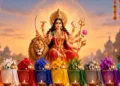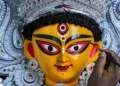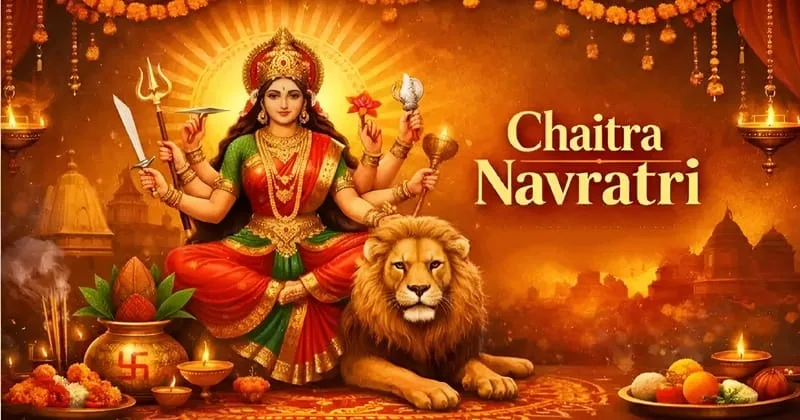
Chaitra Navratri is one of the most significant Hindu festivals and marks the beginning of the Hindu lunar New Year in many parts of Bharat. This year, Chaitra Navratri is celebrated from March 19 to 27, marking the powerful victory of righteousness over unrighteousness. From Shailputri to Siddhidatri, each of the nine divine forms of Maa Durga inspires strength, courage, and balance. The festival is further sanctified through special colours and offerings dedicated to each goddess across these nine holy days. Ultimately, this celebration serves as a profound symbol of new beginnings and the influx of positive energy into our lives.
The sacred festival of Chaitra Navratri, observed from the Pratipada of the Shukla Paksha, marks the glorious awakening of the Primordial Shakti to restore Dharma on Earth. According to our ancient scriptures, when the demon Mahishasura’s tyranny became unbearable, and his ego challenged the very foundations of the cosmos, the Divine Mother manifested her nine forms – the Navadurga – to protect the virtuous. Imbued with the collective radiance and celestial weapons of the Devas, Maa Durga fought a righteous war for nine days, establishing the eternal tradition of seeking her protection to destroy evil and adharma.
Chaitra Navratri also heralds the Nav Samvatsar, the authentic Indian New Year, which resonates with the very soul of Bharat’s civilisational identity. This auspicious day commemorates the moment Brahma commenced the creation of the universe and honours the legacy of the legendary Raja Vikramaditya, whose reign stands as a symbol of Hindu pride and sovereignty. It is a time of cosmic transition, where nature sheds the old to embrace the vibrant energy of spring, aligning our spirits with the divine rhythm of the universe.
The spiritual peak of this festival is reached on the ninth day, celebrated as Ram Navami. This is the holy day when Maryada Purushottam Bhagwan Shri Ram – the ultimate embodiment of righteousness and the ideal King – incarnated on this earth to establish Ram Rajya. His birth during the Chaitra Navratri underscores the deep connection between the worship of Shakti and the establishment of a just, Dharmic social order.
In essence, Chaitra Navratri is a call to reconnect with our profound cultural roots and ancestral traditions. It is a period for every devotee to invoke the warrior spirit of Maa Durga and the unwavering principles of Shri Ram, fostering a sense of national character, spiritual discipline, and the resolve to protect our timeless heritage. As we offer our prayers, we seek the blessings of the Divine Mother for a prosperous, strong, and culturally vibrant Bharat.
The Four Navratris of the Hindu Calendar
The sacred Puranas prescribe the celebration of Navratri four times a year, falling in the holy months of Chaitra, Ashadha, Ashwin, and Magha. While the Chaitra and Ashwin Navratris are widely celebrated by devotees to invoke divine blessings, the other two are dedicated to the esoteric path of Tantra-Mantra sadhana. Consequently, these “Gupt” Navratris hold significance primarily for spiritual seekers on the path of intense ritual practice rather than the general household tradition.
The Divine Vahana: The Secret of Maa Durga’s Doli
According to the sacred Devi Bhagavata Purana, the specific vehicle (Vahana) upon which Maa Durga arrives is determined by the day of the week on which Navratri begins. This year, as the holy festival commences on a Thursday, the Mother of the Universe graces us by arriving on a Doli (Palanquin), while her departure shall be marked by the majestic Elephant.
The Significance of the ‘Raudra’ Samvatsar 2026
Spiritual scholars and astrologers identify this new Hindu New Year as the ‘Raudra Samvatsar.’ In this cosmic cycle, the benevolent Brihaspati (Jupiter) serves as the King, while the energetic Mangal (Mars) takes the role of the Minister. This alignment suggests a year of intense spiritual transformation and the need for disciplined action to maintain global harmony and balance.
The Celestial Year of Seventy Auspicious Unions
The Raudra Samvatsar heralds a season of divine grace, offering seventy sacred windows for the solemnization of marriage. As the Shehnai resonates across the land, these Muhurtas align the stars to bless new unions with longevity and spiritual harmony. The cosmic calendar distributes these auspicious days as follows: 7 in April, 7 in May, 10 in June, 10 in July, 4 in November, 7 in December, 10 in January, 8 in February, and 6 in March.
The Mystery of the Thirteenth Month
This year holds a unique spiritual significance as it expands into a thirteen-month cycle. Due to the occurrence of an Adhik Maas (Intercalary Month) within the holy month of Jyeshtha, the cosmic rhythm grants us an extra period for prayer, penance, and purification. This rare alignment makes the year a profound journey of time, allowing devotees an extended opportunity to connect with the Divine.
Navratri Day 1: The Descent of Maa Shailputri – The Daughter of the Mountains
The spiritual odyssey of Navratri begins with the adoration of Maa Shailputri, the first manifestation of the Divine Mother. Her journey is a testament to the eternal cycle of sacrifice and rebirth, rooted in the sacred memory of Maa Sati. In a bygone era, the patriarch King Daksha organised a grand Yagna, inviting all celestial beings except his own daughter, Sati, and her consort, Lord Shiva. Driven by a daughter’s longing, Sati arrived at the sacrificial grounds despite Mahadev’s wise counsel. There, witnessing the calculated insult to her husband, her heart shattered in grief. In a supreme act of self-sanctification, she surrendered her life to the sacrificial fires. From the remnants of her earthly form, the sacred Shaktipeeths were established across Bharat.
Sati then took birth as the daughter of Himavat, the King of the Himalayas, emerging as Shailputri. Seated majestically upon a bull (Vrisharudha), holding a trident (Trishul) and a lotus, she represents the absolute peak of consciousness and the grounding strength of the Earth. Her story whispers a profound truth: every painful ending is but the seed of a powerful new beginning.
Sacred Mantra: Om Sham Shailputri Devyai Namah
Divine Hue: Yellow, symbolising the radiance of joy, vital energy, and the dawning of positivity.
Holy Offering (Bhog): Pure Ghee, offered to invoke physical vitality and spiritual clarity.
Navratri Day 2: The Penance of Maa Brahmacharini – The Embodiment of Resolve
On the second day, the cosmos vibrates with the intense energy of Maa Brahmacharini, the goddess of asceticism and unwavering determination. Born again in the house of the Mountain King, her heart remained anchored in the pursuit of Lord Shiva. Guided by the wisdom of Devarshi Narada, she embarked upon a thousand-year-long Tapasya (penance) that defies human imagination. She survived on fruits and flowers, then transitioned to fallen leaves, and eventually renounced even water and air (Aparna), standing resolute amidst scorching sun, torrential rains, and biting frost.
Though her physical form grew frail, her internal spiritual fire only intensified, earning her the name Brahmacharini—she who moves within the Brahman (Absolute Reality). Her life is the ultimate blueprint for the modern seeker: that through disciplined devotion, patience, and an unbreakable will, no goal in the three worlds remains unattainable. She blesses her devotees with the power to stay true to their path, no matter the obstacles.
Divine Hue: Green, reflecting the essence of peace, spiritual growth, and the flourishing of the soul.
Holy Offering (Bhog): Sugar (Shakkar), offered to the Mother to bestow longevity, auspiciousness, and the sweetness of divine grace.
Navratri Day 3: The Emergence of Maa Chandraghanta – The Destroyer of Terror
On the third day of the sacred Navratri, we invoke the golden aura of Maa Chandraghanta, the embodiment of divine courage and justice. According to the ancient Puranas, the demon Mahishasura had usurped the throne of Indra, casting a shadow of fear over the celestial realms. In response, the combined effulgence of the Trinity—Brahma, Vishnu, and Mahesh—manifested as this warrior goddess. Adorned with a crescent moon shaped like a bell (Ghanta) upon her forehead, she was armed by the Gods themselves: Lord Shiva bestowed his Trident, and Lord Vishnu his Sudarshan Chakra. With the thunderous sound of her bell, she paralysed the demonic forces, eventually slaying Mahishasura and restoring Dharma. She teaches us that true peace is maintained through the strength to confront evil.
Divine Hue: Grey, symbolising the inner balance, resilience, and stability required to navigate life’s battles.
Holy Offering (Bhog): Milk or milk-based sweets, offered to dissolve the sorrows of life and usher in a reign of tranquil joy.
Navratri Day 4: The Smile of Maa Kushmanda – The Source of the Cosmos
The fourth day belongs to Maa Kushmanda, the Primordial Energy (Adishakti) who birthed the universe. It is said that before time began, the cosmos was a void of pitch-black silence. With a subtle, divine smile, Maa Kushmanda sparked the first ray of light, manifesting the entire universe from her womb. Residing in the core of the Sun (Surya Loka), she possesses the brilliance of a million suns, fueling the celestial bodies with her heat and light. As the ‘Goddess of the Cosmic Egg,’ she represents the creative power within us all. Her worship purifies the intellect and grants the visionary strength to create beauty out of darkness.
Divine Hue: Orange, reflecting the vibrant heat of the sun, enthusiasm, and the fire of creation.
Holy Offering (Bhog): Malpua, offered to enhance one’s wisdom and the power of decisive action.
Navratri Day 5: The Grace of Maa Skandamata – The Mother of the Commander
On the fifth day, we surrender to the maternal protection of Maa Skandamata, the Mother of Lord Skanda (Kartikeya). When the demon Tarakasura sought to destabilise the heavens, knowing only a son of Shiva could defeat him, Maa Parvati took this form to nurture and guide the young warrior-god for the ultimate battle. Seated on a lion with the infant Skanda in her lap, she represents the perfect harmony of nurturing love and fierce protection. To worship her is to receive the blessings of a mother who prepares her children to face the world’s challenges with valour. She is the granter of mental peace and the guardian of family bonds.
Divine Hue: White, the colour of absolute purity, serenity, and the selfless nature of a mother’s love.
Holy Offering (Bhog): Bananas, offered to bring sweetness, health, and prosperity to the household.
Navratri Day 6: The Radiance of Maa Katyayani – The Warrior Daughter
The sixth day celebrates Maa Katyayani, the fierce daughter of Sage Katyayan, who manifested to answer the intense penance of the righteous. Clad in a golden glow that rivals the rising sun, she possesses four arms: two bestowing blessings (Varada and Abhaya mudras) and two wielding a sword and a lotus. Riding a majestic lion, she is the patron goddess of those seeking to overcome internal and external obstacles. Historically, the Gopis of Braj worshipped her to attain Lord Krishna as their husband, making her the presiding deity for fulfilling the deepest desires of the heart. She represents the divine spark that ignites when devotion meets disciplined action.
Divine Mantra: Om Devi Katyayanyai Namah
Divine Hue: Yellow, her most beloved colour, representing the illumination of knowledge and the brilliance of the soul.
Holy Offering (Bhog): Pure Honey, offered to enhance one’s personal magnetism, vital energy, and spiritual sweetness.
Navratri Day 7: The Ferocity of Maa Kalaratri – The Destroyer of Darkness
On the seventh night, the cosmos resonates with the intense energy of Maa Kalaratri, the most formidable form of the Divine Mother. According to our sacred chronicles, when the demon Raktabija terrorised the worlds, the Gods sought refuge in Mahadev. Raktabija possessed a unique boon: every drop of his blood that touched the earth birthed another powerful clone of himself. To end this cycle of adharma, Maa Parvati manifested as Kalaratri—dark as the night, with dishevelled hair and a fearless aura. In the great battle, as she struck the demon, she consumed his blood before it could touch the ground, ensuring his absolute end. Her fierce form serves as a shield for the righteous, granting them Abhaya (fearlessness) and removing the darkness of ego and negativity from their lives.
Divine Mantra: Om Aim Hreem Kreem Kalaratrai Namah
Divine Hue: Royal Blue, representing boundless confidence, inner strength, and the vastness of the sky.
Holy Offering (Bhog): Jaggery (Gur), offered to dissolve negative energies and bring the sweetness of liberation to the soul.
Navratri Day 8: The Radiance of Maa Mahagauri – The Purity of Devotion
The eighth day, celebrated as Ashtami, is dedicated to Maa Mahagauri, the symbol of profound peace and crystalline purity. Her story is one of ultimate penance; to attain Lord Shiva as her consort, she performed such rigorous Tapasya that her body became covered in the dust and soil of the elements, turning her complexion dark. Pleased by her unwavering resolve, Mahadev accepted her and bathed her in the sacred waters of the Ganga. The divine river washed away the earthly layers, revealing a form so radiant and white that she was named Mahagauri. Seated upon a white bull and clad in white garments, she represents the soul’s journey from the grime of worldly attachments to the brilliance of spiritual enlightenment.
Main Worship Verse: Sarva Mangala Mangalye Shive Sarvartha Sadhike…
Divine Hue: Pink, reflecting the essence of universal love, compassion, and the blooming of the heart.
Holy Offering (Bhog): Coconut, offered to ensure the fulfilment of righteous desires and the clarity of the mind.
Navratri Day 9: The Perfection of Maa Siddhidatri – The Giver of Siddhis
The grand finale of Navratri belongs to Maa Siddhidatri, the sovereign of all mystical perfections and spiritual accomplishments. Seated upon a lotus or a lion, she holds the Gada (mace), Chakra, Shambha (conch), and a Lotus in her four hands. Ancient lore tells us that the Trinity—Brahma, Vishnu, and Shiva- manifested her from their collective radiance to restore the balance of the universe. In another sacred tradition, it was by her grace that Lord Shiva attained the eight Siddhis (supernatural powers), leading to the manifestation of his Ardhanarishvara form, where the Devi constitutes his left half. To worship her is to seek the ultimate integration of the self and the attainment of spiritual wholeness.
Spiritual Practice: As per the Kalika Purana, the ritual sacrifice of a Pumpkin (Kaddu) and the offering of Sugarcane juice are performed today to symbolise the surrender of the ego.
Divine Hue: Purple, representing deep spirituality, royal power, and the prosperity of the soul.
Holy Offering (Bhog): Kheer (rice pudding), her most beloved offering, prepared to bring the grace of contentment and completion.
As the echoes of the Shankha and the fragrance of the Homa linger, the nine nights of intense devotion culminate in the triumph of light over darkness. Through the grace of the Navdurga, we emerge not as we were, but as vessels of renewed strength, courage, and wisdom. May the blessings of the Mother remain anchored in our hearts long after the festival, guiding us to live with the purity of Mahagauri and the resolve of Shri Ram. As we step into the New Year, let us carry the flame of Shakti to illuminate our homes, our nation, and our path toward the Eternal Truth.