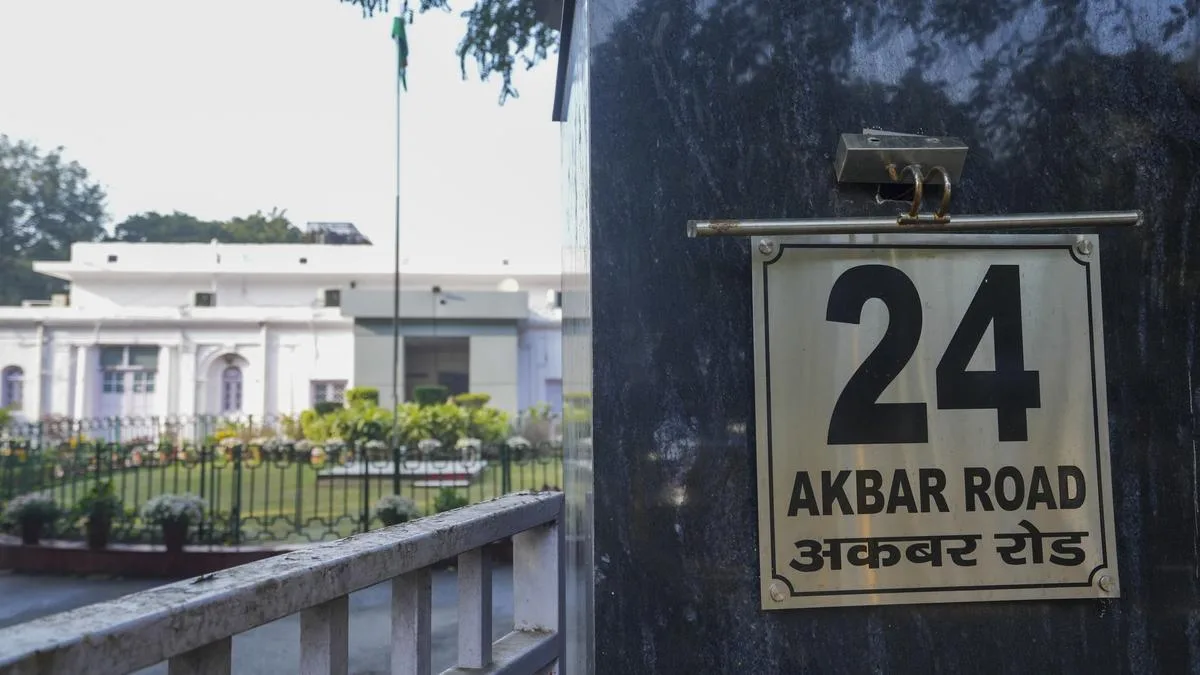
The Indian National Congress has been served an eviction notice for its long-time headquarters at 24 Akbar Road, a property it has occupied since 1978. The notice directs the party to vacate the premises by March 28, marking a significant administrative development in the heart of Lutyens’ Delhi.
A similar notice has also been issued to the Indian Youth Congress for its office at 5 Raisina Road, with the same deadline for vacating the government-allotted bungalow.
The Akbar Road bungalow has long served as the central nerve of Congress operations and political strategy. Since 1978, the party has continued to occupy the property, even as political power at the Centre changed hands multiple times.
The continued occupation of such a high-value government property for nearly five decades has often drawn attention in administrative and political circles, particularly in the context of rules governing allotment and retention of government accommodation.
Despite shifting its official headquarters to a newly constructed office, Indira Bhavan near ITO, the Congress retained control of the Akbar Road property, citing its historical and symbolic significance.
In recent years, the Congress has formally moved much of its organisational work to Indira Bhavan, its modern headquarters in Delhi. However, the Akbar Road address continued to be used, reflecting its deep association with the party’s identity and legacy.
Reports indicate that even after the relocation, efforts were made to retain the bungalow within the party’s control, including attempts to have it allotted to senior leaders following the 2024 Lok Sabha elections. These efforts, however, did not materialise.
With the March 28 deadline approaching, Congress leaders have indicated that they may seek legal intervention to challenge the eviction notice. Senior party leader Abhishek Manu Singhvi has termed the move “politically motivated” and stated that the party will explore all available legal remedies.
However, the larger focus remains on the administrative process surrounding the allotment and continued occupation of government bungalows in the national capital, especially in high-profile zones like Akbar Road and Raisina Road.
In Lutyens’ Delhi, where official residences and bungalows are meant for serving ministers, MPs, and government functionaries, long-term occupation by political entities has periodically raised questions.
The Congress’ nearly five-decade presence at Akbar Road is one of the most prominent examples of such extended occupancy, making the current eviction notice both administratively significant and politically symbolic.
As the deadline to vacate approaches, the Congress faces a crucial moment regarding its long-held presence at Akbar Road. While the party is expected to challenge the notice legally, the development underscores a larger shift towards enforcing rules on government property usage.
The outcome of this episode may set a precedent for how similar cases of prolonged occupation by political entities are addressed in the future.