Bengaluru: The Karnataka government’s disclosure in the Assembly that 24 cases related to alleged sedition and anti-national activities have been registered over the past three years has sparked intense debate, with the spotlight firmly on the increasing number of cases being closed through ‘B reports’ due to lack of evidence.
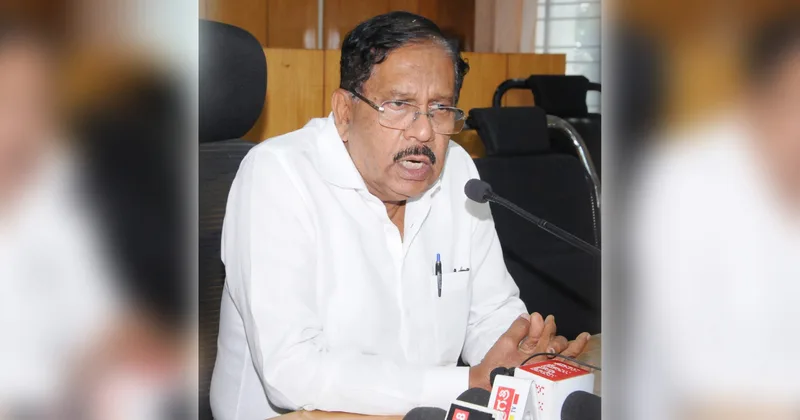
Replying to an unstarred question raised by BJP MLA S. Suresh Kumar, Home Minister G. Parameshwara tabled detailed data, revealing that while 20 accused have been arrested across these cases, none have been convicted so far. Most cases are still under investigation or pending before courts, raising questions about the effectiveness of prosecution.
According to the data, 18 out of the 24 cases relate to alleged anti-national sloganeering, while six cases pertain to broader anti-national activities. However, what has drawn sharp attention is that in at least three cases, police have already filed ‘B reports’, effectively stating that there was insufficient evidence to proceed against the accused. Several other cases are also believed to be heading in a similar direction.
The filing of B reports in such sensitive cases has raised serious concerns among legal experts and opposition leaders alike. B report is filed when investigators conclude that the allegations are not substantiated by evidence. Frequent use of this provision in high-profile cases has led to criticism that cases may be registered in haste without thorough preliminary verification.
Year-wise statistics further highlight the trend. In 2023, only three cases were registered, of which charge sheets were filed in two. However, in 2024, the number of cases jumped significantly to 12, but only four resulted in charge sheets. In 2025, eight cases were registered, with just one charge sheet filed. One case has been registered in 2026 so far and remains under investigation.
One of the most prominent cases mentioned in the Assembly was the alleged “Pakistan Zindabad” sloganeering incident near Vidhana Soudha on February 27, 2024. A case was registered at the Vidhana Soudha Police Station, and forensic reports have been received. However, the investigation is still incomplete, and the final report is yet to be filed, indicating delays even in cases that attracted statewide attention.
Apart from the officially confirmed B reports, some cases have also seen ‘C reports’ filed, which indicate that complaints may have been false or based on misunderstanding. For instance, a 2025 case in Bhadravathi, Shivamogga district, was closed after police failed to establish the allegations, and the court accepted the B report earlier this year.
Across districts such as Bengaluru, Mysuru, Belagavi, Raichur, Chikkamagaluru and Bagalkot, cases are currently in different stages—ranging from investigation and trial to awaiting government sanction for prosecution. In some cases, summons have been issued, while others remain stuck due to procedural delays.
Despite 20 arrests across these 24 cases, the absence of convictions has become a major point of contention. Critics argue that repeated closure of cases through B reports undermines the seriousness of charges related to national security and raises doubts about investigative standards. “If cases do not stand the test of evidence, it reflects either weak investigation or premature registration”, legal observers have pointed out.
The government, however, has defended its position. The Home Minister clarified that investigations are being conducted as per due legal procedure and that filing a B report is a valid course of action when evidence is insufficient. He also stated that there has been no failure on the part of the police.
Meanwhile, cases related to anti-national activities—distinct from sloganeering—also remain largely inconclusive. Of the six such cases, two have seen C reports filed, while others are under investigation or delayed due to court interventions, including a High Court stay.