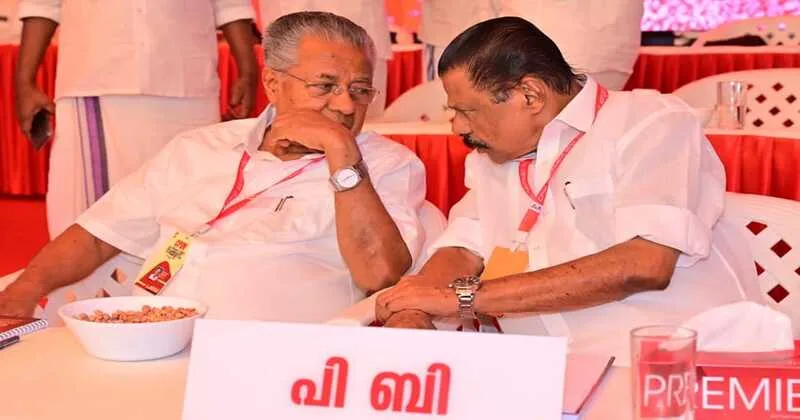
Thiruvananthapuram: The CPI(M), preparing to enter a crucial electoral battle, is grappling with an intensifying internal crisis that threatens to disrupt its organisational coherence. What once appeared as unchallenged authority under Pinarayi Vijayan, often described as “Pinarayism”, now seems to be losing its grip. Simultaneously, the functioning style of party state secretary M V Govindan is causing discomfort even among senior leaders. Observers note that the growing perception of power being concentrated within their families has added to unease among cadres and leadership alike. The emergence of dissent from Kannur district, long regarded as the party’s ideological and organisational stronghold, has particularly jolted the leadership.
Rising dissent in Kannur district
The situation in Kannur reflects a deepening internal fracture. The dramatic exit of veteran leader T.K. Govindan after more than six decades in the party has underscored the seriousness of the crisis. His public opposition to the candidature of P.K. Shyamala, wife of M.V. Govindan, in Thaliparambu assembly constituency has brought the issue of alleged “family rule” into sharp focus. T.K. Govindan’s decision to contest as an independent candidate is widely seen as a direct challenge to the authority and style of the current leadership. Additionally, the candidature of Higher Education Minister R. Bindu, the wife of LDF convenor and former acting state secretary A. Vijayaraghavan, in the Irinjalakuda constituency, along with that of PWD and Tourism Minister P. A. Mohamed Riyas, the son-in-law of Chief Minister Pinarayi Vijayan, in the Beypore constituency, has further deepened the crisis.
Adding to the turbulence, leaders such as V. Kunjikrishnan from Payyannur in Kannur district who had earlier raised allegations of martyr fund corruption against the leadership, have also entered the fray in a similar rebellious manner. The cumulative effect of these developments is a growing sense that Kannur, once the party’s most disciplined bastion, is now witnessing unprecedented internal resistance. Political observers suggest that such open dissent in this region could have ripple effects across the state.
Leadership under pressure
Beyond Kannur, signs of unrest are visible in other parts of Kerala as well. The exit of former minister G. Sudhakaran from the party in Ambalappuzha in Alappuzha district, coupled with dissent from leaders like P. K. Sasi in Palakkad district and A. Suresh, PA of former Chief Minister V S Achuthanandan has further weakened the perception of invincibility surrounding Pinarayi Vijayan. These developments mark a significant departure from earlier instances when dissent was effectively contained.
The leadership appears to be relying on its past strategy of sidelining critics, reminiscent of how opposition led by V. S. Achuthanandan was once neutralised. However, the current situation is markedly different. The dissent is no longer confined to internal discussions but is spilling into the public domain, with several leaders openly expressing their dissatisfaction. There are also concerns within the party that some of these dissenting figures may align with the opposition NDA and UDF, potentially amplifying electoral risks.
A defining electoral test
Historically, the CPI(M) has been compelled to recalibrate its decisions in response to strong grassroots opposition, as seen in controversies such as those in Kuttiadi and Ponnani. Yet, the present crisis represents a more serious challenge, as it involves senior leaders directly confronting the party’s central leadership. Efforts to counter the rebellion, such as organising protest rallies against T.K. Govindan in places like Malapattam in Kannur and G Sudhakaran in Alappuzha, indicate that the leadership is attempting damage control. However, it remains uncertain whether such measures can effectively contain the simmering discontent.
Adding to the complexity is the strategic silence maintained by influential figures like P. Jayarajan and E. P. Jayarajan in Kannur. Their reluctance to openly back the leadership is being interpreted as a sign of underlying tensions, further increasing pressure on both Pinarayi Vijayan and M.V. Govindan.
As the CPI(M) aspires for a historic third consecutive term in power, this internal rebellion could prove decisive. If the party fails to manage these divisions effectively, the electoral consequences could be severe. More importantly, a defeat would likely deepen existing fissures, transforming the current crisis into a prolonged phase of organisational instability.