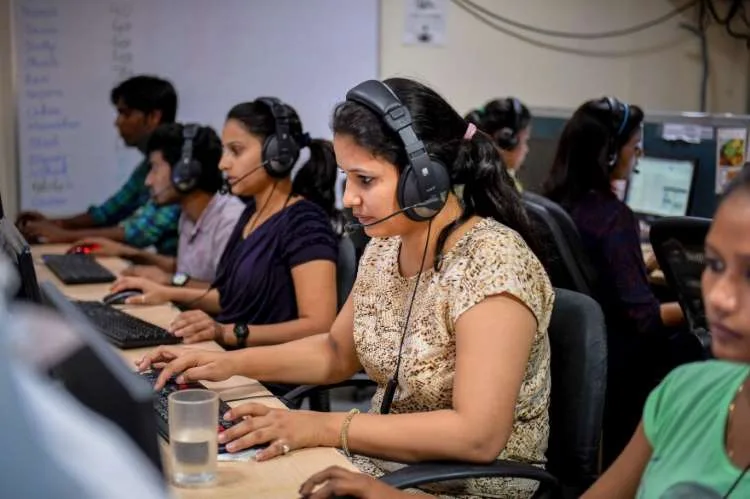
India’s urban unemployment rate witnessed a marginal decline in February 2026, according to the latest Monthly Bulletin of the Periodic Labour Force Survey. The report showed that the unemployment rate in urban areas fell to 6.6 per cent, compared with 7.0 per cent recorded in January, indicating a slight improvement in employment opportunities in cities.
The data was released by the Ministry of Statistics and Programme Implementation, which oversees the compilation of labour market statistics through the National Statistical Office. The survey remains the country’s primary official source of data on employment and unemployment patterns.
The decline in urban unemployment also contributed to a slight reduction in the overall unemployment rate, which dropped to 4.9 per cent in February, compared with 5.0 per cent in the previous month. While rural unemployment remained unchanged during this period, improvements in urban job conditions helped bring down the national average.
Labour force participation rate remains stable
The bulletin noted that the Labour Force Participation Rate (LFPR) for individuals aged 15 years and above remained stable at 55.9 per cent in February, unchanged from January levels. This suggests that the proportion of people either employed or actively seeking employment did not witness major fluctuations during the month.
However, a slight variation was observed between rural and urban areas. In rural India, the LFPR stood at 58.7 per cent, reflecting a relatively higher engagement of people in the workforce, largely driven by agricultural and informal sector activities.
Urban participation, meanwhile, recorded a marginal increase to 50.4 per cent, compared with 50.3 per cent in January. Though the change appears small, economists often interpret even slight shifts in participation as indicators of changing labour market dynamics, including job availability and workforce mobility.
Worker population ratio shows marginal rise
Another key indicator measured in the survey is the Worker Population Ratio (WPR), which represents the proportion of employed individuals in the total population aged 15 years and above.
According to the February bulletin, the overall WPR was estimated at 53.2 per cent, a slight increase from 53.1 per cent in January.
A closer look at the regional distribution shows that rural areas continued to display higher employment ratios. The rural WPR stood at 56.3 per cent, reflecting the significant role of agriculture and allied sectors in sustaining employment.
In contrast, the urban WPR was recorded at 47.0 per cent, indicating that slightly less than half of the working-age population in urban areas was employed during the survey period.
Female labour participation records small gains
The survey also highlighted a gradual improvement in female labour force participation, a trend policymakers have been closely monitoring in recent years.
For persons aged 15 years and above, the female LFPR increased to 35.3 per cent in February, compared with 35.1 per cent in January. While the increase appears modest, it reflects a continued upward movement in women’s engagement with the labour market.
The rural sector played a significant role in this improvement. Female LFPR in rural areas rose to 40.0 per cent, suggesting greater participation of women in agricultural work, self-employment, and rural enterprises.
In urban areas, however, the female participation rate remained unchanged at 25.5 per cent, highlighting the persistent gap in employment opportunities for women in cities.
Female employment indicators improve
Alongside participation rates, the report also recorded a rise in female workforce participation, measured through the Worker Population Ratio for women.
The female WPR increased to 33.4 per cent in February, up from 33.1 per cent in January. This indicates that a slightly larger share of women in the working-age population found employment during the month.
The improvement was observed across both rural and urban regions, although rural employment continued to drive much of the growth.
Reports often consider female workforce participation as a critical indicator of economic inclusivity and social progress, making even small gains significant in the long term.
Female unemployment rate drops significantly
The bulletin also recorded a noticeable improvement in female unemployment indicators.
The female unemployment rate declined to 5.1 per cent in February, compared with 5.6 per cent in January. The reduction was visible in both rural and urban regions.
A particularly notable change occurred in cities, where urban female unemployment dropped to 8.7 per cent, down from 9.8 per cent in the previous month. This suggests that more women were able to secure employment opportunities in urban labour markets during February.
The Periodic Labour Force Survey is conducted by the National Statistical Office and serves as India’s principal instrument for measuring employment trends.
Since January 2025, the survey methodology has been updated to generate both monthly and quarterly estimates of key labour market indicators. This shift allows policymakers and analysts to monitor employment trends more closely and respond to changes in the labour market with greater accuracy.
For the February 2026 estimates, the survey covered 3,74,879 individuals across the country. Of these, 2,13,679 respondents were from rural areas, while 1,61,200 individuals were surveyed in urban regions.
The extensive sample size helps ensure that the estimates reflect broader labour market trends across different sectors and regions of the country.
Gradual stabilisation in labour market
Overall, the February bulletin indicates gradual stabilisation in India’s labour market, particularly in urban areas where unemployment showed a measurable decline.
While key indicators such as labour force participation and worker population ratio remained largely stable, the improvements in female employment and the drop in unemployment suggest incremental progress.
Reports note that sustained improvement in these indicators will depend on continued job creation, expansion of formal employment opportunities, and policies that encourage greater participation of women in the workforce.
For now, the latest data from the Periodic Labour Force Survey suggests that the labour market is witnessing slow but steady progress, with urban employment conditions showing signs of recovery.