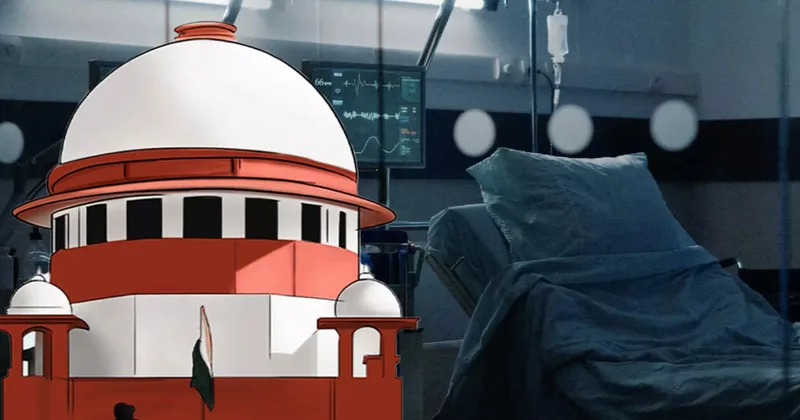
Delhi’s renowned private hospitals, which were granted land at affordable rates to ensure free treatment for the poor, are now under the strict scrutiny of the country’s highest court. The Supreme Court has reprimanded 51 hospitals, issuing contempt notices, asking why free treatment was not provided when the conditions were clear. The court clearly stated that taking advantage of concessions and shirking social responsibility is unacceptable.
It is noteworthy that Sir Ganga Ram Hospital, considered one of Delhi’s most prestigious hospitals, is also included in this list. Questions remain as to whether it fulfilled the conditions for free treatment for poor patients. BLK-Max Super Specialty Hospital, renowned for its modern facilities and high-end treatment, is also accused of not providing the required percentage of free services to EWS patients.
Fortis Escorts Heart Institute, renowned for complex heart surgeries and cardiac care, is now facing scrutiny. The question is: did patients from economically weaker sections truly receive priority here?
This is the free treatment rule
In its landmark decision of July 9, 2018, the Supreme Court clarified that private hospitals granted land at concessional rates would provide 25 per cent of their OPD services and 10 per cent of their IPD services free of charge to economically weaker section patients. In 2007, the Delhi High Court, while hearing a public interest litigation, ordered strict adherence to this condition, which was later upheld by the Supreme Court.
According to the Delhi government’s affidavit, 14 hospitals were found violating the rules in November 2025. Subsequent inspections from October to December 2025 declared 37 more hospitals as defaulters. Combining both lists, action has now been proposed against 51 hospitals. The most shocking thing was that 13 out of 51 hospitals were asked to respond, but only one provided a clear response. Many hospitals tried to shirk responsibility by claiming they were following the rules. The court dismissed it as a matter of light-handedness.
Question: Who provided the land, whose responsibility?
The Delhi government told the Supreme Court that the land for these hospitals was provided by the Delhi Development Authority (DDA), the Land and Development Office (LDO), and the Municipal Corporation of Delhi (MCD). The court also reprimanded these agencies, stating that while the land was provided with conditions, it was their responsibility to monitor and ensure compliance. The court has appointed the Delhi government’s Health Secretary as the nodal officer, who will now ensure concrete action against these hospitals.
So many hospitals received concessions
According to records, a total of 63 hospitals were allotted land at affordable rates, of which 56 are currently operational. Recently, on January 2, the Delhi government increased the EWS income limit from ₹2.20 lakh to ₹5 lakh, making more families eligible for free treatment. But the question is: will increasing eligibility alone solve the problem, or is stricter enforcement of the rules necessary?
Social Responsibility vs. Business Model
Private hospitals often argue that state-of-the-art facilities and specialized doctors are expensive, leading to higher operating costs. However, when they were granted government concessions like affordable land, they were required to fulfill their social responsibility in return. The question arises: is the primary duty of hospitals built on subsidized land to make profits or to provide life-saving treatment to the needy? The Supreme Court has issued a show-cause notice asking why these hospitals’ concessions should not be revoked and contempt of court proceedings initiated. The next hearing is scheduled for March 24.
For now, this move by the Supreme Court is a message to the entire healthcare system: government concessions are not privileges, but social contracts. When the state grants you land, it also entrusts you with a responsibility to the vulnerable sections of society. Now it remains to be seen whether these hospitals will be able to provide a convincing response to the court, or whether the threat of withdrawal of concessions will become a reality. This time, the court’s stance does not appear to be lenient.