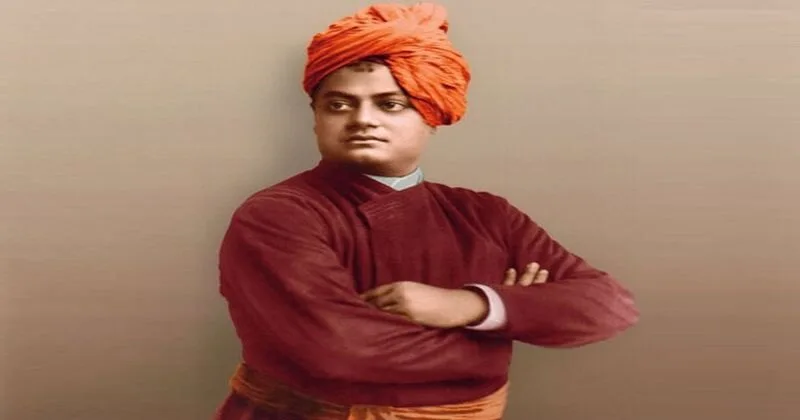
Before understanding Swami Vivekananda’s perspective on women’s empowerment, let us have a brief discussion on the topic of women’s empowerment itself. What exactly does it mean for a woman to be empowered? Does being educated mean that a woman is empowered? If that were the case, then all educated women should be empowered. Considering the current rate of women’s education, there should not have been any need for the idea of women’s empowerment at all. If a woman can protect herself, does that mean she is empowered? When women receive rights equal to men, are they then empowered? If women become economically independent, does that mean they are empowered? If women begin to live their lives according to their own wishes, are they then empowered? Is the subject of women’s empowerment only about women, or do men also have an important role in it? Before knowing the answers to these questions, it is necessary to understand the structure of Indian society and the role of women within it. I have developed and discussed the concept of women’s empowerment as it was perceived by Swami Vivekananda with his own elaboration about women, Indian society, the role of women in Indian society and other societies. While discussing this, I go back and forth in other references as well.
In 1895, in his lecture on “The Ideal of Womanhood” delivered at the Brooklyn Standard Union, Swami Vivekananda briefly reviewed the historical roles of women in various civilisations of the world. In it, he states that in ancient India, among the Aryan race, there was no discrimination between men and women. Just as men were priests, women too were priests. In Aryan households, the sacrificial fire that was lit in the home at the time of marriage was never extinguished. The same fire was used for daily rituals and occasional ceremonies. During sacred offerings, both husband and wife would jointly offer oblations. If either the husband or the wife died, the funeral pyre of that person was lit using fire taken from the same sacrificial altar. Therefore, in ancient India, women were called the co-performers of religious duties alongside men.
In the Ramayana, when Bhagwan Rama performed the Ashwamedha Yajna as the king of Ayodhya, he had a golden image of Sita made and installed it to his left before sitting for the ritual. This concept progressed so far in our tradition that later a man could not sit alone for worship, because alone he was considered only half. If a widower sits for worship, there is a custom of tying a betel nut to the left side of his waist as a symbol of his wife. In earlier times, unmarried men were not permitted to perform priestly duties. The lives of married Vedic teachers, such as Vashistha and Arundhati, were held up as ideals for married couples. Even today, among Hindus, immediately after the wedding, the newly married couple is brought outside the wedding pavilion and symbolically shown the stars of Vashistha and Arundhati in the sky, and they are blessed to lead an ideal married life like theirs.
A similar system of equality between men and women was seen in ancient Roman and Greek civilisations. In ancient times, just as there were ascetics of a warrior-like spirit in every country, women, too, inspired by similar feelings, became nuns; Swamiji mentions this in his speech delivered at the Indian Social Conference. When, in these countries, an independent priestly class later emerged, the priesthood of women equal to that of men declined. The Assyrian race of Semitic blood was the first to declare that women had no rights after marriage. The Babylonians firmly upheld this concept, and it then spread to Rome and Greece. Thereafter, the condition of women deteriorated in all these regions. Its reflection can be seen in the cultures of the Jewish, Christian, and Muslim religions.
In the speech delivered by Swamiji at the Brooklyn Standard Union in 1895, he gave another reason for the decline in the condition of women, mentioning changes in marriage practices. In the very early period, there was a matriarchal system, meaning the mother was central, and after her, her daughters would take her place. Because of this, provisions for polyandry are also found in the Vedas. If a man died childless, his widow was permitted to live with another man until she bore a son, and the children born to her were regarded not as that man’s children but as the woman’s. Earlier, widows were allowed to remarry in our society, but in later modern times (after the Muslim invasions), this was denied. Among the Jews, even today, it is believed that the children of a Jewish woman are Jewish, regardless of whether the father is Jewish or not.
Swamiji further says that along with these external factors, intense ideas of personal purity later arose among us. On every page of the Vedas, teachings about personal purity are found, and the rules in this regard were extremely strict. Every boy and girl was sent to a university for education, where they studied until the age of twenty or thirty. Even the slightest impure conduct was severely punished. This concept of personal purity is so deeply rooted in the Indian social psyche that it may be called a kind of obsession. As an example of this, Swamiji mentioned in his speech the Jauhar performed by Maharani Padmini of Chittor along with many women there (according to official records, 74,500) during the Muslim invasions.
In the same lecture, Swamiji says that during the Buddhist period, India became like one vast monastery. Even the Kshatriyas abandoned their warrior duties and took up renunciation, and monastic culture spread widely. As a result, the notions of purity became even sharper, and propaganda began suggesting that impurity comes because of women. The outcome of this was the spread of warnings against women, such as “Woman is the gateway to hell,” “The chain that binds us all to the dust is woman,” and “He who is deceived by a woman is the blindest of the blind.” Swamiji says that this same concept is found at the root of Western monasteries, and wherever any monastic system developed, the condition of women declined.
As these ideas developed, in the Western world wifehood became the ideal of womanhood, while in India motherhood was regarded as the ideal. In the Western world, the development of women was brought about by John Stuart Mill and the French revolutionaries. However, Swamiji mentions that in Asia Minor, Christian bishops still maintain a separate gynaecium. He also notes in his speech that in Muslim society, there has been no special mention of the social and intellectual development of Muslim women.
The Western women’s empowerment movement generally began in the mid-nineteenth century (1850 to 1915) to demand political rights, especially the right for women to vote. The first phase of this movement drew inspiration from the French Revolution and the anti-slavery movement. The first phase secured legal rights for women, including the right to vote, the right to purchase property, control over their own earnings, and the right to education. The nature of the movement involved protests and organising marches. At that time, the movement was limited only to the issues of middle-class white women. As a result of this movement, on March 8, 1910, Vladimir Lenin, regarded as the architect of the Russian Revolution, announced at the International Socialist Women’s Conference held in Copenhagen that March 8 would be celebrated as International Women’s Day. Since then, March 8 has been celebrated in countries with socialist and communist ideologies.
When Swami Vivekananda went to America in 1893 to attend the Parliament of Religions, it was American women who helped him the most. Based on his experiences, Swamiji used to say that American women are independent-minded, brave, and intelligent. Since they have a fondness for innovation, they do not hesitate at all to conduct new and diverse experiments. In contrast, he described American men as opportunistic and sycophantic. On one hand, these men pretend to respect women, but in reality, they view women as objects of enjoyment. Then, the movement organised by socialist women in New York in 1909 for women’s rights can be said to have represented only women of socialist and communist ideologies. Therefore, perhaps initially, this feminist movement was ridiculed in America.
In his 1895 lecture at the Brooklyn Standard Union, Swamiji mentioned that in America, a man could cancel his wife’s inheritance rights in property, whereas in India, a wife has full rights over the property earned by her husband, and even after the husband’s death, she has lifelong rights over his property. Even today, its reflection can be seen in Indian law. The wife of a soldier who is martyred in war or any mission receives his pension for life. According to the Samkhya philosophy in Hinduism, the origin of the universe occurred through the union of Purusha (soul, pure consciousness) and Prakriti (matter, inert nature). Because of Purusha, Prakriti becomes active, and creation comes into existence. In Sanskrit, Prakriti, Utpatti (origin), and Srushti (creation) are feminine terms associated with creativity. Since God has naturally bestowed upon women the power to give birth to new life, due to this inherent gift of creativity, women hold unparalleled importance in Hinduism.
यत्र नार्यस्तु पूज्यन्ते रमन्ते तत्र देवताः । यत्रैतास्तु न पूज्यन्ते सर्वास्तत्राफलाः क्रियाः ॥
Yatra naryastu pujyante ramante tatra devatah । Yatraitastu na pujyante sarvastatra aphalah kriyah ॥ (Manusmriti 3.56)
Meaning: where women are worshipped, there the gods reside. Where they are dishonoured, all virtuous religious acts lose their merit. If we deny the importance of this shloka just because it is written in the Manusmriti, it would be a big mistake. Although it is written in a Smriti, it does not contradict the essence of similar feelings about women mentioned in the Shrutis. Swami Vivekananda also stated that if there is any contradiction between Smriti and Shruti, then Shruti should be considered authoritative, because Smritis change according to time. Therefore, even if we find any other text in the Manusmriti that seems insulting toward women, there is no need to treat it as authoritative. But that does not mean the entire Manusmriti is worthless.
In the 10th chapter of the Shrimad Bhagavad Gita, while describing his divine manifestations, Shri Krishna says:
मृत्युः सर्वहरश्चाहमुद्भवश्च भविष्यताम् । कीर्तिः श्रीर्वाक्च नारीणां स्मृतिर्मेधा धृतिः क्षमा ॥
Mrityuh sarvaharashchaham udbhavashcha bhavishyatam । Kirtih shrir vak cha narinam smritir medha dhritih Kshama ॥ (Shrimad Bhagavad Gita 10.34)
Meaning: I am all-devouring death, and I am also the source of all that will be born in the future. Among women, my supreme expression manifests through qualities such as fame, prosperity, speech, memory, intelligence, firmness, and forgiveness. This verse, in a way, proclaims the greatness of women.
In our culture, Marathi words denoting virtues such as Daya (compassion), Kshama (forgiveness), Shanti (peace), Kirti (fame), Shri (prosperity), Vaani (speech), Smriti (memory), Medha (intelligence), Dhruti (courage/fortitude), Samrudhhi (abundance), Pragati (progress), Pradnya (wisdom), Vidya (knowledge), and Tejaswini (radiant) are all feminine. This shows that from the very beginning, our social life and culture have been imbued with reverence for women. If we look back to the Vedic and Upanishadic period, women had freedom—freedom of thought and conduct. We find strong evidence of this in many stories from Upanisadas. The greatest proof of this is the dialogue between Shankar and Parvati found in the Shiv Purana. In our tradition, female Gods Lakshmi, Kali, Saraswati, Parvati, and Annapurna are worshipped along with the male Gods. This is what we call Shakti worship. After fighting Mahishasura for nine nights, Mahishasuramardini killed him and freed the earth from his atrocities. So that the power of Mahishasuramardini may come into us, during the nine days of Navratri in Hinduism, not only women but men also observe fasts and worship Shakti.
While worshipping, we consider names of Hindu deities in pairs like Radha-Krishna, Parvati-Shiva, Sita-Ram, Lakshmi-Vishnu, Rakhumai-Vitthal. In the Vedic period, learned women such as Gargi, Maitreyi, Anusuya, Arundhati, and Lopamudra were referred to as Brahmavadinis. Justice Ranade, a contemporary social reformer of Swami Vivekananda and the then president of the Indian Social Conference, in his presidential address, presented a reformist perspective on India’s social condition and mentioned the contributions of these Brahmavadini women (both married and unmarried) from the Vedic period. Justice Ranade also noted references from the Shruti and Smriti state that these Brahmavadini women moved about in many royal courts and challenged the philosophers there, emphasising the capability of Indian women. However, Ranade cited all these references to argue how unmarried men, especially renunciates, were corrupt. While Swamiji praised his views regarding the Brahmavadinis, he also refuted with evidence his opinion about unmarried renunciates.
In Tamil history, Kannagi, born in the 2nd century, an ordinary woman, came to be worshipped like a goddess. The same Kannagi is worshipped under various names in Kerala by followers of the Bhagavati tradition, while in Sri Lanka Tamil people and Sinhalese Buddhists worship her by the name of the goddess Pattini. Even in the Buddhist period, there were women who were bhikkhunis. In the 17th century, there was Rajmata Jijau; in the 18th century Rani Chennamma and Ahilyabai Holkar; in the 19th century, the Queen of Jhansi and Savitribai Phule; and in the 20th century, in the pre-independence period, Naga Rani Gaidinliu—many such important women can be cited as examples of powerful and empowered women in the Indian sub-continent. From the Mughal invasions onward, along with the restrictions imposed on women, some bad and incorrect practices also emerged. But original Hindu ideology was liberal, in the post-independence period, as women became educated, excellent scientists, mathematicians, medical professionals, surgeons, architects, artists, military officers, fighter pilots, and sportspersons emerged. As many women became active in politics, the country also saw a woman Prime Minister and two women Presidents, with women leading the nation.
In the philosophy of “Integral Humanism”, the stage of development is expected to progress from the individual becoming one with the Supreme: Vyashthi (individual), Samashthi (society), Srishti (the universe), and Parameshthi (the Supreme Being/Brahman). When two individuals (a woman and a man) come together through the sacrament of marriage, a family is formed. In the Patanjali Yoga Darshana (2.30), the coming together of a man and a woman is also described as a karma. Certain limits and disciplines are prescribed in the act of reproduction for the creation of virtuous progeny. The emotional and mental state of the parents during reproduction influences the nature of the offspring that is born. In particular, a woman has only a limited number of ova (eggs). Each month when a woman menstruates, the diet, lifestyle, and temperament she maintains influence the maturation of the ovum that develops during that time. During reproduction, among the millions of sperm from the man, the sperm that carries the corresponding disposition competes with the others and unites with the ovum that carries those particular impressions. Therefore, in the resulting offspring, the mother’s impressions are the most powerful. Hence, if the mother is virtuous, the offspring will also be virtuous. Perhaps for this reason, in Hinduism, certain rules and limitations were prescribed regarding the diet and lifestyle of girls and women.
In the first chapter of the Shrimad Bhagavad Gita, in the dialogue between Krishna and Arjuna (Bhagavad Gita 1.39–1.42), Arjuna says: When a family is destroyed, its family traditions and dharma perish, and adharma spreads everywhere. When adharma increases, the women of the family become corrupted. From corrupted women arises degraded and unwanted progeny. As such, degraded progeny increases, life becomes like hell. Consequently, the rituals for the ancestors, such as offerings to them, cease. Thus, the duties of family and caste are destroyed, and social disorder (varna-sankara) arises. Those whose family dharma is destroyed remain in hell for an indefinite time. Because Jijabai was the mother, Shivaji was born. Lokmanya Tilak’s mother performed strict worship of the sun so that she might have a son radiant like the sun. Many more examples could be given. From all this, it becomes clear how essential it is for women to be cultured and disciplined in their diet and lifestyle for the creation of virtuous progeny.
Swami Vivekananda also stated in his lecture on The Ideal of Womanhood that the mother is the centre of the family, she is the highest ideal of the Indians, and she appears as the representative of God because God is the creator (mother) of the universe. He also said that the truth that God is one was first discovered by a woman and was recorded in one of the earliest hymns of the Vedas. Just as our God is both with attributes (saguna) and without attributes (nirguna), the nirguna God is male while the saguna God is female. Therefore, we say that the first manifestation of God is the mother who rocks the cradle. One who is born through prayer and pure conduct is considered Arya, while one born through sensual indulgence is considered non-Arya (Anarya). This principle of the influence on a child even before birth (the dominance of the ovum) is proclaimed by both science and religion. The Indian principle that one should keep oneself pure and sacred for the creation of virtuous progeny has been deeply accepted. Our mothers were pure and sacred, and whatever we are today is because of them. Purity is the main foundation of our society—this is what Swamiji clearly states while speaking about the ideal of womanhood.
That is why women are the backbone of the family system, and the institution of marriage is the foundation of the family system. If there are good families, a good society will be created. For a good family to exist, the members of that household must have good values and a cultural upbringing. In other words, the women in that house must be good. This means that the responsibility of building a good family and society lies with both women and men, but it rests most heavily on women. If the leading man or woman in a family—or either of them individually—makes decisions without considering the other members of the family, will the family survive? Even though men may appear physically strong and strict in behaviour, they are often emotionally weaker. That is why the proportion of men among those who commit suicide due to depression is higher. Women, however, face difficult situations firmly and stand strong. The wives of farmers who committed suicide due to debt are often seen standing strong and continuing to run their families. When the owner of the Cafe Coffee Day, V. G. Siddhartha, committed suicide due to debt, his wife, Malavika Hegde, took over the management of the Cafe Coffee Day and handled everything in such a way that within a year she repaid the creditors and brought the company into profit and even expanded it.
Women possess flexibility of both body and mind, and therefore, even though they are gentle at heart, they are mentally strong. Because of this flexibility and gentleness, she becomes the mother (caretaker) of the entire family. In our culture, the word mother holds great importance. That is why we address goddesses as Mother. Those who are soft-hearted are also addressed as Aai or Mauli or Ma, because they absorb all our mistakes and faults. For example, we call Saint Dnyaneshwar Dnyanoba Mauli, and Ramakrishna Paramahamsa was called Gadai in his childhood. Many people also worship Akkalkot Swami in a female form, as we know. Because of these flexibility and gentleness, it is also said in our culture that a woman is a wife for a moment but a mother forever. She received this position because of the qualities within her. At that time, she becomes the most capable and empowered woman in the world.
When Swami Vivekananda was in America, American women helped him the most and even became his disciples. There were some American women who created obstacles in his pathway. Swamiji always addressed all women as Mother, regardless of their age. He explained to them that in Hindu culture, we always look at women as a representation of motherhood, and therefore, he saw a mother in them. The English words mommy or mom widely used in the Western countries, do not carry that same power. Therefore, in the Indian culture, women’s power has always held an important place. Preserving that place is the responsibility of women as well as men. They should maintain it through their values and conduct.
During the period of foreign invasions, girls’ education came to a halt. For some time after independence, girls and women were not very educated. Women began to receive secondary treatment, and the exploitation of ordinary women started. Therefore, the feminist movement that emerged and flourished in America in the mid-19th century also came to India. In modern times, girls and women get educated, become financially independent and raise their voices against the injustices done to them, which is good. Women of the older generation both earned a living and handled household responsibilities, which caused many of them great strain. Hence, they tried to ensure that their daughters would not have to go through the same situation. However, in this process, the mentality of boys and men (regarding women doing household chores and holding household responsibilities) remained the same, and the conflict between men and women increased.
Amid all this hustle, the situation has now changed. Many girls and women prefer to remain unmarried in order to pursue their careers. Even if they do marry, their primary role in the family often becomes of another breadwinner. They can get helpers for all household tasks, including cooking. With the decline of joint families, grandparents are often not present at home. As a result, the responsibility of instilling values and cultural upbringing in children is unknowingly neglected. Even this task is outsourced. Children consume whatever they see around them as their values. Naturally, this has its consequences. The new generation is drifting away from our culture. Western feminism has such a strong influence on urban girls and women that, in the name of women’s freedom, they do not even realise that they are being exploited themselves and are being used as objects. In the name of My Body My Choice and the latest fashion, wearing extremely revealing or bizarre clothes, using makeup to look attractive and confident, and now with the advent of smartphones and social media, women and girls from all age groups and social and economic backgrounds display whatever they want through reels, each trying to satisfy their desire to become a celebrity.
In this way, commercialisation has strengthened the perspective of viewing women as objects of pleasure, yet these women themselves do not realise it. After keen observation of Americans, Swamiji had noted in his letters the hypocritical behaviour of American men toward women. When Swamiji had gone to America, there was not the same concept and variety of junk food as today, but even then, he had mentioned that bread made from refined flour (maida) was harmful to health. He said that if one must eat bread made from refined flour, it should be toasted so that it causes less trouble. Nowadays, because of the fondness for and habit of eating junk food, such as recipes including sweet corn, cheese, burgers, pasta, and pizza, along with unnecessary diet plans adopted for achieving a zero figure, women are not aware of the harm being done to their health. At the same time, due to the mistaken idea that a woman is considered independent if she smokes cigarettes or drinks alcohol, smoking and alcohol consumption among men and women have increased tremendously. Even college-going young men and women are being drawn into the trap of addiction, yet this also goes unnoticed. Many times, when women are intoxicated or drunk, people take advantage of them by taking obscene photographs and then forcing them to do wrong things. As a result, many lives are ruined. Junk food, smoking, and alcohol consumption affect the reproductive capacity of both women and men, and then they have to face infertility. Massive increase in fertility clinics and IVF facilities tells the whole story.
Contemporary social reformers were striving—with the help of the British—for reforms such as the law banning the Sati practice and the legalisation of widow remarriage. Regarding such reforms, Swamiji said that religion is the life force of Indian society, and any reform cannot succeed merely by making laws; it must be conveyed to society through the framework of religion. For example, the good habit of washing hands and offering a prayer before beginning a meal was spread in society under the name of religion. As a result, habits such as cleanliness and expressing gratitude toward all those who brought the food to one’s plate became ingrained in society. There are many examples, even today, that show reforms do not occur merely through laws. In the post-independence period, because law rather than religion dominated our society, the issue of women’s exploitation was attempted to be resolved not through religious or family awareness but through one-sided laws favouring women. However, only a few people refrain from exploitation merely out of fear of the law. The law against domestic violence is being misused by women to such an extent that their husbands, feeling exploited, end up choosing suicide. We have seen four or five such cases during recent years. If the issue of women’s exploitation and domestic violence had been addressed through family awareness via religion, then the misuse of the law would not have occurred.
In this context, there is a traditional religious rule at the Sabarimala temple in Kerala that women aged 10 to 50 (that is, women in the age group when menstruation occurs) are not allowed entry into the temple. Leftist, communist and feminist organisations challenged this rule in court, and the court also delivered a verdict striking down the rule. Yet women from Kerala themselves came together to protest against that decision. Supporting the tradition, they said that in their culture, there are certain temples intentionally visited only by women, while in some places, only men visit the shrine. This is meant to preserve both the freedom and privacy of each group. As a result, the traditional rule regarding women’s entry at the Sabarimala temple is still followed.
Swami Vivekananda used to say: Just give women education or the opportunity to receive education. Then they themselves will make the right decisions about their lives. No one else has the right to interfere in that. If a young widow wishes to remain unmarried and pursue something else in life, she should have the freedom to make that decision. But if you think that a widow should remarry, you should not force her into marriage. If a woman wishes to sacrifice her life along with the body of her deceased husband, you should not oppose it merely because you think so. Conversely, if a woman does not wish to sacrifice her life as Sati, forcing her to do so and compelling her to become Sati would also be wrong.
Swamiji encouraged his disciple, Sister Nivedita, to start a school for women in Kolkata and helped her in every possible way to run it. Just as he established the Ramakrishna Math to train male monks, he also instructed the creation of a separate Sri Sarada Math for women under the guidance of Holy Mother Sri Sarada Devi. Among Swamiji’s female disciples, some names that can be mentioned are: Sister Nivedita (originally Irish, who promoted Indian culture and nationalism and did great work for women’s education in India); Sister Christine (an American who helped establish the Mayavati Ashram in the Himalayas and also assisted Sister Nivedita); Josephine MacLeod (originally American, who contributed financially and provided emotional support to Swami Vivekananda’s work. Her financial support was very important in the establishment of Belur Math); Sara Ole Bull (the widow of the famous American pianist Ole Bull, who made significant financial contributions to Swamiji’s work in America and India and who regarded Vivekananda as her own son); Charlotte Sevier (along with her husband, she provided substantial financial assistance in establishing the Mayavati Ashram in the Himalayas, and the Sevier couple lived in the Mayavati Ashram until the end of their lives); Mary Hale and her two sisters and Hale (Swamiji’s American family, with whom he maintained extensive correspondence); Mrinalini Bose (an Indian disciple of Swamiji, to whom he explained spiritual concepts such as the chosen ideal (Ishta) and surrender to the Guru through letters, and also encouraged her to work for society, especially for women’s education).
From the above discussion, it is clear that according to Swamiji, women’s empowerment means giving them various opportunities in life, providing and encouraging education, and developing in them the ability to make their own life decisions and carry them out. This same concept can be used for the empowerment of any weaker section of society.