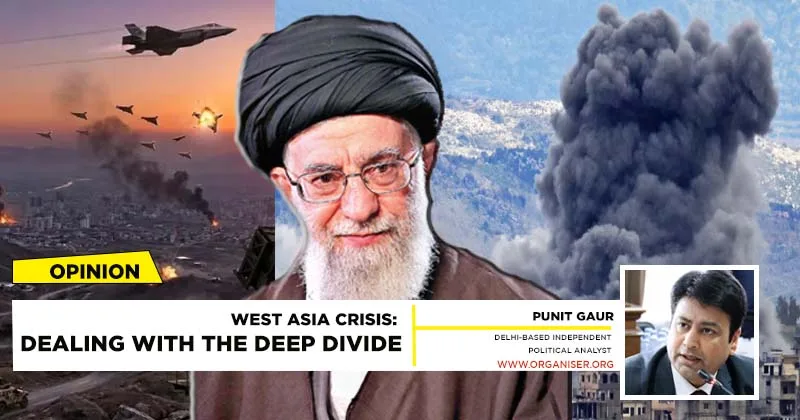
The death of Iran’s Supreme Leader Ayatollah Khamenei deeply shook the country, revealing sharp divisions in society. In response, the Red Flag was raised over the Imam Reza shrine in Mashhad. This Shiite symbol stands for mourning and a demand for justice or revenge. While the Black Flag usually shows grief in Iran, the Red Flag sends a stronger message that blood has been unfairly spilt and calls for retribution. Known as the ‘alam-e surkh’ in Shiite tradition, the Red Flag is associated with remembrance of Imam Hussein’s martyrdom at Karbala and has often been displayed during crises to inspire people to act. For instance, during the Iran-Iraq War in the 1980s, it appeared at religious sites to encourage resistance. It has also been raised after major attacks, like the 1994 bombing of the Imam Reza shrine. Religious conservatives and hardline supporters see Red Flag as a sacred call to protect their faith and seek justice.
On the other hand, secularists, reformists, and many ethnic minorities usually avoid this symbol, seeing it as linked to state propaganda and religious pressure. For example, the Red Flag was raised at the Jamkaran mosque in 2020 after the U.S. killed General Qasem Soleimani, which rallied Government supporters but was met with doubt or silence in many cities. These examples show how the Red Flag can both unite regime supporters and deepen divisions in Iran.
Supporters Vs Critics
The death of the Supreme Leader represented a devastating loss for those who supported the Government. Many viewed the death as the departure of a guardian and a protector. On the other hand, for others, it was a moment of relief, with sentiments expressed such as, “Finally, perhaps we have an opportunity to breathe.” These mixed reactions—grief and loyalty on one side, cautious celebration on the other—show the demand for change and the deep divisions caused by Khamenei’s rule. Outside the capital, feelings were more complex. In ethnic minority areas like the Kurds in the West and Baluch in the South East, responses ranged from careful hope to open celebration in places long ignored by the Central Government. Some reports described quiet street celebrations and messages calling for more autonomy. In rural villages, especially those connected to religious traditions or supported by the regime, many felt worried about the future and wanted stability. These reactions reveal a country divided by ideology, ethnicity, and geography. Following the 1979 Islamic Revolution, Ruhollah Mostafavi Musavi Khomeini became Iran’s first Supreme Leader, reorganising state power under the velayat-e faqih (guardianship of the Islamic jurist). During this time, the Islamic Revolutionary Guard Corps (IRGC) was created. In 1989, after Khomeini’s death, Khamenei was appointed Supreme Leader. Despite lacking top clerical credentials, political compromises led to his appointment, and he ruled for nearly 37 years, until his death in 2026. Few anticipated that this “compromise figure” would outmanoeuvre his rivals and patrons to secure nearly four decades of rule.
Controversial journey of Khameini
- July 17, 1939 Khamenei is born in the shrine city of Mashhad to parents from Iran’s Azeri minority
- 1957 Meets Ayatollah Ruhollah Khomeini, who will emerge as a key influence
- 1977 After several stays in prison due to his opposition to the shah, he is exiled to Iranshahr, a remote desert city close to the Pakistan border. He returns to Mashhad in 1979 for the Islamic Revolution
- 1979 His rapid ascent to power begins when he is named deputy defence minister and subsequently head of the elite Revolutionary Guards by Khomeini
- 1981 Becomes the first cleric to be elected president of the Islamic republic. Re-elected in 1985
- June 27, 1981 Survives a bomb attack by the outlawed People’s Mujahedeen group in a Tehran mosque, but his right hand is never the same. Learns to write with his left
- June 4, 1989 Upon the death of Khomeini, he is elected supreme leader just a year after the end of the war with Iraq (1980-1988). January 2005 Confirms the “death sentence” fatwa handed down on writer Salman Rushdie by Khameini.
- September 8, 2014 Undergoes prostate surgery after two decades of speculation about his health
- July 14, 2015 Supports the Vienna accord with world powers on Iran’s nuclear programme. January 17, 2020 Leads Friday prayers in Tehran for the first time since 2012. Uses the occasion to condemn anti-government protests
- October 3, 2022 Blames the United States and Israel for fomenting the widespread nationwide unrest sparked by the death of Mahsa Amini
- June 13-24, 2025 Going into hiding during the 12-day war with Israel, which the United States briefly joins, but emerges from the conflict unscathed
- January 17, 2026 Says “Iran must break the back of the seditionists” as the clerical authorities brutally repress the biggest protests against the Islamic republic in more than three years
- February 28, 2026 Killed in the wave of strikes launched by the United States and Israel
Lacking Khomeini’s charisma, Khamenei relied on strategic alliances and bureaucratic skill. Over the 1990s and 2000s, he cultivated a political balance between conservative and reformist factions, enabling alternating presidencies to appease competing social groups, including traditionalists, bazaar merchants, urban progressives, and entrepreneurs. During this time, the IRGC grew much more powerful. Under Khamenei, it became not just Iran’s top military force but also a major player in the economy and internal security. Khamenei maintained loyalty by choosing trusted leaders and frequently rotating commanders to prevent any one person from gaining too much power.
Khamenei bolstered Iran’s nuclear programme in the early 2000s. He issued a fatwa against nuclear weapons, but officials insisted the program was civilian. During the early 2000s, Khamenei aimed for a nuclear “threshold status” to deter enemies, resulting in a standoff with the West and sanctions by the 2010s.
By the late 2000s, Khamenei’s efforts to balance politics failed, deepening divisions. The harsh crackdown on the 2009 protests over alleged election fraud showed the regime’s firm stance and Khamenei’s readiness to widen divides instead of healing them. Following 2009, in the 2010s, Khamenei increasingly depended on hardliners, particularly as reformists advocated compromise with the West to alleviate sanctions. For Khamenei, maintaining the nuclear programme was a matter of national pride and regime survival, rendering any retreat politically untenable.
Western approaches, especially from the United States, fluctuated. President Obama brokered a nuclear deal exchanging enrichment limits for sanctions relief under Joint Comprehensive Plan of Action (JCPA); however, President Trump later withdrew from the agreement. Iran, meanwhile, refused to abandon uranium enrichment and denied intentions to develop nuclear weapons.
By the 2010s, Khamenei embodied the source of polarisation in Iran—his autocratic governance and resistance to change fuelled the ideological and societal rifts that define his legacy and the deepening demand for a new political era.
Since 2010, Khamenei emphasised the concept of Resistance Economy, encouraging self-reliance and reducing dependency on foreign sources and boosting domestic production. After Trump’s decision to withdraw from the JCPA agreement in 2018, Iran intensified its missile and regional security strategy. By the mid-2020s, during his final years, Khamenei’s declining health and the looming threat of war prompted accelerated succession planning. Concurrently, years of sanctions severely damaged Iran’s economy, driving inflation above 30 per cent annually, collapsing the currency, and fueling ongoing, sometimes nationwide, street protests.
From 2022 to 2024, Khamenei tightened political control during protests while promoting technological development and military capabilities. Internationally, Iran strengthened ties with Russia and China and continued to support regional allies amid Middle East conflicts.
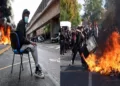
Khamenei’s strict rule damaged public trust and increased unrest. A major moment came in late 2025 when the government sharply raised fuel prices to boost state income, sparking immediate and widespread anger. Within days, protesters gathered in many cities, calling for accountability and help with economic struggles. The regime reacted quickly and harshly: it cut off internet access nationwide, and security forces fired on mostly peaceful crowds. National polls showed public trust in government dropped by nearly 20 per cent over the next two months. Protests pushing for reform were regularly crushed, especially in January 2026, when violent state actions against demonstrators showed the regime’s intolerance and made divisions in society worse.
In early 2026, massive protests erupted, with hundreds of thousands taking to the streets. The regime responded with violent force: human rights groups reported thousands killed within days, and some sources suggested even higher numbers. International leaders condemned the crackdown and signalled consideration of intervention. By late February, as the U.S. military presence built up to levels not seen since the 2003 Iraq war, Khamenei remained defiant. On February 28, fighting began, and Khamenei was among the first killed.
Conclusion
The death of the Iranian leader carries major implications for Iran, West Asia, and International Politics. On the domestic front, it may create a leadership vacuum and uncertainty during the succession process, as the country moves to appoint a new Supreme Leader. The important question is whether future leaders can replicate Khamenei’ legacy and transformative influence on Iran’s politics and society remains uncertain. On the global front, it could influence Iran’s diplomatic strategy, nuclear negotiations, and regional alliances, potentially reshaping patterns of cooperation, rivalry, and geopolitical stability in the region.