Equal status for Vande Mataram: A double honour for Bengal
September 14, 2026
  • Read Ecopy
  • Circulation
  • Advertise
  • Careers
  • About Us
  • Contact Us
Android AppiPhone AppArattai
Organiser
  • ‌
  • Bharat
    • Assam
    • Bihar
    • Chhattisgarh
    • Jharkhand
    • Maharashtra
    • View All States
  • World
    • Asia
    • Europe
    • North America
    • South America
    • Africa
    • Australia
  • Editorial
  • International
  • Opinion
  • RSS @ 100
  • More
    • World Hindu Congress 2026
    • Op Sindoor
    • Analysis
    • Sports
    • Defence
    • Politics
    • Business
    • Economy
    • Culture
    • Special Report
    • Sci & Tech
    • Entertainment
    • G20
    • Azadi Ka Amrit Mahotsav
    • Vocal4Local
    • Web Stories
    • Education
    • Employment
    • Books
    • Interviews
    • Travel
    • Law
    • Health
    • Obituary
  • Subscribe
    • Subscribe Print Edition
    • Subscribe Ecopy
    • Read Ecopy
  • ‌
  • Bharat
    • Assam
    • Bihar
    • Chhattisgarh
    • Jharkhand
    • Maharashtra
    • View All States
  • World
    • Asia
    • Europe
    • North America
    • South America
    • Africa
    • Australia
  • Editorial
  • International
  • Opinion
  • RSS @ 100
  • More
    • World Hindu Congress 2026
    • Op Sindoor
    • Analysis
    • Sports
    • Defence
    • Politics
    • Business
    • Economy
    • Culture
    • Special Report
    • Sci & Tech
    • Entertainment
    • G20
    • Azadi Ka Amrit Mahotsav
    • Vocal4Local
    • Web Stories
    • Education
    • Employment
    • Books
    • Interviews
    • Travel
    • Law
    • Health
    • Obituary
  • Subscribe
    • Subscribe Print Edition
    • Subscribe Ecopy
    • Read Ecopy
Organiser
  • Home
  • Bharat
  • World
  • Operation Sindoor
  • Editorial
  • Analysis
  • Opinion
  • Culture
  • Defence
  • International Edition
  • RSS @ 100
  • Magazine
  • Read Ecopy
Home Bharat

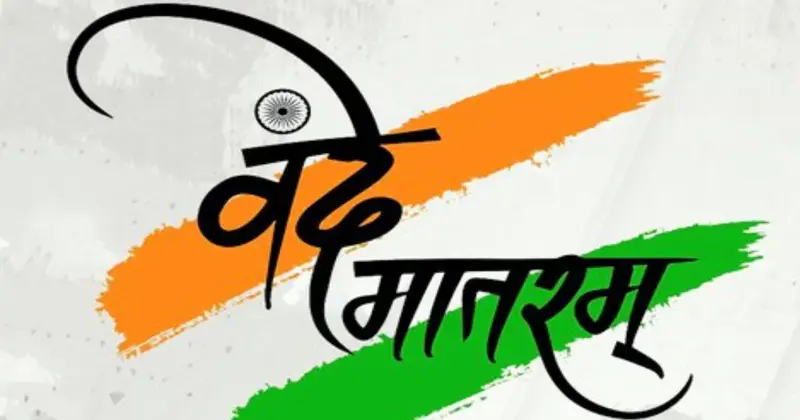
Equal status for Vande Mataram: A double honour for Bengal

During the freedom struggle, Vande Mataram emerged as a powerful mantra of national awakening. It inspired countless revolutionaries who embraced martyrdom with its words on their lips. British intelligence reports frequently observed that raids on revolutionary hideouts revealed three recurring texts: the Bhagavad Gita, Bartaman Bharat by Swami Vivekananda and Anandamath by Bankimchandra

Diganta ChakrabortyDiganta Chakraborty
Mar 8, 2026, 05:00 pm IST
inBharat, Analysis, Opinion, Culture
Follow on Google News
Facebook
Twitter
WhatsAppTelegramEmail

A few days ago, the Government of India issued a directive that from now on, Vande Mataram, composed by Bankim Chandra Chattopadhyay, will enjoy equal status alongside Jana Gana Mana at official functions. Moreover, it will no longer be rendered in truncated form; the full version will be sung at government ceremonies. For Bengalis, this is a moment of profound pride. When another composition by a son of Bengal is accorded parity at the national level, it effectively doubles the honour of Bengal itself. Yet, even in such a moment of cultural affirmation, politics moves to its own rhythm.

Certain groups have attempted to portray the move as “anti-Bengali,” arguing that granting equal status to Vande Mataram somehow diminishes the stature of Rabindranath Tagore, the composer of the National Anthem. Others have questioned whether such recognition was necessary at all. To address these concerns meaningfully, it is essential to turn to history, for historical clarity often dispels contemporary confusion.

On November 26, 1949, the Constitution of India was adopted. At the final sitting of the Constituent Assembly on January 24, 1950, its President, Rajendra Prasad, made an important statement. With little time left for elaborate debate, he declared that Jana Gana Mana would serve as the National Anthem, while Vande Mataram “shall be honoured equally and shall have equal status with it”. This was not a later political innovation but an understanding articulated at the very birth of the Republic. The principle of equal honour between the two songs, therefore, has constitutional roots.

It is also worth recalling Tagore’s own attitude toward Vande Mataram. In a letter dated October 28, 1916 to his son Rathindranath, Tagore described the hymn not merely as a tribute to Bengal but as an invocation to the Universal Mother. Significantly, it was Tagore himself who first sang Vande Mataram publicly at the 1896 session of the Indian National Congress in Calcutta. To frame the recognition of Vande Mataram as an affront to Tagore is thus historically untenable.

During the freedom struggle, Vande Mataram emerged as a powerful mantra of national awakening. It inspired countless revolutionaries who embraced martyrdom with its words on their lips. British intelligence reports frequently observed that raids on revolutionary hideouts revealed three recurring texts: the Bhagavad Gita, Bartaman Bharat by Swami Vivekananda and Anandamath by Bankimchandra. Published in 1882, Anandamath contained the hymn that would later electrify a nation.

Recognising its mobilising power, the colonial government attempted to suppress its public performance. Students were punished for singing it; meetings were dispersed; processions chanting it were lathi-charged. In 1905, two hundred students in Rangpur were fined for raising the slogan. In 1908, when Bal Gangadhar Tilak was deported to Mandalay, demonstrators who cried “Vande Mataram” faced severe repression.

The spiritual and political depth of the hymn was keenly understood by Sri Aurobindo. In 1907, writing in the newspaper Bande Mataram, he described Bankim as a Rishi who had given the nation a “reviving Mantra” that was shaping a new India. According to Aurobindo, Bankim’s supreme service lay in offering the nation a vision of the Mother. In 1907 he wrote, “It was thirty-two years ago that Bankim wrote this great song and few listened; but in a sudden moment of awakening from long delusions the people of Bengal looked round for the truth and in a fated mo-ment somebody sang Bande Mataram. The mentra had been given and in a single day a whole people had been converted to the religion of patriotism. The Mother had revealed herself…”.

Many women freedom fighters also drew strength from this mantra. Matangini Hazra continued chanting Vande Mataram until her final breath after being shot by British forces. Pritilata Waddedar echoed the same cry in her last moments following the attack on the Pahartali European Club in 1932. Even moderate nationalist leaders recognised its significance. In the words of Surendranath Banerjee, although Vande Mataram was originally a song within Anandamath by Bankim Chandra Chattopadhyay, over time it transcended the boundaries of mere literary creation. Written in Bengali, its heavily Sanskritised vocabulary enabled educated people across India to grasp its meaning with ease.

Also Read: Ayushman Bhava Holistic Healthcare Confluence 2026: Crafting an inclusive ecosystem & advancing Atmanirbharta in health

The strength of its language, the emotional power of its melody, and its profound yearning for the motherland elevated the song to a position of unique national stature. Surendranath Banerjee compared Bankim to Dante, suggesting that just as Dante had articulated the dream of Italian unity long before political leaders transformed it into reality, Bankim perhaps did not foresee that his hymn would become the mantra of a national awakening. In 1927, Mahatma Gandhi wrote that when Indians sang Bande Mataram, they sang it to the whole of India.

The historical evidence is therefore unequivocal: Vande Mataram was not merely a literary composition but a source of emotional and moral strength during India’s struggle for freedom. Article 51A of the Constitution reminds citizens of their duty to cherish and follow the noble ideals that inspired that struggle. Recognising the full text of Vande Mataram, particularly in the 150th year of its composition, can be seen as part of that constitutional responsibility.

For India as a whole—and especially for Bengal—this decision represents a moment of cultural affirmation. As the nation advances toward its centenary of independence in 2047, it may be fitting to once again echo Bankimchandra’s invocation:

“Tvam hee durga dashapraharanadharini,
kamala kamaladala viharini
Vani vidyadayini,
namami tvam
Namami kamalam
amalam atulam
sujalam suphalam
mataram!”
Topics: AnandmathWest Bengal"Vande MataramFreedom struggleSwadeshiBankim Chandra Chatterjee
Share
Tweet
SendShareSend
✮ Subscribe Organiser YouTube Channel. ✮
✮ Join Organiser's WhatsApp channel for Nationalist views beyond the news. ✮
Previous News

Assam’s Economic Resurgence: Building a new growth story in Northeast India

Next News

Shanku to Cesium: The scientific story of tracking time

Related News

RSS Akhil Bharatiya Sah-Bauddhik Shikshan Pramukh Deepak Vispute addressing the gathering

‘Nation First’ should be the guiding principle for every individual, regardless of their Field: Deepak Vispute

Vande Mataram: The eternal mantra of national consciousness

RSS Akhil Bharatiya Karyakarini Sadasya Dr Manmohan Vaidya at a Pramukh Jan Samvad Sangosthi organised by Kashi Mahanagar on the occasion of the RSS Centenary Year,

Entire society must unite with a sense of oneness; This Is the spirit of Sangh Work: Dr Manmohan Vaidya

'Vande Mataram' made mandatory at govt functions in Karnataka

Karnataka: Congress govt restricts ‘Vande Mataram’ to two stanzas despite centre’s full song directive

Darjeeling District Police arrested TMC leader Kajal Ghosh in a land-grabbing and forgery case involving a 72-year-old woman

West Bengal: TMC leader Kajal Ghosh arrested in Darjeeling over land grab, forged documents & record manipulation

Vande Mataram remains an enduring symbol of Bharat’s civilisational heritage, national unity and deep-rooted love for the motherland

Vande Mataram: Reclaiming a civilisational legacy against opposition cynicism

Load More

Latest News

Anything illegal will not be tolerated: Dilip Ghosh after West Bengal govt orders closure of 252 unauthorised madrasas

BRICS 2026: Brick by Brick

Bhagwan Ganesh

Ganesh Chaturthi: Awakening the Ganesha within

Tamil Nadu: Hindus protest TVK govt restrictions on Vinayaka Chaturthi celebrations in Muslim-dominated areas

Women’s Asia Cup 2026: India win the title; Mohsin Naqvi takes trophy away again—A breather for Pakistan’s headlines

Karnataka ‘Anti-Hindu’ face of state govt exposed? BJP leaders detained over Ganesh procession

A representative image

How PM SHRI schools are changing the way Bharat thinks about education

Cocroach Abhijit Dipke plays as MP CM, but is it an act? Who gave him this authority?

Abhijit Dipke ‘Resigns’ as MP CM, but when did he become Chief Minister & in what capacity did he use state symbols?

Ganesh Chaturthi 2026

Ganesh Chaturthi 2026: From Lalbaugcha Raja to Kolkata’s ‘New Bengal’, faith & festivity centre stage

Rashtriya Hindi Diwas (AI-generated Image)

Rashtriya Hindi Diwas 2026: From Devanagari to AI, Hindi charts a powerful new journey

Load More
  • Privacy
  • Terms
  • Cookie Policy
  • Refund and Cancellation
  • Delivery and Shipping

© Bharat Prakashan (Delhi) Limited.
Tech-enabled by Ananthapuri Technologies

  • Home
  • Search Organiser
  • Bharat
    • Assam
    • Bihar
    • Chhattisgarh
    • Jharkhand
    • Maharashtra
    • View All States
  • World
    • Asia
    • Africa
    • North America
    • South America
    • Europe
    • Australia
  • Editorial
  • Operation Sindoor
  • Opinion
  • Analysis
  • Defence
  • Culture
  • Sports
  • Business
  • RSS @ 100
  • Entertainment
  • More ..
    • Sci & Tech
    • Vocal4Local
    • Special Report
    • Education
    • Employment
    • Books
    • Interviews
    • Travel
    • Health
    • Politics
    • Law
    • Economy
    • Obituary
  • Subscribe Magazine
  • Read Ecopy
  • Advertise
  • Circulation
  • Careers
  • About Us
  • Contact Us
  • Policies & Terms
    • Privacy Policy
    • Cookie Policy
    • Refund and Cancellation
    • Terms of Use

© Bharat Prakashan (Delhi) Limited.
Tech-enabled by Ananthapuri Technologies