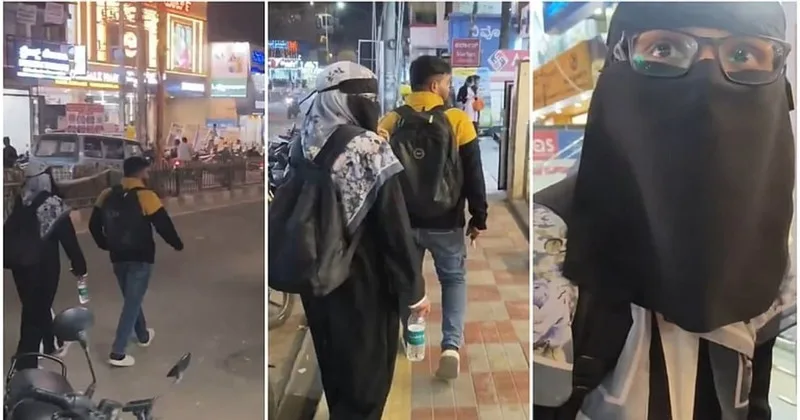
Bengaluru: A fresh case of alleged moral policing has surfaced in Bengaluru after a group of youths reportedly stopped and questioned a Muslim woman who was walking with her Hindu friend on a public road. The incident, which was recorded on video, has gone viral on social media and triggered widespread outrage among citizens and activists.
According to reports, the woman was walking along a road in the city with her Hindu male friend when a group of young men approached them and began questioning them about their relationship. The youths allegedly confronted the pair in public and demanded to know why they were together.
Yesterday in Bengaluru: Muslim youth gang harasses Muslim girl for being with a Hindu boy. Moral policing at its finest. But if roles reversed? The usual Twitter outrage brigade would be howling.
Double standards much?#Hypocrisy #Interfaith #MoralPolicing #Bengaluru pic.twitter.com/wr6WMfh4Aa
— ಸನಾತನ (सनातन) (@sanatan_kannada) March 7, 2026
In the video that has now been widely circulated online, the group can be seen surrounding the two and questioning them in an aggressive manner. The youths are heard asking the woman why she was holding the hand of a Hindu man and why she was accompanying him. At one point, some of them are also heard telling the woman that she should not wear a burqa if she is going around with a Hindu youth.
The confrontation reportedly took place on a public road and lasted for several minutes. The youths continued to interrogate the woman and her friend, asking them what they were doing there and demanding explanations about their personal relationship.
The video of the incident quickly spread across social media platforms, drawing strong reactions from users who condemned the act as moral policing and an invasion of personal freedom. Many people expressed concern that such behaviour reflects a growing trend of individuals or groups trying to control the personal choices of others.
Several social media users criticised the youths for questioning the pair based on their religious identities. In the video, the group can be heard repeatedly pointing out that the man was Hindu while the woman was Muslim and asking why they were together.
The incident has sparked a broader debate about personal liberty, religious tolerance and the role of self-appointed vigilante groups in public spaces. Citizens have pointed out that public roads and common spaces belong to everyone and that individuals have the right to walk, talk and spend time with friends without fear of harassment.
Social activists and members of civil society have strongly condemned the incident, stating that no one has the authority to interfere in the private lives of consenting adults. They emphasised that questioning someone about their friendships or relationships based on religion is unacceptable in a democratic society.
Activists have also pointed out that such incidents can create fear among people and discourage interaction between communities. They warned that harassment in the name of moral policing could undermine social harmony and the values of equality and freedom guaranteed by the Constitution.
Many citizens have demanded that the authorities take strict action against those involved in the incident. They said that allowing such behaviour to go unchecked could encourage similar acts of intimidation in the future.
Legal experts and activists have also urged the police to identify the individuals seen in the video and take appropriate legal action if the allegations are found to be true.