In recent weeks of geopolitical developments, a new development in the Indian Ocean has drawn attention to India’s diplomatic conduct and civilisational ethos. The incident involved an Iranian naval frigate, IRIS Denna, which had taken part in naval battles organised by India before it sank while en route to Iran. Following this incident, India’s response was balanced, especially from a symbolic perspective. This is because India’s Foreign Secretary attended a condolence meeting at the Iranian Embassy in New Delhi, and External Affairs Minister S. Jaishankar spoke with his Iranian counterpart. These actions were not simply diplomatic but they are part of an old tradition that has been at the core of Indian statecraft for centuries “Atithi Devo Bhava” which means that a guest is to be treated with respect and dignity.
In order to understand why India has taken this approach, it is important to understand the context of the incident, Indian naval diplomacy and the ethical underpinnings of its foreign policy.
The Naval Event that Brought Iran to India
From February 16 to February 25, India hosted the International Fleet Review and the Milan naval exercises, major maritime events aimed at strengthening cooperation among navies. According to reports, the exercises brought together 74 countries and 89 warships, making it one of the largest multilateral naval gatherings in the region. Among the participants was the Iranian frigate IRIS Denna, which arrived at Visakhapatnam as a part of the Iranian Navy delegation.
The presence of the Iranian vessel symbolised longstanding maritime and cultural connections between the two countries. During their stay in India, Iranian sailors participated in ceremonial functions and interactions in the host city, indicating the spirit of cooperation that guided the naval exercises.
After the naval exercises, the voyage of the Iranian frigate towards Iran resumed. What followed next, has transformed what should have been a normal naval voyage into an international controversy.
The Incident in the Indian Ocean
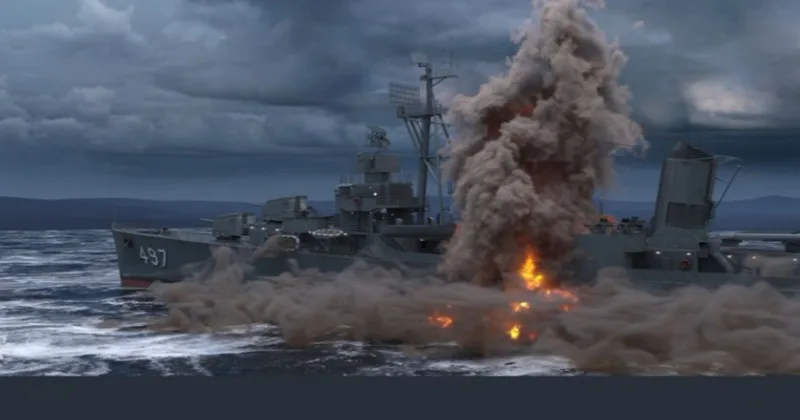
The Iranian frigate, which was cruising through international waters near Sri Lanka, was hit by a torpedo from a United States submarine. This was a direct hit by a torpedo after World War II. The ship sank, leading to major casualties among the 130 sailors on board. According to reports, 87 sailors were confirmed dead, 32 were rescued by Sri Lankan force,s and others were still missing.
The incident did not take place in Indian territorial waters, nor was the ship under Indian naval escort at the time. But the location and circumstances surrounding the incident ensured that it drew India into the discussion. This is because the ship had recently completed naval exercises with India and was cruising through the Indian Ocean, which is strategically important to New Delhi. This explains why this incident drew so much attention, which is normally reserved for naval confrontations.
India’s Immediate Response
The Indian Navy clarified that the incident occurred in international waters and that the ship was under Sri Lankan operational responsibility at the time. India responded to the distress signals by deploying patrol aircraft and warships to assist in search-and-rescue efforts. By the time Indian assets reached the location, Sri Lankan authorities had already initiated rescue operations and coordination between the two countries continued.
These actions reflect India’s established approach to maritime emergencies and humanitarian response irrespective of nationality or geopolitical alignment.
Condolence Diplomacy in New Delhi
Soon after the incident and the reported death of Iran’s Supreme Leader Ayatollah Ali Khamenei, India’s Foreign Secretary visited the Iranian Embassy in New Delhi and signed the book of condolences. On the same day, External Affairs Minister S. Jaishankar also spoke with his Iranian counterpart. This is the second conversation between the two sides after the escalation of the issue. Such actions have significant value in diplomacy. These actions show that the country acknowledges the pain and suffering but at the same time maintains the connection between the two sides. The following actions by India cannot be regarded as based on any ideology. It is based on humanitarian concerns.
Atithi Devo Bhava: A Civilisational Ethos
Beyond strategy, India’s response also reflects a cultural philosophy deeply embedded in its social and political traditions, “Atithi Devo Bhava,” which means “the guest is equivalent to God.”
The Iranian sailors who had participated in the fleet review were guests of India’s navy only days before the tragedy. They had come to the country for a cooperative maritime exercise and had interacted with Indian counterparts in a spirit of friendship. The symbolic connection between that hospitality and the subsequent tragedy cannot be ignored.
Since the incident was out of India’s jurisdiction, the acknowledgement of the loss of the people who had recently been accepted by India was in the context of the country’s ethos. The condolence visit and diplomacy were acts as a moral responsibility rather than political posturing. In diplomacy, symbolism is as important as the actions themselves, and India’s actions conveyed that the country had respect and empathy for the situation.
Jerusalem and Other Countries
India has shown similar diplomatic understanding in many other situations as well. When situations arise in other nations with which India has some kind of relationship, the country usually expresses condolences and continues diplomatic talks regardless of the situation.
This has been the case in situations arising in places like Jerusalem and West Asia, in which India has always sought to maintain relationships with multiple parties while showing diplomatic courtesy.
Such gestures do not imply endorsement of any side in a conflict, but it reinforces India’s role as a responsible and respectful international actor.
Strategic Implications for the Indian Ocean
The incident also raises questions about the evolving security dynamics of the Indian Ocean region. India views the region as a zone where it plays a stabilising role and often refers to itself as a “net security provider.”
An attack on a naval vessel returning from Indian exercises within the broader maritime neighbourhood naturally attracts attention. While India has avoided direct confrontation or public condemnation, it is evident that developments of this nature could influence regional stability.
Diplomacy Anchored in Values
India’s actions in this episode illustrate the combination of pragmatism and principle that characterises its foreign policy. The condolence visits by the Foreign Secretary and the conversation between S. Jaishankar and his Iranian counterpart were not dramatic gestures. But it carried a powerful message about the Indian approach to global affairs.
Even amid geopolitical rivalry and conflict, India remains able to draw on its civilisational values that stress respect, dialogue and hospitality.
In a world where power politics seems to drive international relations, such actions may seem trivial. It reinforces India’s commitment to itself as a country that seeks to balance hard-nosed realism with cultural sensitivity.
This balance is the essence of Indian diplomatic philosophy, rooted in firmness in its interests and committed to the eternal truth that the guest is to be treated with honour and dignity.