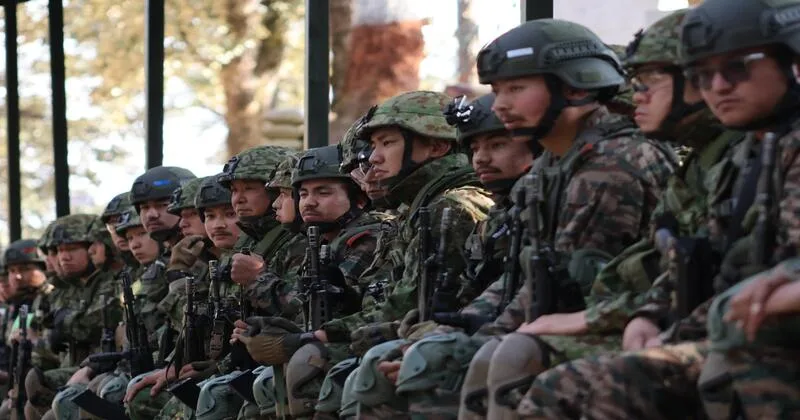
Chaubattia in Uttarakhand has become the focal point of strategic military cooperation as the seventh edition of the India–Japan joint military exercise ‘Dharma Guardian’ continues at the Foreign Training Node. The ongoing exercise reflects the deepening defence partnership between India and Japan and is designed to enhance the operational synergy between the armed forces of both countries.
The exercise began on February 24 and will conclude on March 9, 2026. A total of 240 soldiers—120 from each country—are participating in the joint training program. The Japanese contingent represents the 32nd Infantry Regiment of the Japan Ground Self-Defense Force, while the Indian side is being represented by troops from the Ladakh Scouts regiment of the Indian Army.
The training commenced with orientation and integration activities aimed at familiarising the troops with each other’s operational procedures, command structures, and equipment. Following the initial phase, the exercise progressed into intensive joint training sessions focusing on coordinated operations in semi-urban and complex environments.
Military officials stated that the exercise places significant emphasis on achieving high standards of physical fitness, joint operational planning, and seamless coordination between the participating forces. Special attention is being given to interoperability, ensuring that troops from both nations can operate effectively together during real-world operational scenarios.
Several key tactical activities form part of the training program. These include the establishment of temporary operating bases, development of Intelligence, Surveillance and Reconnaissance (ISR) grids, and the setting up of mobile vehicle check posts in simulated hostile environments. The troops are also conducting cordon and search operations, heliborne missions, and house intervention drills designed to simulate counter-terror and urban warfare scenarios.
Such exercises are particularly significant in the context of evolving global security challenges, where coordinated responses and multinational cooperation are becoming increasingly essential. The joint training not only enhances combat readiness but also helps both forces exchange best practices and operational knowledge.
The exercise will conclude with a validation phase, during which the standards achieved during the training will be evaluated through a comprehensive field scenario. This final drill will test the combined capabilities of the participating soldiers in executing integrated operations under simulated battlefield conditions.