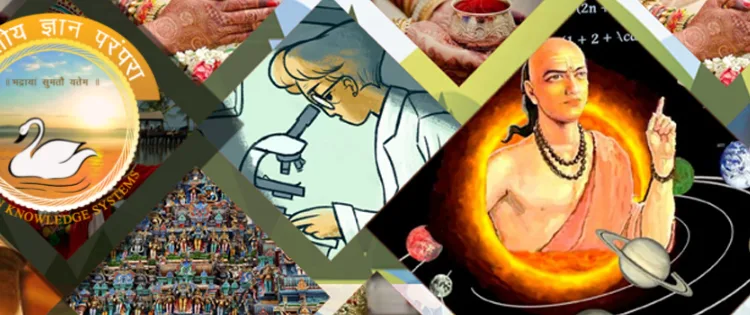
India’s higher education landscape is undergoing a structural transformation anchored in civilisational self-awareness and academic reform. Over the past five years, leading national institutions, including IIT Kharagpur, IIT Madras, IIT Mandi, IIT Gandhinagar, IIM Nagpur, IIM Sambalpur, Nagaland University, Central Sanskrit University and Pondicherry University, have moved Indian Knowledge Systems from policy articulation to institutional practice.
The vision outlined in the National Education Policy 2020 is no longer confined to frameworks and guidelines. It is unfolding across campuses through new centres of excellence, interdisciplinary research laboratories, compulsory coursework, faculty development programmes, international seminars and collaborative memoranda of understanding. From Sanskrit and astronomy to consciousness studies and sustainable management, Indian Knowledge Systems are being integrated into mainstream academia through structured initiatives.
Between 2020 and 2025, this shift has evolved into a coordinated academic movement. Institutions have aligned curricula with indigenous epistemologies, opened research fellowships to gurukul scholars, launched global seminars and created platforms that bridge classical knowledge with modern scientific inquiry. These developments mark a deliberate recalibration of higher education toward a hybrid academic model rooted in tradition and contemporary scholarship.
1. IIT Kharagpur to Launch India’s First Master’s Programme in Indian Knowledge System
The Indian Institute of Technology Kharagpur has announced plans to introduce a new master’s programme in the Indian Knowledge System (IKS), marking the first such offering at this level in the country. The programme is scheduled to begin in June 2026 as part of the institute’s Platinum Jubilee Year celebrations.
The Master of Science (MS) course will explore India’s mathematical and scientific traditions, linguistic theories, principles of holistic wellness and leadership values. Organisers say the curriculum will blend classical Indic knowledge with contemporary academic methods and modern scientific and technological perspectives.
Initially, the programme will admit 15 students. Topics will include foundational Sanskrit studies to develop linguistic competence and familiarity with classical texts, alongside subjects like trigonometry and astronomy interpreted through traditional Indian thought.
The institute said the programme aligns with the National Education Policy 2020, and represents an effort to situate India’s traditional knowledge systems within rigorous academic frameworks.
2. IIM Nagpur and Sri Sri University Sign MoU to Promote Leadership Rooted in Spirituality and Indian Knowledge System
The Indian Institute of Management Nagpur (IIM Nagpur) and Sri Sri University (SSU), Cuttack, signed a Memorandum of Understanding (MoU) on September 11, 2025, to collaborate on academic and research initiatives that integrate contemporary management education with Indian spiritual and cultural traditions.
The agreement was formalised at a ceremony in Nagpur, where representatives from both institutions endorsed the partnership aimed at exploring leadership models influenced by spirituality and the Indian Knowledge System.
Under the MoU, the two institutions will develop academic programmes and research activities that blend modern management practices with insights drawn from India’s cultural heritage and spiritual wisdom. This includes creating case studies based on leadership and social transformation, designing executive education programmes that incorporate spiritual perspectives, and promoting elements of Indian Knowledge Systems within leadership education.
The collaboration is expected to examine perspectives from the Art of Living International Centre in Bengaluru, focusing on wellness, meditation, holistic leadership and related themes.
3. IITs to Train Delhi Government School Teachers in Indian Knowledge Systems Programme
The Indian Institutes of Technology (IITs) will train government school teachers in Delhi under a new programme on Indian Knowledge Systems (IKS), beginning in September. The initiative aims to integrate ancient Indian knowledge with modern teaching methods.
The programme will be conducted at IIT Mandi and IIT Gandhinagar. It is expected to be a five- to seven-day immersion into India’s intellectual legacy.
According to the plan, participating teachers will be introduced to traditional knowledge systems, including philosophy, Sanskrit, yoga, Ayurveda, classical arts and sciences, and ancient texts such as the Vedas and Upanishads.
Delhi Education Minister Ashish Sood stated that the goal of the initiative is to empower children to connect with their heritage by combining contemporary teaching techniques with India’s cultural traditions.
The first phase will involve the selection and grouping of at least 50 government school teachers into groups of five. Each cohort will attend a week-long training module at the respective IIT campuses.
Officials said the workshops are intended to go beyond academic instruction and are envisioned as immersive experiences where historical knowledge and pedagogy intersect.
4. IIT Mandi, Parul University Partner on Mental Wellbeing Research Collaboration
The Indian Institute of Technology Mandi and Parul University signed a memorandum of understanding (MoU) aimed at advancing research and initiatives in holistic mental wellbeing by combining modern neuroscience with elements of traditional Indian knowledge systems.
Professor Laxmidhar Behera, director of IIT Mandi, said the collaboration will establish a dedicated centre focused on Indian knowledge systems and mental health. Through joint efforts, the two institutions plan to deepen research and promote practices inspired by Indian traditions for improved mental wellbeing.
Behera made the remarks during the signing event in Vadodara, where he was joined by scientists including Padma Shri and Padma Bhushan awardee Vijay Bhatkar, known for his role in India’s national initiative in supercomputing, who was attending BLAIM 2025, an international conference on mindfulness, behavioural science, legal innovation and emerging technologies such as artificial intelligence.
5. Setubandha Vidwan Yojana Opens IIT Research Fellowships to Gurukul Scholars
The Government of India has introduced a new initiative, Setubandha Vidwan Yojana, aimed at bridging traditional Indian education systems and modern academic research. Under the scheme, students from the gurukul system, including those without formal academic qualifications, can apply for research fellowships at institutions such as the Indian Institutes of Technology (IITs).
The initiative seeks to recognise knowledge embedded in traditional Indian disciplines, including Sanskrit, Ayurveda, philosophy, mathematics and classical arts. Selected scholars will receive monthly stipends and annual research grants to support their work.
The scheme marks a national-level effort to acknowledge expertise rooted in the Shastras and Indian Knowledge Systems independent of formal schooling credentials. To be eligible, candidates must have completed at least five years of study at a recognised gurukul and demonstrate proficiency in fields such as philosophy, mathematics, Ayurveda, Sanskrit or the performing arts.
Research fellowships are offered in two categories. At the postgraduate level, scholars will receive Rs 40,000 per month along with an annual research grant of Rs 1 lakh. At the PhD level, the fellowship provides Rs 65,000 per month and an annual research grant of Rs 2 lakh.
Fields of research under the scheme include Anvikshiki Vidya, covering philosophy and cognitive science; Ganit-Bhaut-Jyotish Vidya, encompassing mathematics, physics and astronomy; Bhaishajya Vidya, focused on Ayurveda and health sciences; as well as Sanskrit grammar, classical performing arts and political theory.
6. IIT Hyderabad, Central Sanskrit University Sign MoU to Advance Research in Indian Knowledge Systems
The Indian Institute of Technology Hyderabad and Central Sanskrit University, New Delhi, have signed a Memorandum of Understanding (MoU) to collaborate in the areas of Sanskrit, Indian Knowledge Systems and technology-based research.
The agreement provides for joint teaching and research initiatives in Sanskrit, Vedic sciences, linguistics and related disciplines. The two institutions will also organise workshops and conferences, and promote faculty and student exchanges.
Established in 2008, IIT Hyderabad has developed a reputation in research and academics and ranks prominently in the National Institutional Ranking Framework. The institute is also pursuing its ‘Patent a Day: Mission 365’ initiative, which aims to file one patent each day until the end of 2025.
7. Nagaland University Sanctioned IKS Research Centre to Study Indigenous Water Management and Ethnic Culinary Practices
Nagaland University has been sanctioned an Indian Knowledge Systems (IKS) Research Centre to study indigenous water management practices in agriculture and ethnic culinary traditions among tribal communities in the state.
A university official said these systems are integral to agricultural livelihoods and cultural identity in the region. He stated that the Indian Knowledge Systems (IKS) is an initiative under the Union Ministry of Education at the All India Council for Technical Education in New Delhi. The IKS initiative works to promote traditional knowledge and heritage in areas such as arts and literature, agriculture, basic sciences, engineering and technology, architecture, management and economics.
Vice Chancellor Prof. Jagadish K. Patnaik said Nagaland’s indigenous tribes possess unique traditional water management systems and ethnic cuisine practices. He stated that documenting and disseminating this knowledge would support sustainability and enable further adoption.
Traditional water management practices in Nagaland include rainwater harvesting through ponds and wooden tanks, terracing for erosion control, spring water management and the use of bamboo pipes for long-distance water transport. These practices support agriculture and environmental conservation.
8. IIM Sambalpur Hosts International Seminar on Cultural Heritage and Sustainable Management in Indian Knowledge System
The Indian Institute of Management Sambalpur, through its Rangavati Centre for Excellence in Culture and Sustainable Management, in association with the Indian Council of Social Science Research, organised a one-day international seminar titled “Unknown Aspects of Freedom Struggle; Cultural Heritage and Sustainable Management in Indian Knowledge System”.
The seminar focused on lesser-known aspects of the freedom struggle in western Odisha, including the resistance led by Veer Surendra Sai and the Kudopali Massacre. It also examined the region’s cultural heritage and its relevance to sustainable management.
A research report and compendium were released during the event. More than 100 scholars, researchers and students participated in the seminar.
9. Central Sanskrit University and SSUN Sign MoU to Promote Indian Knowledge System
Central Sanskrit University and Shiksha Sanskriti Utthan Nyas signed a Memorandum of Understanding (MoU) to promote the Indian Knowledge System (IKS), Indian Studies and research at the Madhav Ganit Centre.
The agreement seeks to advance collaboration in research, academic activities and cultural initiatives centred on Indian Knowledge Systems. According to the institutions, the partnership is intended to integrate traditional Indian wisdom with contemporary education frameworks.
The MoU outlines joint efforts to strengthen research at the Madhav Ganit Centre and support academic advancement in areas related to Indian Studies and cultural heritage.
10. IIT Mandi Makes Indian Knowledge System Course on ‘Consciousness and Wellbeing’ Mandatory for BTech Students
First-year BTech students at Indian Institute of Technology Mandi are required to complete a compulsory course titled “Introduction to Consciousness and Wellbeing,” which includes topics such as the concept of the subtle body, reincarnation, near-death and out-of-body experiences.
The course is offered by the institute’s Indian Knowledge Systems department and is mandatory for all undergraduate engineering students. Other subjects listed in the syllabus include theories of consciousness, effects of Indian Knowledge Systems art and dance forms on the mind, supreme consciousness, anatomy and functionality of the physical body from the perspectives of Western medicine and Ayurveda, the gut-mind connection, and meditation.
11. IIT Roorkee Inaugurates National Youth Conference on Indian Knowledge System under G20 University Connect
The Indian Institute of Technology Roorkee held the inaugural session of the National Youth Conference on Indian Knowledge Systems (NYCIKS) on August 25, 2023, at the MAC Auditorium as part of G20 University Connect: Celebrating the Indic Wisdom. The conference is being organised in collaboration with the IKS Division of the Ministry of Education, Central Sanskrit University, the University of Patanjali, the Central Council for Research in Yoga & Naturopathy, and the IIT Roorkee Alumni Association.
The inaugural session was marked by an emphasis on the importance of developing genuine study material related to Indian Knowledge Systems. Speakers stated that developing authentic study material on IKS is the need of the time.
12. IIT Mandi Aligns B.Tech. Curriculum with NEP 2020, Emphasises Indian Knowledge Systems
The Indian Institute of Technology Mandi has revised its undergraduate curriculum in alignment with the National Education Policy 2020, placing emphasis on holistic development and Indian Knowledge Systems. The institute stated that the restructuring has been carried out under the leadership of Director Professor Laxmidhar Behera.
He said that one key aspect of NEP 2020 is the promotion of cultural heritage and that the Indian Knowledge System and Mental Health Applications Centre at IIT Mandi is ensuring that students are introduced to Indian Knowledge Systems. He added that the revised curriculum provides exposure to holistic development.
Professor Behera also stated that the Centre for Quantum Science and Technologies at IIT Mandi will build a quantum computer dedicated to advancing quantum computing and educating future generations.
According to the institute, the IKSMHA Centre focuses on research related to Indian Knowledge Systems, including areas such as consciousness studies, yoga, meditation, Ayurveda, traditional Indian medicine research and Indian performing arts. It stated that the course “Introduction to Consciousness and Holistic Well-being” offered by the centre has been made compulsory for all BTech students.
IIT Mandi reported that it has trained more than 1,000 Himachali youth, including school and college students, dropouts, and faculty members from Himachal government polytechnic and engineering colleges. The institute stated that over 60 per cent of participants have been placed or received job offers and that several completed internships at IIT Mandi after the course.
13. IIT Madras Launches Centre for Indian Knowledge Systems to Focus on Vāstu, Astronomy and Traditions
The Indian Institute of Technology Madras has launched a Centre for Indian Knowledge Systems under its Department of Humanities and Social Sciences. The Centre will focus on four thematic areas: mathematics and astronomy in India; architectural engineering, Vāstu and Śilpa-śāstra; Indian political and economic thought; and Indian aesthetics and grammatical traditions.
The Centre will initially design and offer courses related to these thematic areas to students of IIT Madras. These courses are subsequently planned to be offered on the NPTEL platform for wider dissemination.
With the establishment of the new Centre, IIT Madras aims to publish quality research related to Indian Knowledge Systems. The research will involve collaborations with external scholars and institutions.
The Centre also plans to host workshops to familiarise school teachers and students with various aspects of Indian Knowledge Systems. It further intends to reach out to the public through popular writings and social media posts.
14. IIT Gandhinagar Offers Indian Knowledge System Course on Precolonial Literatures, Open to Non-IITians
The Indian Institute of Technology Gandhinagar has announced the sixth edition of its elective course, Introduction to Indian Knowledge Systems (IKS), offered by the Humanities and Social Sciences discipline. The course will be conducted in hybrid mode from January to April 2022, enabling interested participants to register and attend from anywhere in the world.
The course is open to students and others interested in India’s knowledge systems and cultural heritage. Participants can join free of cost after online registration through the course website. Lectures beginning January 13 are generally scheduled on Thursdays and Fridays from 5:05 pm to 6 pm. The website will carry announcements and updates regarding speakers and lectures.
In an official statement, IIT Gandhinagar said that precolonial India encompassed a diversity of languages ranging from Sanskrit to numerous regional languages, along with a wide range of themes, literary techniques and sociocultural functions. The institute stated that this “literaturescape” had a deep impact on the Indian subcontinent and played a significant role in shaping Indian civilisation.
15. IIT Gandhinagar Begins Online Indian Knowledge System Course on ‘Indian Web of Arts and Aesthetics’
The Indian Institute of Technology Gandhinagar is set to begin the fifth edition of its elective course, Introduction to Indian Knowledge Systems (IKS), in online mode from January to April 2021. The course is offered by the Humanities and Social Sciences discipline of the institute and carries the theme “The Indian Web of Arts and Aesthetics.”
According to the institute, the theme is based on the idea that Indian aesthetics emerged not only from theoretical frameworks grounded in fundamental concepts, including those codified in the Natyashastra, but also from diverse regional traditional practices. Some of these practices revolve around the classical-folk dialogue, often described as the marga-deshi dynamic, which led to the emergence of classical art forms and literary genres with a recognisable pan-Indian character.
The course will feature around 13 scholars, practitioners and cultural proponents from India and abroad. The course coordinators include Professor Michel Danino and Ms Mana Shah from IIT Gandhinagar. The speakers will examine the processes underlying Indian arts and aesthetics and their contribution to the cultural integration of Indian civilisation.
16. Centre of Excellence for Indian Knowledge System Announced at IIT Kharagpur
The Indian Institute of Technology Kharagpur will establish a Centre of Excellence for Indian Knowledge System (IKS) following an announcement by the Union Education Minister.
The Centre of Excellence is intended to promote research in India’s scientific, linguistic and cultural heritage. The initiative aims to integrate Indian Knowledge Systems into modern education and research frameworks.
According to the announcement, the Centre will encourage interdisciplinary studies in areas including Sanskrit, Ayurveda, mathematics, astronomy and ecology. It is also intended to strengthen India’s traditional knowledge systems in alignment with the objectives of the National Education Policy 2020.
The establishment of the Centre forms part of efforts to advance research and academic engagement with Indian Knowledge Systems within higher education institutions.
The period from 2020 to 2025 reflects a structured transition from conceptual endorsement of Indian Knowledge Systems to their institutional integration across India’s premier academic establishments. What began as a policy vision has taken tangible form through research centres, degree programmes, MoUs, compulsory coursework, teacher training initiatives and international seminars.
Across IITs, IIMs and central universities, Indian Knowledge Systems are being embedded into curricula, research frameworks and interdisciplinary platforms. The initiatives indicate a sustained institutional commitment to aligning higher education with civilisational knowledge traditions while engaging contemporary scientific tools and methodologies.
The trajectory from 2020 to 2025 suggests that this integration is not episodic but systemic. With national institutions leading structured implementation, Indian Knowledge Systems have entered a phase of organised academic mainstreaming within India’s higher education ecosystem.