Israel spent years quietly embedding itself inside Iran’s surveillance infrastructure, according to a detailed report by the Financial Times. Citing current and former Israeli intelligence officials, the newspaper claimed that nearly all traffic cameras across Tehran had been compromised long before the strike that killed Khamenei.
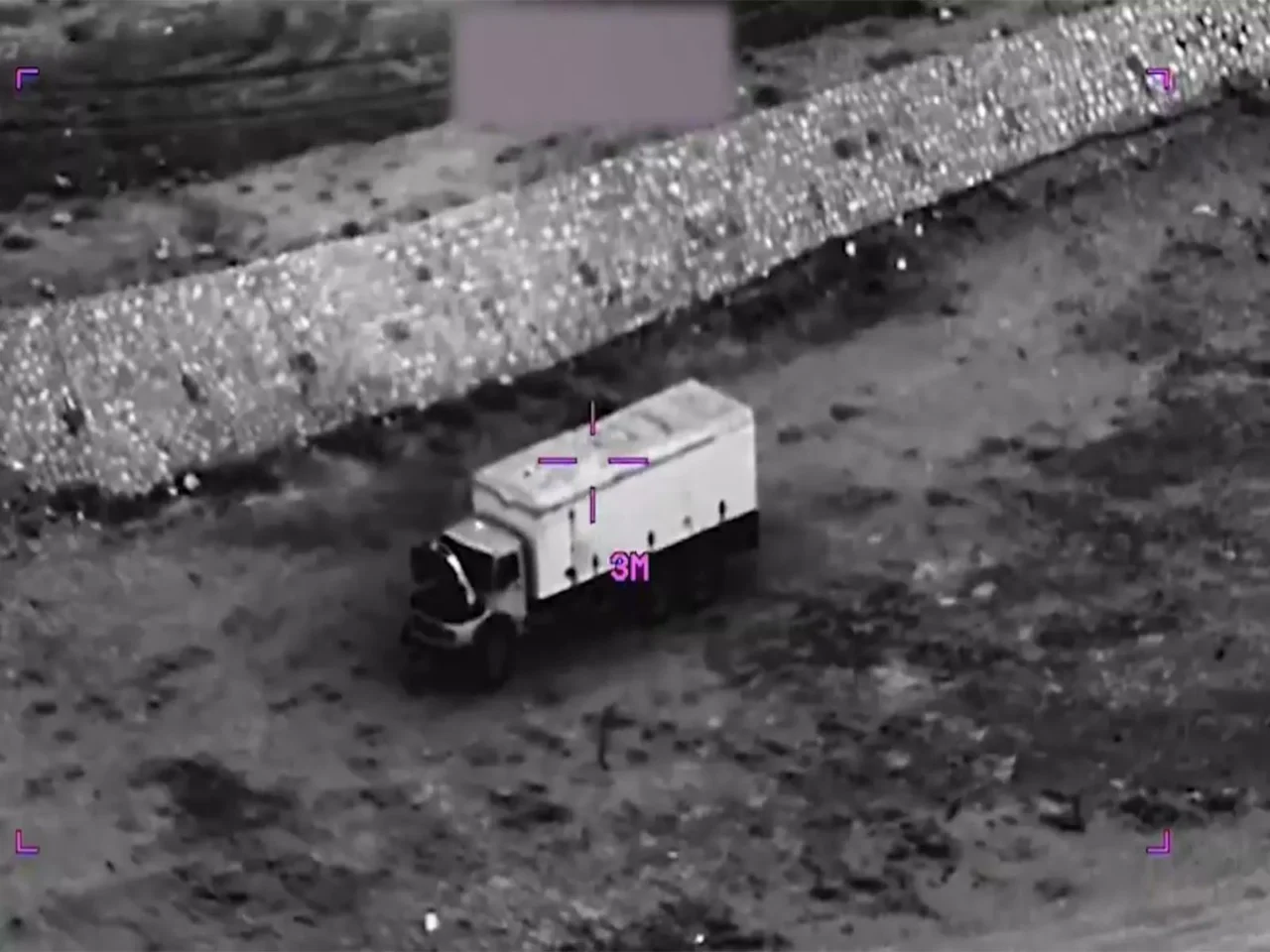
The report alleges that encrypted footage from the Iranian capital was transmitted to secure servers located in Tel Aviv and southern Israel. Among the most valuable feeds, sources said, was a specific camera angle near Pasteur Street, the highly secured district that houses the offices of the Supreme Leader and key state institutions.
That vantage point reportedly allowed analysts to observe where security personnel parked, track the movement of bodyguards, and identify daily patterns within the compound. Over time, such surveillance built a behavioural map, a predictive profile of routines, vulnerabilities and fallback options.
Phone networks under watch
The alleged operation extended beyond static cameras. According to the report, Israeli intelligence infiltrated segments of Iran’s mobile phone networks, enabling the tracking of communications and movement patterns associated with Khamenei and his inner circle.
Parallel reporting by CNN suggested that US and Israeli intelligence agencies jointly analysed Khamenei’s lifestyle in detail, where he resided, whom he met, how he communicated, and potential locations he might retreat to under threat.
Such monitoring was not limited to the 86-year-old cleric alone. Senior military and political leaders, including members of the Islamic Revolutionary Guard Corps (IRGC), were also tracked. Intelligence officials reportedly paid close attention to rare moments when multiple high-ranking figures gathered within proximity.
The strike that followed
According to an unnamed Israeli military official cited by Associated Press, the final assault was launched in daylight, deviating from earlier plans for a night strike.
At approximately 6 am local time in Israel, fighter jets reportedly fired precision-guided munitions at three targets inside the Tehran compound within a span of 60 seconds. The coordinated US-Israeli operation killed Khamenei and roughly 40 senior officials, including the chief of the Revolutionary Guard, the official claimed.
The choice of a daytime attack was described as a calculated move to introduce surprise. Iranian leadership may have anticipated nocturnal action; daylight altered that expectation.
Lessons from Hezbollah
The alleged long-term infiltration of Iranian infrastructure mirrors earlier Israeli intelligence operations.
In September 2024, Israel’s intelligence agency Mossad targeted Hezbollah operatives in Lebanon and Syria using explosive-rigged pagers and walkie-talkies. The devices were reportedly modified to conceal small explosive charges, tested extensively to limit collateral damage.
Agents allegedly used shell companies including one in Hungary to deceive the Taiwanese manufacturer Gold Apollo into unknowingly partnering in the supply chain. Hezbollah members were persuaded to adopt upgraded pagers through coordinated advertising campaigns that highlighted improved durability and battery life.
The operation demonstrated Israel’s emphasis on precision infiltration, exploiting supply chains, communication devices and behavioural habits rather than relying solely on conventional force.
Regional escalation
The killing of Khamenei marked a turning point in the regional conflict. US officials say more than 1,250 targets inside Iran have since been struck, 11 Iranian ships destroyed and at least 10 warships sunk. Iranian retaliatory attacks on Kuwait reportedly killed six US service personnel.
The widening war has engulfed the Gulf, causing civilian casualties in Iran, Israel and Lebanon. Air travel routes have been disrupted, and maritime shipping through the Strait of Hormuz, a corridor for nearly one-fifth of global oil trade has been temporarily suspended, driving energy prices sharply higher.
Intelligence as the decisive edge
If the Financial Times report is accurate, the operation against Khamenei shows a defining feature of modern conflict: infrastructure is intelligence.
Traffic cameras, telecom grids and civilian networks are no longer neutral utilities. They can become strategic assets when penetrated by hostile actors. The alleged years-long monitoring campaign suggests that the strike was not merely an opportunistic attack but the culmination of sustained surveillance, data aggregation and behavioural analysis.
The implications are significant. If a capital city’s surveillance ecosystem can be remotely compromised and encrypted feeds siphoned abroad, it raises broader questions about the resilience of state-controlled digital systems.
What remains unanswered
Iranian authorities have not publicly confirmed or detailed any breach of traffic camera networks or telecom infrastructure. The absence of an official response leaves critical questions open: How deep did the infiltration go? Was it limited to select nodes, or systemic? And could similar vulnerabilities exist elsewhere?
As regional tensions continue, the alleged operation represents a stark illustration of how intelligence collection can quietly shape battlefield outcomes. Long before fighter jets take off, the decisive moves may already have been made, in server rooms, data centres and encrypted channels far from public view.
![Smoke rises after a strike on the service center of the US Fifth Fleet in Manama, Bahrain [Reuters]](https://organiser.org/wp-content/uploads/2026/03/2026-02-28t100535z_1207820246_rc2xuja1xo4r_rtrmadp_3_iran-crisis-bahrain-1-1772438251-120x86.webp)