As the scent of gulaal fills the air and streets burst into a riot of colours, India prepares itself to celebrate Holi 2026, one of the most vibrant festivals in the world. Known as the festival of colours and love, Holi 2026 is not just about throwing coloured powders or splashing water; it is a cultural symphony that changes its rhythm as one travels from the snow-clad north to the coastal south of India. While the essence of Holi, i.e., victory of good over evil, and the celebration of spring, remains constant, each Indian region adds its own flavour, traditions, and legends to the festival. From Mathura’s divine raasleela to Kerala’s temple festivities, the celebrations of Holi showcase India’s incredible cultural diversity and unity. Let us dig deep into the details of how Holi is celebrated from North to South India.
The Northern Splendour: Where Holi Originated
The northern states of India are considered the cradle of Holi celebrations. Rooted in ancient legends associated with Bhagwan Krishna and Radha, the northern belt paints Holi with devotion, joy, and cultural fervour.
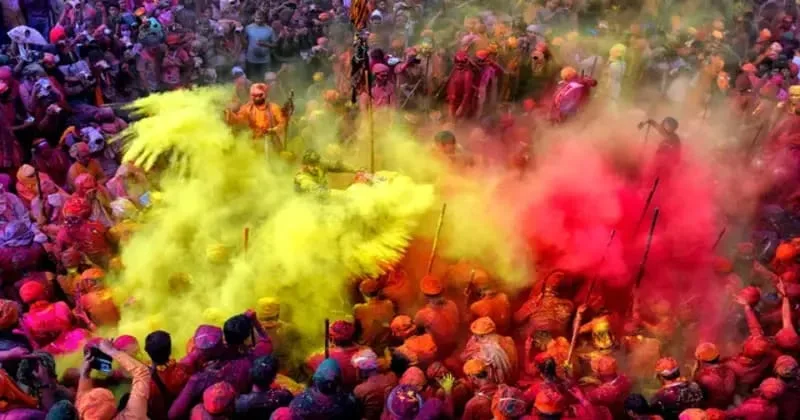
Uttar Pradesh: Land of Radha and Krishna – In Uttar Pradesh, especially in the towns of Mathura, Vrindavan, Barsana, and Nandgaon, Holi is celebrated with unmatched grandeur. Barsana’s Lathmar Holi is one of the most famous traditions, where women playfully beat men with sticks while men protect themselves with shields. The event, filled with laughter and folk songs, is said to recreate Radha and Krishna’s playful exchanges. In Vrindavan, the Mandirs come alive with colours, bhajans, and chants. The Banke Bihari Mandir hosts a special Phoolon wali Holi, where devotees throw flower petals instead of colours. Mathura’s grand Holi procession features decorated chariots, musicians, and devotees singing devotional songs in praise of Bhagwan Krishna. In Lucknow and other cities of Uttar Pradesh, people celebrate with colours, sweets like gujiya, malpua, and thandai infused with seasonal flavours.
Punjab: Hola Mohalla by the Nihangs – In Punjab, Holi coincides with Hola Mohalla, an annual fair started by Guru Gobind Singh Ji. Instead of just colours, the festival here celebrates valour and discipline. The Nihang Sikhs display their martial arts skills, horse riding, and mock battles. Anandpur Sahib becomes the hub of activity, blending spirituality, courage, and festivity. The evenings, however, turn musical with folk dances like bhangra and gidda around bonfires.
Delhi and Haryana: A Splash of Modern and Rustic Fun – In Delhi, Holi has a more urban vibe, parks and colonies echo with laughter as friends gather for colour fights, music, and festive drinks. The Rang Mahotsav and community Holi parties reflect the city’s cosmopolitan spirit. In Haryana, Holi takes a rustic tone. The bhabhi-devar Holi is unique, where sisters-in-law tease their brothers-in-law with witty folk songs and playful colour fights. It’s an event filled with humour, teasing, and cultural bonding.
The Eastern Delight: Devotion and Folk Spirit
In the eastern states, Holi is celebrated as a festival of art, devotion, and folk traditions.
West Bengal: Basanta Utsav of Santiniketan – In West Bengal, Holi takes a poetic and graceful form as Basanta Utsav or Dol Jatra. Started by Rabindranath Tagore at Visva-Bharati University, this festival welcomes spring through music, dance, and poetry. Students dress in yellow and sing Tagore’s songs (Rabindra Sangeet), celebrating the arrival of Basanta (spring). Instead of loud music, there’s elegance and artistic harmony; people gently apply abir (dry colours) on each other’s faces as a mark of respect and joy.
In other parts of Bengal and Odisha, the Dol Purnima festival involves devotees swinging idols of Radha and Krishna on decorated swings while chanting devotional songs.
Bihar and Jharkhand: Folk Rhythms and Fire – In Bihar and Jharkhand, Holi begins with the lighting of the Holika Dahan bonfire, symbolising the burning of evil. Villages resonate with traditional songs called Phagua, sung with the beats of dholak and jhal. People enjoy bhang, pakoras, and gujiya, while playing with dry and wet colours the next day. The rural charm of Holi here lies in its simplicity and community bonding.
The Western Palette: Colours, Bonfires, and Brotherhood
Rajasthan: Royal and Rustic Celebrations – Rajasthan celebrates Holi with royal elegance. In Udaipur, the Mewar royal family hosts a grand celebration beginning with Holika Dahan at the City Palace courtyard, followed by a procession of horses, elephants, and royal bands. The next day, the city turns colourful with people dancing in the streets. In Pushkar and Jaipur, tourists and locals come together for musical Holi parties, combining folk music, camel rides, and traditional cuisine.
Gujarat: Holika Dahan and Dhuleti – In Gujarat, the night before Holi, people light Holika Dahan with wooden logs symbolising the victory of good over evil. The next day, known as Dhuleti, is marked by playing with colours and water. In Dwarka, the festival takes on a devotional theme with Bhagwan Krishna Mandirs organising bhajans and religious rituals. Gujarat’s Holi also coincides with the end of the harvest season, bringing farmers together in thanksgiving.
The Southern Symphony: Simplicity, Devotion, and Community
While Holi is not as widely celebrated in the southern states as in the north, the spirit of the festival has gradually spread across the region, blending with local customs and Mandir traditions.
Karnataka: Kamadahana and Folk Traditions – In Karnataka, Holi is celebrated as Kamadahana, recalling the story of Bhagwan Shiva burning Kamadeva (the god of love). Villagers light bonfires to mark this legend, and the next day, they play with colours and sing folk songs. In cities like Bangalore, Holi has evolved into a lively urban event with community gatherings, DJ parties, and cultural performances.
Telangana and Andhra Pradesh: Kamuni Panduga – In Telangana and Andhra Pradesh, Holi is celebrated as Kamuni Panduga or Kama Dahanam, again linked to the legend of Kamadeva and Shiva. Villages light bonfires and sing Holi Paatalu (Holi songs). In recent years, the youth celebrate with coloured powders, reflecting growing pan-Indian cultural integration.
Tamil Nadu: Panguni Uthiram Festival – In Tamil Nadu, Holi coincides with Panguni Uthiram, a major festival celebrating divine marriages, especially that of Bhagwan Shiva and Maa Parvati. Devotees gather in Mandirs, particularly in Madurai and Tiruchendur, for rituals, processions, and devotional songs. The focus here is on spiritual love rather than colours.
Kerala: Manjal Kuli Festival – In Kerala, Holi takes a unique form known as Manjal Kuli, celebrated by the Kudumbi and Konkani communities at Guruvayur Mandir and nearby regions.
Instead of coloured powders, people use turmeric paste (manjal) and water to play Holi, symbolising purity and prosperity. Devotional songs and temple processions mark the day, combining faith with festivity.
Despite the vast differences in customs, languages, and rituals, Holi unites India in a colourful thread of togetherness. The essence remains the same i.e., the celebration of life, love, and light over darkness. In cities across India, the modern Holi has become a social festival of harmony, bringing people from all backgrounds together. Offices, housing societies, and colleges organise eco-friendly Holi events using organic colours, water-saving techniques, and cultural performances that highlight traditional Indian values.
Holi’s colours tell a single story of unity in diversity. The festival transcends regional differences, reminding every Indian that beneath the many hues of language, caste, and culture, lies one spirit that of joy, compassion, and togetherness. Holi is not just a festival; it is India’s heartbeat that is vibrant, inclusive, and eternally colourful.