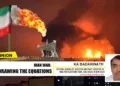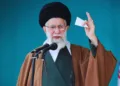

The war in West Asia has now spread beyond borders. From Monday, the Lebanese militant group Hezbollah joined the conflict by attacking Israel, saying it was in retaliation for the death of Iran’s Supreme Leader, Ayatollah Ali Khamenei.
Around 1 am on Monday, the Iran-backed group fired rockets and a swarm of drones at Israel for the first time. This came even as Hezbollah was still recovering from its previous war with Israel. The group targeted the Ramat David Airbase and said the attack was in response to Israeli airstrikes in Beirut that killed civilians.
Lebanese government demanded group to handover weapons
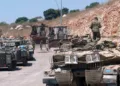
After Hezbollah joining the war, Israel responded with heavy bombardments in Lebanon, opening a dangerous northern front. By the late Monday morning, the Lebanese government reacted strongly to Hezbollah’s actions. It banned all of Hezbollah’s military activities and asked the group to hand over its weapons to the state. After an emergency cabinet meeting on Monday morning, Prime Minister Nawaf Salam said Hezbollah had ignored the wishes of most Lebanese people. The statement marked the government’s strongest position so far against Hezbollah, the militant group and political party that has held significant power in Lebanon for decades.
About Hezbollah – Who is leading the outfit?
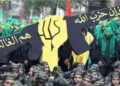
Hezbollah (Arabic for “Party of God”) is a Shia Islamist Lebanese political party and paramilitary/militant group. It functions as both a powerful political actor in Lebanon and one of the most heavily armed non-state armed groups in the world, often described as a “state within a state” due to its extensive military capabilities, social services network, media outlets, and influence over parts of Lebanese society and politics. This is the reason why Hezbollah joined the conflict with the US and Israel to avenge Iran’s supreme leader.
Hezbollah is a group in Lebanon that began in 1982 during the country’s civil war. It was formed after Israel invaded Lebanon that year. The group was inspired by Iran’s 1979 Islamic Revolution and got a lot of help from Iran’s Islamic Revolutionary Guard Corps in the form of money, training, and weapons. Its original goal was to fight against the Israeli military presence in southern Lebanon.
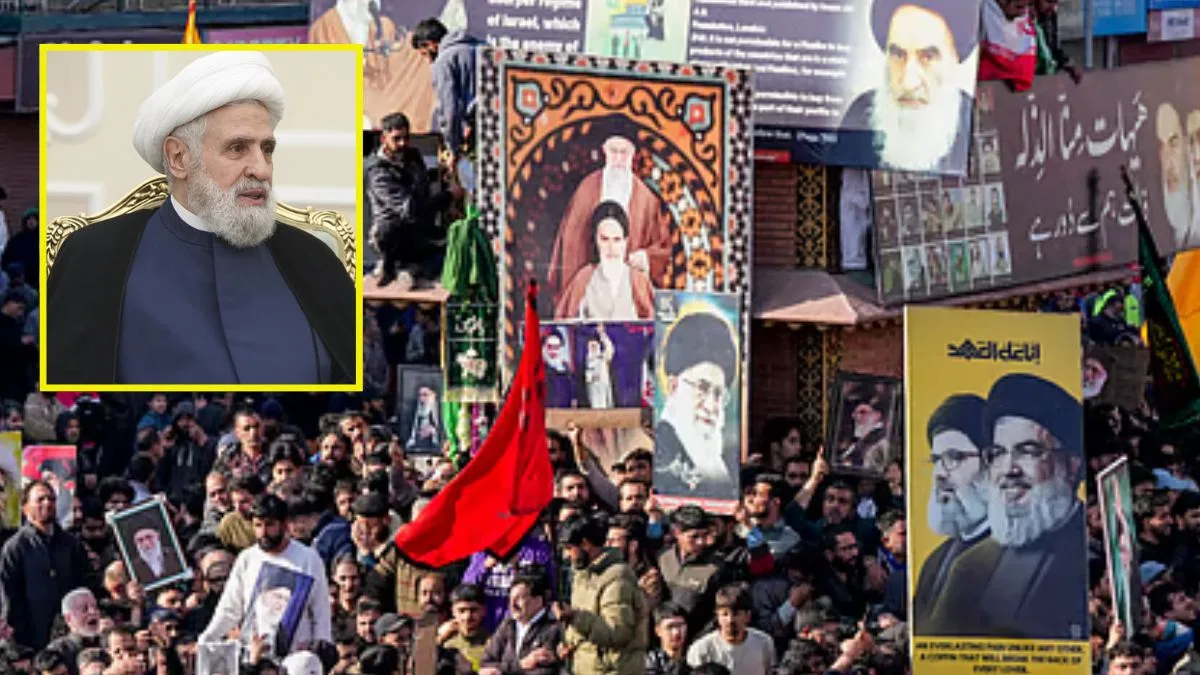
Hezbollah is currently led by Naim Qassem. He assumed leadership after the killing of longtime chief Hassan Nasrallah in an Israeli strike in 2024. Qassem had served for decades as Hezbollah’s deputy secretary-general and was considered one of the group’s key ideological and organizational figures.
Leadership Structure
Secretary-General: Naim Qassem (overall political and military head)
Shura Council: The top decision-making body overseeing political, military, and security strategies
Military Wing Commanders: Handle operational and strategic combat decisions
Hezbollah holds seats in Parliament
Hezbollah holds seats in Lebanon’s parliament, participates in governments, and provides extensive social services (schools, hospitals, welfare) in Shia-majority areas, building strong loyalty among supporters.
Military Power of Hezbollah
It maintains a large arsenal of rockets, missiles, drones, and fighters (estimates in early 2026 placed active combatants at 40,000–50,000, plus reservists). It has been called the world’s most powerful non-state armed force in recent years.
Hezbollah considered as Terrorist Organisation
Some countries, including the United States, Israel, and the United Kingdom, consider Hezbollah a terrorist organization. The European Union has listed its military wing as a terrorist group.
These countries took this step because of Hezbollah’s involvement in attacks on civilians, kidnappings, bombings, and other violent actions. One major example is the 1983 Beirut barracks bombings.
Hezbollah-Israel Fight
In October 2023, Hezbollah fired rockets at Israeli positions in support of Hamas, another group backed by Iran. Israel responded, and this led to a fierce war that lasted for a year. The fighting caused heavy damage to Lebanon and weakened Hezbollah.
Israeli airstrikes hit towns and villages in southern and eastern Lebanon, leaving many areas badly damaged. Hezbollah lost a large part of its weapons stockpile, many of its fighters were killed, and its long-time leader, Hassan Nasrallah, was also killed.
When a ceasefire was reached in November 2024, Hezbollah found it difficult to convince even its strong supporters in Lebanon’s Shiite community that the war had not ended in defeat.
In the following year, there were signs that Lebanon might begin a new phase. Lebanon is a small Mediterranean country with a mix of Shiite and Sunni Muslims, Christians, and Druse. These groups once fought each other in a violent civil war that lasted 15 years.
After years of political deadlock, the Lebanese government became more confident. It tried to use Hezbollah’s weakened position to strengthen state authority. Western countries, especially the United States, urged Lebanon to disarm Hezbollah, as many people in the country believed the group had drawn Lebanon into a costly and unwanted war.