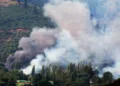
In a dramatic escalation of hostilities between Islamabad and Kabul, the Afghan Taliban government has claimed responsibility for a series of coordinated aerial strikes on key Pakistani military facilities, including the crucial Nur Khan Airbase in Rawalpindi. The announcement was made by Afghanistan’s Ministry of National Defence on March 1, intensifying an already volatile security situation along the Pakistan-Afghanistan border.
According to the Taliban’s official statement, drones operated by the Afghan Air Force targeted multiple high-value Pakistani military installations. Among the locations named were the Nur Khan Airbase in Rawalpindi, the 12th Division headquarters in Quetta (Balochistan), the Khwazai Camp in Mohmand Agency of Khyber Pakhtunkhwa, and the Ghulni military bases. These sites are regarded as critical operational hubs within Pakistan’s defence network.
The ministry described the operation as “precise and coordinated,” asserting that the strikes were aimed at what it termed “key military installations and command centers.” The statement further warned that any additional violations of Afghan airspace or acts of aggression by Pakistani forces would be met with a “swift, decisive and proportionate response.”
بِسْمِ اللَّهِ الرَّحْمَنِ الرَّحِيمِ
فَمَنِ اعْتَدَىٰ عَلَيْكُمْ فَاعْتَدُوا عَلَيْهِ بِمِثْلِ مَا اعْتَدَىٰ عَلَيْكُمْد ملي دفاع وزارت هوايي ځواکونو نن ورځ یوځل بیا د پاکستان راولپنډۍ نورخان اډه، بلوچستان کوټه ۱۲نمبر قول اردو، خیبر پښتونخوا مهمندو ایجنسي خویزو کمپ او… pic.twitter.com/tNGKTOECC2
— د ملي دفاع وزارت – وزارت دفاع ملی (@MoDAfghanistan2) March 1, 2026
Nur Khan airbase under renewed threat
The reported attack on Nur Khan Airbase carries particular strategic significance. Located in Rawalpindi, near Pakistan’s military headquarters, the airbase serves as a central logistical and operational hub for the Pakistan Air Force. Notably, the facility had not fully recovered from damage sustained during India’s Operation Sindoor last year, when it was reportedly targeted amid intense regional tensions.
Reconstruction and restoration efforts at the airbase were said to be ongoing when the latest strike allegedly occurred. Security analysts suggest that another successful hit on the facility could further undermine Pakistan’s aerial preparedness and logistics infrastructure.
Taliban officials claimed that preliminary assessments indicated “significant damage” to the targeted installations, though independent verification from Pakistani authorities remained limited at the time of reporting.
Retaliation for alleged Pakistani air intrusions
The Taliban named the operation as a retaliatory measure against what it described as repeated Pakistani air intrusions into Afghan territory. Afghan officials alleged that Pakistani forces conducted nocturnal and early-morning raids in Kabul, Bagram, and other regions in recent weeks.
The drone offensive follows Pakistan’s declaration of “open war” against the Afghan Taliban on February 27, after a surge in cross-border clashes. Islamabad has accused Taliban fighters of harboring anti-Pakistan militant elements and facilitating attacks inside Pakistani territory.
The situation further escalated after Pakistan reportedly bombed several Afghan cities, including the capital Kabul, claiming to have killed hundreds of Taliban fighters in targeted strikes.
Claim of downed Pakistani fighter jet
Adding to the growing list of confrontations, Taliban officials earlier claimed to have shot down a Pakistani fighter aircraft near Jalalabad in eastern Afghanistan. According to reports cited by AFP, a local policeman stated that the jet was downed in the sixth district of Jalalabad city and that the pilot parachuted safely before being captured alive.
While Pakistan has not officially confirmed the loss of any aircraft, the claim, if verified, would mark a significant development in the escalating conflict.
Taliban government spokesman Zabihullah Mujahid stated that Taliban forces had killed 55 Pakistani soldiers in cross-border engagements and had targeted “important military objectives” within Pakistan. He emphasised that the actions were in response to Pakistani air strikes along the border.
In retaliation, Pakistan launched strikes in Kabul, Kandahar, and Paktia under a military campaign named Operation Ghazab lil Haq. Pakistani officials described the operation as a necessary measure to neutralise threats emanating from Afghan territory.
The cycle of attack and counter-attack has significantly raised fears of a broader military confrontation between the two neighbouring countries, both of which share a historically tense and porous border.
The renewed targeting of Nur Khan Airbase, already impacted during India’s Operation Sindoor, shows the vulnerability of key military infrastructure in Pakistan amid multi-front tensions. With Pakistan simultaneously managing strained relations with India and Afghanistan, the strategic calculus for its military leadership appears increasingly complex.
As of now, both sides continue to exchange accusations and military responses, with no immediate signs of de-escalation. The coming days are likely to determine whether diplomatic channels can intervene or whether the conflict deepens into sustained armed confrontation.