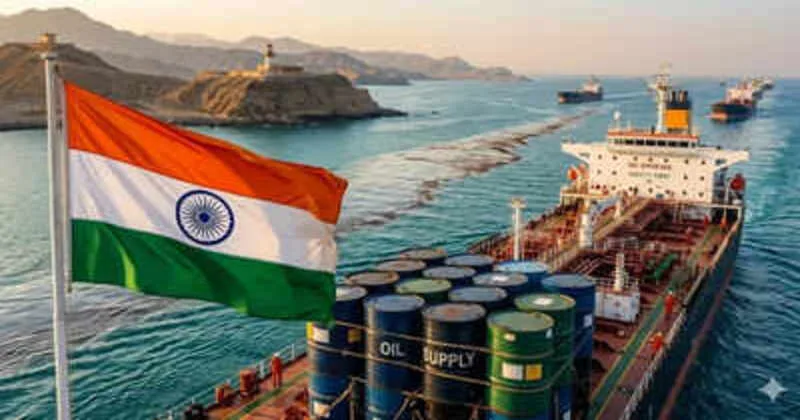
Even though Iran has decided to close the Strait of Hormuz, India is unlikely to face any immediate disruption to its crude oil and natural gas supplies. Nearly 20 per cent of the world’s oil trade passes through the Strait of Hormuz, making it one of the most strategically critical energy corridors globally. Iran’s decision follows the killing of President Khamenei in a joint United States–Israel attack, an escalation that has sharply raised tensions across West Asia.
Despite the volatility, India’s energy security remains stable in the short term. The country’s major oil companies currently hold crude reserves sufficient for about ten days of fuel production, along with additional reserves covering eight more days. This buffer provides breathing space against any temporary supply shock.
According to data from Kepler Vessel Track, a platform that monitors ships, cargo transfers and port activity in real time, India imports between 2.5 and 2.7 million barrels of crude oil per day from Iraq, Saudi Arabia, the UAE and Kuwait through the Strait of Hormuz. This accounts for more than half of India’s total crude imports. In addition, nearly 60 per cent of India’s natural gas supplies transit through the same route.
Analysts believe that a short-term closure of the Strait would not significantly impact India’s energy availability. Even in the event of a prolonged disruption, India has the flexibility to diversify sourcing and procure crude from other regions to maintain supply stability.
$100 crude fears rise, but India has strong strategic options Including Russia
Market experts warn that if the conflict in West Asia continues, global crude prices could climb to $100 per barrel. At the close of trading on Friday, crude was priced at $74 per barrel. With markets reopening amid heightened tensions, prices are expected to move toward $78 per barrel. Crude prices have already risen 16 per cent so far this year.
India may also consider resuming purchases of Russian oil, which had been curtailed amid US sanctions and escalating geopolitical tensions. Current developments in Central Asia and legal changes in the United States have created a more favourable environment for such imports. However, logistics remain a key challenge. While Gulf oil reaches India within a day, shipments from Russia can take up to a month, increasing transit time and costs.