BENGALURU: The Congress-led Karnataka government is facing intense criticism and political backlash after the Health and Family Welfare Department allegedly issued an official invitation letter exclusively in Urdu for a government programme, sparking allegations of appeasement politics and disregard for Kannada, the state’s official administrative language.
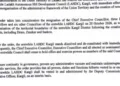
The invitation was issued for a major public health programme scheduled at the Nehru Planetarium in Bengaluru, aimed at providing preventive treatment to haemophilia patients and launching new 108 ambulance services. However, the decision to print the invitation letter only in Urdu, without including Kannada or English, has triggered widespread outrage among pro-Kannada organisations, opposition parties, and sections of the public.
Critics have questioned the government’s priorities, accusing it of sidelining Kannada despite clear legal and administrative norms. Under the Karnataka State Official Language Act, Kannada is designated as the primary administrative language, and official government communications are generally issued in Kannada and English to ensure accessibility and transparency.
Opposition leaders have alleged that the move reflects a deliberate attempt by the Congress government to pursue vote-bank politics rather than uphold the dignity of the state’s official language. They argued that Karnataka is home to people speaking multiple languages, including Tamil, Telugu, Hindi, and Tulu, and questioned why the government selectively chose Urdu for official communication.
ಓಲೈಕೆ ರಾಜಕಾರಣಕ್ಕಾಗಿ ಕನ್ನಡವನ್ನು ಸಹ ಕಡೆಗಣಿಸುತ್ತಿದೆ ನಾಡದ್ರೋಹಿ @INCKarnataka ಸರ್ಕಾರ!!
ರೋಗ ನಿರೋಧಕ ಚಿಕಿತ್ಸೆ – ಆಂಬುಲೆನ್ಸ್ಗೆ ಚಾಲನೆ ನೀಡಬೇಕಾಗಿದ್ದ ಆಹ್ವಾನ ಪತ್ರಿಕೆಯನ್ನು ಸಂಪೂರ್ಣ ಉರ್ದುವಿನಲ್ಲಿ ಪ್ರಕಟಿಸಿದೆ.
ಸಿಎಂ @siddaramaiah ಅವರೇ, ಡಿಸಿಎಂ @DKShivakumar ಅವರೇ, ಕರ್ನಾಟಕದ ಆಡಳಿತ ಭಾಷೆ ಕನ್ನಡವೋ ಅಥವಾ… pic.twitter.com/lC8v7j5KMQ
— BJP Karnataka (@BJP4Karnataka) February 25, 2026
“This raises serious questions about the government’s intentions. If inclusivity is the objective, why was Kannada, the administrative language, ignored? Why were other widely spoken languages also not considered?” opposition leaders asked, accusing the government of sending a wrong message to Kannadigas.
The controversy escalated further after Health Minister Dinesh Gundu Rao defended the decision and questioned whether Urdu speakers should be excluded. However, critics argue that the issue is not about excluding any language, but about respecting Kannada’s constitutional and administrative status in official government functions.
Pro-Kannada organisations strongly condemned the move, calling it an insult to the state’s linguistic identity. Karnataka Rakshana Vedike state president Praveen Shetty launched a scathing attack on the government, accusing it of neglecting Kannada and undermining its importance. He said Kannada has always been the primary language for official government communication, and deviation from this practice reflects misplaced priorities.
“This government has failed to protect the pride and importance of Kannada. All official invitations must be published in Kannada first. Ignoring Kannada and issuing invitations in another language raises serious concerns about the government’s commitment to the state’s identity,” he said.
Narayangowda On Govt: ಉರ್ದು ಭಾಷೆಲಿ ಸರ್ಕಾರದ ಆಹ್ವಾನ ಪತ್ರಿಕೆ..ಆರೋಗ್ಯ ಇಲಾಖೆಗೆ ನಾರಾಯಣಗೌಡ ಎಚ್ಚರಿಕೆ|#TV9D #Tv9kannada #KaraveNarayanagowda #KarnatakaRakshnaVedike #UrduLetter #GovtProgramme #TV9D pic.twitter.com/ac31s3uwRf
— TV9 Kannada (@tv9kannada) February 25, 2026
Opposition parties also linked the controversy to earlier decisions, alleging that the government had allocated disproportionately more funds for Urdu development than for Kannada. They claimed such actions have reinforced perceptions that the government is prioritising political considerations over cultural and linguistic responsibilities.
Critics have further accused the government of focusing on symbolic gestures rather than addressing pressing issues such as unemployment, infrastructure gaps, and farmer distress. They argue that such decisions erode public confidence and create unnecessary divisions.