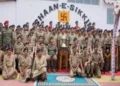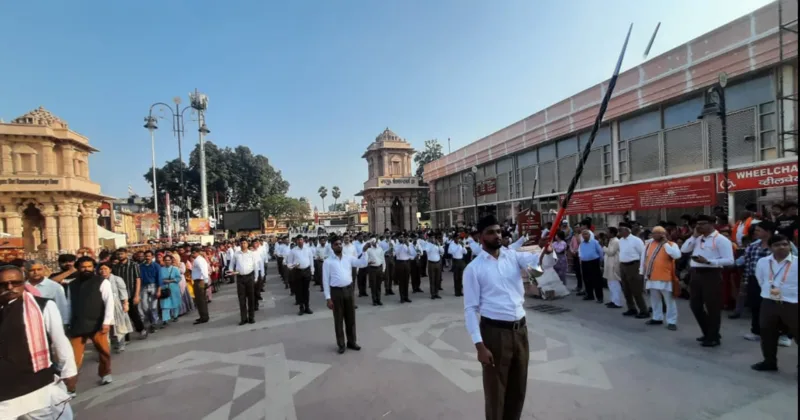
AYODHYA: On February 22, 2026, a spiritually charged and disciplined spectacle unfolded in Ayodhya as swaysmsevaks of Rashtriya Swayamsevak Sangh Delhi Prant presented a special programme “Shri Ram-Archanam,” dedicated to devotion, dedication, and national spirit towards Bhagwan Shri Ram. Moving in perfect synchronisation to rhythmic beats and melodious strains based on Bharatiya ragas, the swayamsevaks created a divine atmosphere that captivated residents and viewers alike through live telecast.
The RSS swayamsevaks, sangh ganvesh, commenced their route march from the Saryu banks on February 22 and proceeded towards Shri Ram Janmabhoomi for offering musical reverence. Upon reaching Veena Chowk, the emotional tenor of the ragas shifted as tributes were paid to martyr karsevaks and legendary vocalist Lata Mangeshkar through swaranjali.
Continuing the disciplined procession, the ghosh dal reached Hanumangarhi, where salutations were offered to Pavan Putra Hanuman. Further along Ram Path, the ensemble paused for nearly ten minutes for a sthirvaadya presentation. The march culminated at the main gateway of the Shri Ram Janmabhoomi Temple with the formal rendering of Shriramachanam. Throughout the route, shopkeepers and passers-by stood respectfully, observing the swayamsevaks performing in seamless rhythm and coordination.
The presentation highlighted India’s musical heritage through traditional instruments. The conch (bugle), shringa (tury), and venu (flute) produced melodious compositions, while the anak (small drum) delivered energetic and inspiring rhythms. All ghosh compositions were based on Indian classical ragas and prescribed rhythmic cycles, reflecting a synthesis of classical depth and organisational discipline. The balanced tempo and melodic harmony filled the surroundings with devotion and patriotic fervour.
Four prominent compositions: “Jayostute” written by Vinayak Damodar Savarkar, “Ram Stuti,” “Ram Bhakt Le Chala Re Ram Ki Nishani,” and “Shri Ram Chandra Kripalu Bhajman”—enhanced the devotional and inspirational atmosphere.
The programme aimed to convey the message of Indian tradition, discipline, cultural pride, and nationalism to society as a whole. The RSS ghosh tradition once again demonstrated its distinct identity through collective discipline, musical excellence, and cultural expression. Months of rigorous training were evident in the coordinated movements and controlled sound of the swayamsevaks, leaving spectators mesmerised.
In the concluding segment, the ghosh dal presented Shriramacharanam before Ram Lalla at the greenhouse ground within the temple complex. Subsequently, a ghosh shakha was conducted at the Singh Dwar of the precincts. After nearly 45 minutes of varied musical renditions, the shakha concluded, following which the swayamsevaks proceeded for darshan of Ram Lalla.