LUCKNOW: Uttar Pradesh latest budget and policy direction reflect a decisive shift toward infrastructure-led growth, technological transformation and grassroots economic empowerment under NDA government. With a historic budget outlay of Rs 9,16,696 crore, the state has placed development projects at the centre of its governance framework, focusing on capital investment, digital infrastructure, industrial expansion and social sector strengthening.
This development-oriented approach is designed not only to improve infrastructure but also to transform Uttar Pradesh into a trillion-dollar economy and a major investment destination in India.
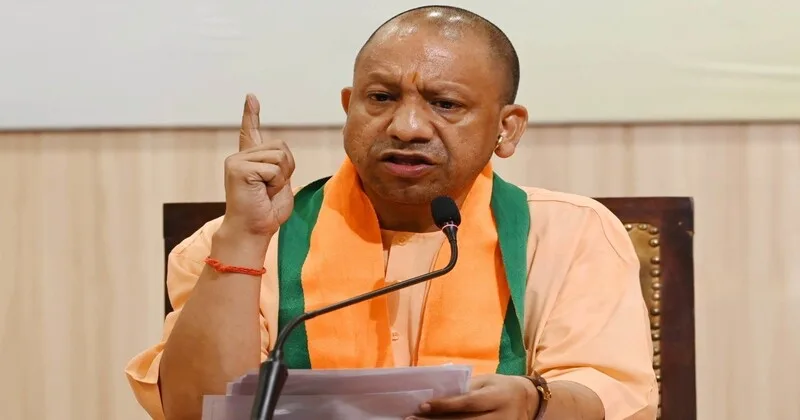
Uttar Pradesh Chief Minister Yogi Adityanath delivered his speech on Budget session which focuses over the development of UP in last 10 years, he pointed out all aspects of development that has been made by his government.
He slammed opposition party by stating: you talked about Dalits and backward classes and said that you represented socialism. But you have forgotten that the Samajwadi Party has been in power four times. During that period, every year between 1,200 and 1,500 children belonging to Scheduled Castes, extremely backward classes, minorities and poor families died due to encephalitis.
This disease used to claim lives until 2017. We formed teams to collect data, brought different organizations together and worked in different departments. When we worked together the result was clear after 2019, encephalitis was no longer a major threat and children’s lives were saved.
We never looked at this problem from the perspective of caste. Our stand is that every citizen has an equal right to government facilities and protection. Governance should be neutral and the benefits of government schemes should reach every citizen equally.
CM Yogi also share a memory when he was visiting Balrampur in 2007 after reading about children dying from an “unknown disease.” When he visited the hospital, the symptoms were clearly encephalitis, but they admitted that they did not have proper treatment facilities there.
CM also said “since we came to power, we have improved the infrastructure of healthcare and made sure that the treatment is proper. Today, deaths from encephalitis are zero. Governance is not about promises but about delivery. Our government has made sure that there is dignity and pride in Uttar Pradesh and every person from Uttar Pradesh can stand tall and represent the state in front of the nation and the world”.
आप लोग केवल जातीय आधार पर समाज को बांटते रहे,
उस दलित के बच्चे के बारे में नहीं सोचते थे, जो इंसेफेलाइटिस से पीड़ित होकर दम तोड़ता था… pic.twitter.com/a6Hn6Xd9vq
— Yogi Adityanath (@myogiadityanath) February 20, 2026
Capital Expenditure and Infrastructure as Growth Drivers
Infrastructure development continues to be the driving force behind the economic change in Uttar Pradesh. The state government has seen a rise in capital spending, which has grown from approximately Rs 71,000 crore in 2016-17 to over Rs 1,77,000 crore in recent years. This growth is a result of the focus on developing infrastructure that will help the economy grow in the long run.
The development of infrastructure through capital outlays has a multiple effect and it is estimated that for every rupee of infrastructure development, five to six times its value is created. This includes job creation, development of industries, connectivity and overall quality of life.
Large irrigation projects such as the Saryu Canal National Project, Bansagar and Arjun Sahayak projects have increased irrigation facilities for millions of hectares of land, enabling farmers to increase their productivity and make them less dependent on rainfall. The government is promoting the use of solar-powered irrigation pumps to reduce the energy bills of farmers.
The emphasis on infrastructure development has also improved the financial ecosystem of the state. The credit-deposit ratio has registered a significant increase, ensuring that the amount deposited in the banks is used in the state. This has resulted in the development of industries and enabled businessmen and entrepreneurs to take loans.
Building Digital Infrastructure: Data Centres and AI Ecosystem
Uttar Pradesh understands the significance of digital infrastructure in the current economy and is heavily investing in data centres and artificial intelligence. The state government has announced the establishment of a State Data Centre Authority to oversee and promote the development of digital infrastructure.
Data centres are now considered the backbone of the digital economy, allowing for the safe storage, processing and management of data. The state plans to develop data centre hubs and reach a capacity of 5 gigawatts by 2030, making Uttar Pradesh a prominent destination for digital services.
Another key area of emphasis is Artificial Intelligence. The government has announced that it will offer free access to AI tools and training to 25 lakh youth, so that they can acquire skills in data science, machine learning, robotics and new emerging technologies. This will enable the youth to prepare for high-value job opportunities and will also enable the development of a technology-driven workforce.
The government has launched a robotics mission with an allocation of ₹100 crore and has partnered with institutions such as IIT Kanpur to establish Centres of Excellence for drone and robotics technologies. This is to enable the development of a strong technology ecosystem that can support innovation and industrial transformation.
Enhancing Industrial Ecosystem and MSMEs
Industrial development is another key area of Uttar Pradesh’s growth strategy. The state has the largest number of MSMEs in the country, with 96 lakh MSME units which employ more than 3 crore people.
The government has also started various initiatives for the development of this sector, like easy access to credit, training, insurance and connectivity. The traditional sectors of brass in Moradabad, carpets in Bhadohi, terracotta in Gorakhpur and black pottery in Azamgarh are also being developed by modernization and global connectivity.
The “Jan Vishwas” framework has been introduced to simplify business regulations, which allows industries to operate through self-certification. This has further improved ease of doing business, and huge investments have been attracted because of this. By developing a transparent and investor-friendly system, Uttar Pradesh has become a major industrial destination for both domestic and foreign investments.
Economic Regions and Urban Development Strategy
To promote faster economic development in the region, the government has also suggested the formation of City Economic Regions. These regions include the State Capital Region, which will be around Lucknow and the Kashi-Vindhya Economic Region, which will encompass the districts of Varanasi, Mirzapur, Ghazipur, Jaunpur and Sonbhadra.
These regions are expected to be fully functional economic zones, with world-class infrastructure, industrial estates, logistics centers and urban facilities. The aim is to ensure that economic development takes place in a balanced manner in the region and that people are able to find employment opportunities in their neighborhoods.
Urbanisation is being considered a critical factor in economic development. The government is planning to develop the infrastructure of cities and link them with the districts around them to develop dynamic economic corridors that will attract investments and help develop the local economy. This will also help to develop connectivity between rural and urban areas so that economic development reaches all sections of society.
Digital Empowerment and Rural Entrepreneurship
One of the most revolutionary initiatives is the Digital Entrepreneur Scheme, which aims to create digital entrepreneurs in 8,000 justice panchayats in the state.
The scheme comprises:
• Developing a digital entrepreneur in each panchayat
• 50% of the digital entrepreneurs will be women
• Interest-free loans of up to ₹10 lakh will be provided
• Digital infrastructure and services will be developed in rural areas
This will help to bridge the digital divide and enable rural areas to access online services, e-commerce sites and government services.
Government has also decided to open marketing centers for women entrepreneurs, which will enable self-help groups to sell their products in an organized retail setup. With over 1 crore women members in self-help groups, this will help to increase the economic independence of women.
Social Infrastructure: Education, Healthcare and Human Development
The government is also working on the development of modern educational infrastructure, which includes the establishment of integrated composite schools with modern infrastructure such as digital classrooms, skill development centers and sports infrastructure. These schools will provide quality education from pre-primary to senior secondary levels in one single entity.
Healthcare development is also on the government’s agenda. The government has allocated ₹1,000 crore for ensuring safe institutional deliveries for mothers and has a target to reduce the rates of maternal and infant mortality.
Technology is being utilized in the healthcare sector to improve disease prevention, surveillance and control. Data-driven decision-making has assisted the government in effectively addressing health issues and has led to better public health outcomes.
Towards a Trillion-Dollar Economy
The development plan of Uttar Pradesh is a result of a clear vision to make the state a modern and technologically advanced area. Through the development of infrastructure, digital transformation, industrial development and social development, the state is laying a strong foundation for future growth.
The focus on data centers, artificial intelligence, industrial clusters, digital entrepreneurship and economic regions indicates a forward-looking vision that is in line with international economic trends.
The development projects are not only developing infrastructure but also providing job opportunities and empowering the people. As Uttar Pradesh is moving ahead on the path of development, it is emerging as a major contributor to the economic growth of India.