Oil prices are climbing. Wall Street is rattled. The Dow Jones Industrial Average has slid amid fears of a possible U.S. military strike on Iran. At the heart of this volatility lies a narrow strip of water between Iran and Oman, the Strait of Hormuz, through which roughly 20 million barrels of petroleum flow every single day.
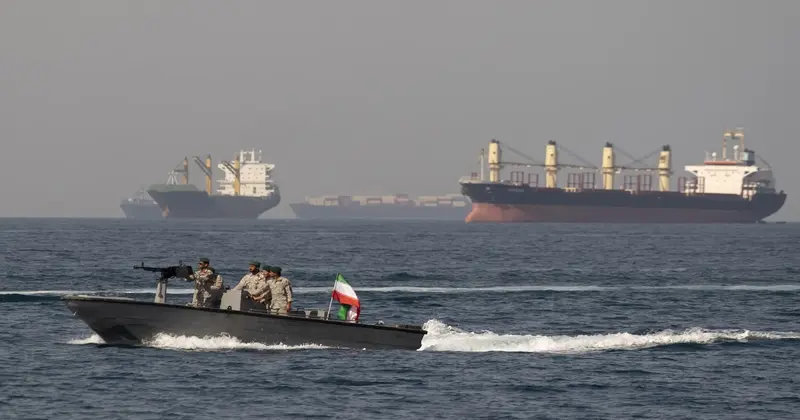
When Iranian state media reported on February 17, that the Strait was temporarily shut for military drills conducted by the Islamic Revolutionary Guard Corps (IRGC), global markets took notice. Though the closure was brief and framed as a “security precaution”, it was a sharp reminder of how fragile the world’s energy lifeline can be.
If tensions escalate further and the Strait faces a prolonged disruption, the consequences would stretch far beyond the Gulf, reaching stock exchanges, fuel pumps and household budgets worldwide, including in India.
The world’s most important energy chokepoint
Geographically, the Strait of Hormuz connects the Persian Gulf to the Gulf of Oman and the Arabian Sea. At its narrowest point, it is just about 33 kilometres wide, with even narrower shipping lanes for inbound and outbound tankers. Strategically, however, it is immense.
Nearly one-fifth of global oil consumption and a significant portion of liquefied natural gas (LNG) exports pass through this corridor daily. Major producers, Saudi Arabia, Iraq, United Arab Emirates, Kuwait and Iran, all rely on it to ship energy to global markets.
https://twitter.com/CraigTaylorViz/status/1935683595278127322
Asia is the primary destination. China, India, Japan and South Korea together account for the bulk of oil transiting the Strait. There are limited alternative routes or pipelines that can bypass Hormuz at scale. That is why it is often described as the world’s most sensitive energy chokepoint. Even the threat of disruption can send oil futures surging.
What happens if Iran closes it?
Iran has periodically threatened to shut the Strait in response to Western sanctions or military pressure. But what would an actual closure mean?
Strait of Hormuz.
With all this talk of closing/choking the “Strait of Hormuz” around, the map of Middle East and an Info video for you. pic.twitter.com/skYCQ10Yzb
— Sangha/ਸੰਘਾ/संघा/سنگھا (@FarmStudioz) June 23, 2025
Immediate oil price shock
A sustained blockade would sharply reduce global oil supply overnight. With spare production capacity limited and rerouting options constrained, crude prices could spike dramatically. Analysts have long warned that even a partial disruption could push Brent crude well above $100 per barrel.
Higher oil prices ripple quickly into:
- Petrol and diesel costs
- Airline ticket prices
- Freight and logistics charges
- Manufacturing and food inflation
Financial markets would react just as swiftly. Equity indices typically fall during energy shocks, while safe-haven assets rise.
Shipping and insurance turbulence
Insurance premiums for vessels entering the Gulf would soar. Tankers might hesitate to sail. Naval escorts from global powers, including the United States, would likely increase, raising the risk of military confrontation.
Strategic reality check
However, closing Hormuz is not simple. The U.S. Fifth Fleet, based in Bahrain, maintains a significant naval presence in the region. A prolonged blockade would likely trigger a military response. Moreover, Iran itself exports oil through the Strait. A full closure would hurt its own economy.
Historically, even during intense periods like the Iran-Iraq War, particularly the “Tanker War” phase, shipping was harassed and attacked, but the Strait was never completely sealed off for long.
Why India should be watching closely
For India, the Strait of Hormuz is not an abstract geopolitical issue, it is directly tied to economic stability.
Energy Dependence
India imports over 80 per cent of its crude oil needs. A substantial share of those imports comes from Gulf suppliers whose shipments pass through Hormuz.
A prolonged disruption would:
- Increase India’s crude import bill
- Widen the trade deficit
- Weaken the rupee
- Push up domestic fuel and LPG prices
- Add inflationary pressure to the economy
In a country where fuel costs influence everything from vegetable prices to transport fares, the impact would be felt widely.
Diaspora and trade concerns
Millions of Indians live and work in Gulf countries. Remittances from the region form a crucial component of household incomes back home. Heightened instability could disrupt not just oil flows, but trade routes and employment security for the diaspora.
Strategic Calculations
India has diversified energy sourcing in recent years, including increased purchases from Russia and other regions. It also maintains strategic petroleum reserves. But diversification does not eliminate vulnerability. The Gulf remains central to India’s energy matrix.
The Indian Navy already conducts regular deployments in the Arabian Sea to safeguard shipping lanes. In a crisis scenario, maritime security would assume even greater importance.
The long history of Hormuz: From spice route to oil artery
The Strait’s strategic value predates oil by centuries. During the medieval era, the Kingdom of Hormuz controlled trade between Persia, Arabia and India. European powers soon recognised its importance. In 1515, Portuguese commander Afonso de Albuquerque seized Hormuz to dominate the lucrative spice trade routes linking Europe to India.
Later, the Safavid dynasty expelled the Portuguese with British assistance. For the British Empire, securing Gulf waters was essential to protecting sea routes to colonial India. In the 20th century, with the discovery of vast oil reserves across the Gulf, Hormuz transformed from a commercial gateway into the central artery of the global energy system.
Since then, it has been a recurring flashpoint, during the Cold War, the Iran–Iraq War, US-Iran tensions in the 1980s, and various standoffs in the 21st century. Yet despite repeated threats, the Strait has never been permanently closed. The reason is simple: too much is at stake for too many countries.
A narrow passage, A global fault line
Today’s tensions, marked by US military deployments and Iran’s signalling through temporary closures, underscore a sobering truth: global energy security rests on a fragile maritime corridor barely 33 kilometres wide.
For investors, it means volatility.
For governments, strategic recalculations.
For energy-importing nations like India, it means vigilance.
The Strait of Hormuz may be narrow, but its impact spans continents. In moments of geopolitical strain, it becomes not just a waterway, but the pressure valve of the global economy.