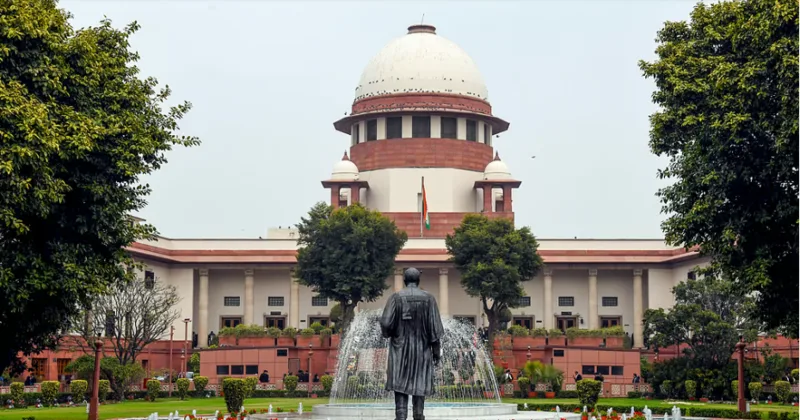
New Delhi: The Supreme Court on Wednesday (Feb 19) stayed a Madras High Court order that had effectively rendered the Tamil Nadu Waqf Board defunct over the non-appointment of two non-Muslim members.
The apex court observed that the High Court’s direction restraining the Board from functioning was unsustainable, invoking the “doctrine of necessity” to allow the body to continue discharging its duties.
A Bench led by Chief Justice of India Surya Kant, along with Justices Joymalya Bagchi and Vipul M. Pancholi, passed the interim order while hearing a plea filed by the Tamil Nadu Waqf Board challenging the High Court’s January 8 ruling.
The Madras High Court had held that the constitution of the Board was not in accordance with the law as it lacked two non-Muslim members required under Section 14 of the Waqf Act, 1995. On that basis, the High Court restrained the Board from exercising its statutory powers.
Staying the order, CJI Surya Kant remarked, “Of course the High Court is wrong. Madras High Court order rendering the board defunct is stayed. Doctrine of necessity has to function.”
The High Court had acted on a plea pointing out that one member under Clause (d) and one under Clause (f) of Section 14 of the Waqf Act, 1995 had not been nominated. These included the non-Muslim members mandated under the statutory framework.
Senior Advocate P. Wilson, appearing for the Waqf Board, submitted before the Supreme Court that eight members had already been appointed and that only three vacancies remained.
The Bench directed that it be informed about the status of the remaining appointments at the next date of hearing. “Let us know on next date who can be these three members also,” the court observed.
By staying the High Court’s order, the Supreme Court ensured that the Tamil Nadu Waqf Board can continue to function pending further adjudication. The invocation of the doctrine of necessity suggests that statutory bodies cannot be rendered non-functional due to procedural or temporary vacancies if essential public functions are at stake.
The matter will now be heard further, with the court expected to examine compliance with the statutory composition requirements under the Waqf Act.