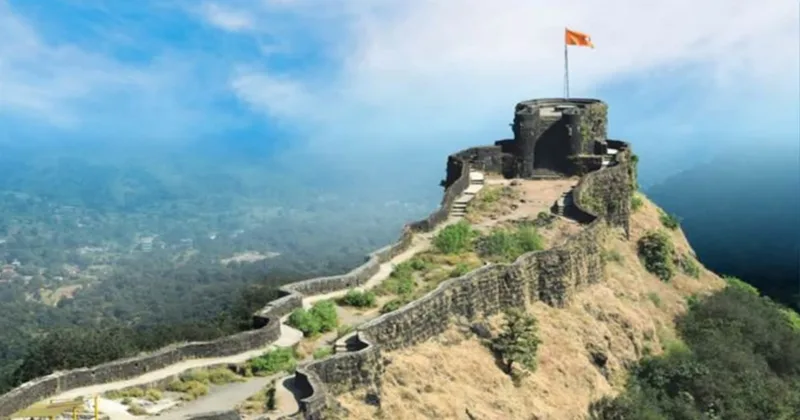
On the birth anniversary of Chhatrapati Shivaji Maharaj, the story of his forts, his gadh, becomes central to understanding his genius. These were not mere military outposts. They were the physical expression of Swarajya: self-rule rooted in terrain, people, and preparedness.
Shivaji Maharaj did not inherit a ready-made empire. He built one from fractured local power centres, hostile imperial forces, and an exposed coastline. In that fragile beginning lay his greatest foresight. He understood that sovereignty in India could not rely only on armies; it had to be secured through geography, infrastructure, and constant vigilance.
The founder of the gadh system
Shivaji called his forts gadh, living strongholds rather than static castles. Each gadh was a node in a wider network: administrative headquarters, supply depots, intelligence stations, and sanctuaries during crisis. They allowed a decentralised state to function even when central authority was under attack.
Forts such as Raigad Fort, Pratapgad Fort, and Sinhagad Fort were not accidental hilltop structures. They were chosen, designed, and reinforced with a deep understanding of terrain warfare. Their placement enabled rapid regrouping, the flow of intelligence, and the protection of civilians and resources.
The system enabled Swarajya to survive military setbacks. Lose a battle in the plains, and the resistance retreated to the mountains. Lose one fort, and another held out. Power was dispersed, not concentrated.
Securing the coast: Shivaji’s maritime foresight
Shivaji Maharaj’s vision extended beyond the mountains and valleys of the Sahyadris. He recognised that foreign powers had entered India through the sea long before his rise. The Portuguese, arriving with Vasco da Gama in 1498 and consolidating their presence in Goa by 1510, had demonstrated how vulnerable India’s coastline was to naval intrusion.
More than a century later, Shivaji responded not with reaction but with strategy.
He began constructing a coastal defence system, forts that guarded harbours, monitored maritime routes, and enabled indigenous naval presence. Structures like Sindhudurg Fort and Vijaydurg Fort were embodiments of this maritime policy. They were designed to watch the Arabian Sea, protect trade, and ensure that foreign powers could not dominate western India unchecked.
On the Jayanti of Chhatrapati Shivaji Maharaj, we bow in reverence to the visionary leader, exceptional administrator, strategic thinker and champion of Swarajya.
May his courage inspire us, his governance guide us and his spirit of justice and self-respect strengthen our… pic.twitter.com/A6wmEjMvGu
— Narendra Modi (@narendramodi) February 19, 2026
This foresight was extraordinary for its time. Shivaji Maharaj was not only defending land; he was thinking like a sovereign conscious of global maritime power.
Had such a coastal doctrine existed earlier, India’s vulnerability to European entry might have unfolded differently. Shivaji’s system came later, but it marked the first organised indigenous attempt to secure the western seaboard against external control.
The resilience learned from Chhaava’s sacrifice
If Chhatrapati Shivaji Maharaj was the fierce lion, his son Chhatrapati Sambhaji Maharaj was no less, and was therefore called the Chhaava, i.e. the cub. Chhatrapati Sambhaji Maharaj’s brutal torture and death on the command of deceitful and radicalised despot Aurangzeb did not break the Maratha state. Instead, it triggered regrouping and resurgence. Leadership re-emerged, forts held out, and resistance reorganised itself from the very infrastructure Shivaji had created.
This pattern, fall, regroup, return, became a defining feature of Maratha resilience. It demonstrated that Swarajya was not dependent on a single ruler. It was sustained by systems, people, and fortified geography.
Empires took note.
The British response: dismantling the architecture of resistance
When the British defeated Peshwa Bajirao II in the Third Anglo-Maratha War and thereby broke the back of the Maratha Confederacy in 1818, they confronted a political structure unlike the centralised empires they had previously subdued. They had learned from Mughal experience that defeating a Maratha ruler did not end Maratha resistance. The forts made revival possible.
Their response was calculated.
Defences were dismantled, bastions damaged, cannons removed, supply routes disrupted. Some forts were garrisoned, others abandoned to decay. The objective was not aesthetic destruction but structural neutralisation. A fort without artillery, gates, and provisioning could no longer sustain guerrilla warfare.
This approach explains why many Sahyadri forts appear blasted and neglected compared to imperial structures elsewhere. They had been deliberately stripped of military viability.
The British understood that as long as the gadh system remained intact, Swarajya could rise again.
Fear of resurgence, not fear of stone
The dismantling of forts was ultimately an acknowledgement of Chhatrapati Shivaji Maharaj’s foresight. His model of decentralised resistance, terrain-based, people-driven, and infrastructure-backed, had frustrated powerful empires for generations.
The British were not merely confronting ruins; they were confronting a blueprint for indigenous sovereignty.
They knew that Maratha resistance had revived after Sambhaji’s death. They knew that forts had enabled repeated regrouping. And they knew that if these structures remained operational, the memory and mechanics of Swarajya could once again converge.
So the infrastructure had to go.
The enduring legacy of the gadh
Yet even in ruin, the forts survived in another form. They became civilisational memory.
Raigad still evokes coronation and sovereignty. Pratapgad still recalls decisive resistance. The coastal forts still speak of maritime vigilance and strategic foresight. Across Maharashtra, these gadh are not silent stones but reminders of a ruler who imagined security in totality, land, sea, administration, and people.
On Shivaji Maharaj’s birth anniversary, their broken walls tell the real story. He was not merely a warrior who captured forts; he was the architect who turned geography into governance and defence into philosophy.
Swarajya, in his vision, was not an abstract ideal. It was built, stone by stone, fort by fort, coast by coast.
And that is why, centuries later, even the ruins testify to his foresight. Empires tried to dismantle the infrastructure he created, but they could not dismantle the idea behind it: that a people prepared, organised, and rooted in their land could shape their own destiny.
In 2025, UNESCO conferred World Heritage status on a group titled “Maratha Military Landscapes of India”, recognising 12 forts associated with the Maratha military network and legacy of Chhatrapati Shivaji Maharaj and his successors.
These are the forts included:
- Salher Fort
- Shivneri Fort
- Lohgad
- Khanderi Fort
- Raigad
- Rajgad
- Pratapgad
- Suvarnadurg
- Panhala Fort
- Vijaydurg
- Sindhudurg
- Gingee Fort (Tamil Nadu)
Eleven of these are in Maharashtra, while Gingee represents the southern expansion of Maratha military strategy beyond the Deccan.
UNESCO recognised them as an interconnected defensive network developed between the 17th and early 19th centuries, demonstrating how the Marathas used terrain, fortification design, and mobility to build and sustain power across hills, coasts, and plains.