Srinagar/New Delhi: A chilling probe into a dismantled “white-collar” terror module has revealed that a group of educated professionals, including doctors and radical preachers, allegedly floated a new terror outfit named ‘Ansar Interim’ to execute subversive operations in Jammu and Kashmir and beyond.
The investigation, which has now been handed over to the National Investigation Agency, points to a structured conspiracy involving recruitment, procurement of explosives, and plans for a major vehicle-borne IED attack.
The inter-state module first came under scrutiny after posters linked to Jaish-e-Mohammed surfaced in Bunpora, Nowgam, on the outskirts of Srinagar on October 19.
Following the appearance of these posters, the Jammu and Kashmir Police registered a case and began reviewing CCTV footage. This led to the arrest of three local youths with prior records of stone-pelting. Their interrogation unravelled a much larger and more sophisticated network.
Subsequent arrests included Maulvi Irfan Ahmad, a former paramedic-turned-imam from Shopian, who is alleged to have supplied the posters and played a key role in radicalising educated professionals within the group.
Formation of ‘Ansar Interim’
According to investigators, the core accused doctors Muzamil Gannie, Umer-un Nabi (now deceased), Adeel Rather, along with Adeel’s brother Muzzafar Rather (currently absconding), Maulvi Irfan, Qari Aamir and Tufail Gazi, met at Eidgah in downtown Srinagar in April 2022.
During that meeting, they allegedly resolved to form a new outfit named ‘Ansar Interim’. Officials note that the term “Ansar” is frequently associated with Al-Qaeda-linked nomenclature.
Roles within the organisation were clearly demarcated. Adeel Rather was designated as the Ameer (chief), Maulvi Irfan as Deputy Ameer, and Muzamil Gannie was assigned responsibility for financial management. Dr Umer-un Nabi reportedly assumed the role of coordinator and operational planner.
The radicalisation and explosives trail
Dr Umer-un Nabi, a 28-year-old doctor from Pulwama, is believed to have been the most radicalised member of the module. Officials revealed that he had earlier made failed attempts in 2016 and 2018 to join active terror groups.
In 2023, the group allegedly began sourcing materials required for fabricating improvised explosive devices (IEDs). Fertilisers were procured from Sohna and Nuh in Haryana, while NPK chemicals were purchased from a shop in Faridabad, reportedly on Umer’s instructions.
Investigators as per the reports state that Umer began learning basic IED fabrication techniques by watching online videos. He is said to have successfully prepared triacetone triperoxide (TATP), a highly volatile and sensitive explosive commonly used in terror attacks.
The procurement network spanned multiple states, linking Kashmir to Haryana and potentially to Uttar Pradesh, suggesting an organised inter-state logistical chain.
Recruitment and aborted suicide plot
The investigation further reveals that Adeel Rather had begun recruiting new members into the outfit. Among those allegedly brought in was Danish alias Jasir from south Kashmir.
Danish was reportedly taken to a rented accommodation near Al-Falah University in Faridabad, where he witnessed the preparation of explosive material by Umer and Gannie.
Officials claim that Umer later attempted to persuade Danish to carry out a suicide attack. However, Danish is said to have backed out, citing financial hardship and religious reservations.
The aborted suicide plan indicates the module’s willingness to escalate operations to high-casualty attacks.
The Red Fort explosion link
Dr Umer-un Nabi later died in an explosion involving an explosive-laden vehicle outside the Red Fort on November 10. Investigators suspect that he was planning a major vehicle-borne IED attack at a crowded location, possibly in the national capital or at a religious site.
Authorities are probing whether the explosion was accidental or a failed execution attempt of a larger conspiracy.
The involvement of Maulvi Irfan and other clerical figures has drawn particular attention from investigators. Officials allege that radical sermons and ideological indoctrination played a critical role in motivating educated individuals to take up extremist paths.
Maulvi Irfan, who had previously worked as a paramedic, is accused of bridging the ideological and operational aspects of the module, supplying propaganda material while allegedly facilitating recruitment and radicalisation.
This intersection of professional backgrounds and extremist ideology has prompted authorities to term the network a “white-collar” terror module.
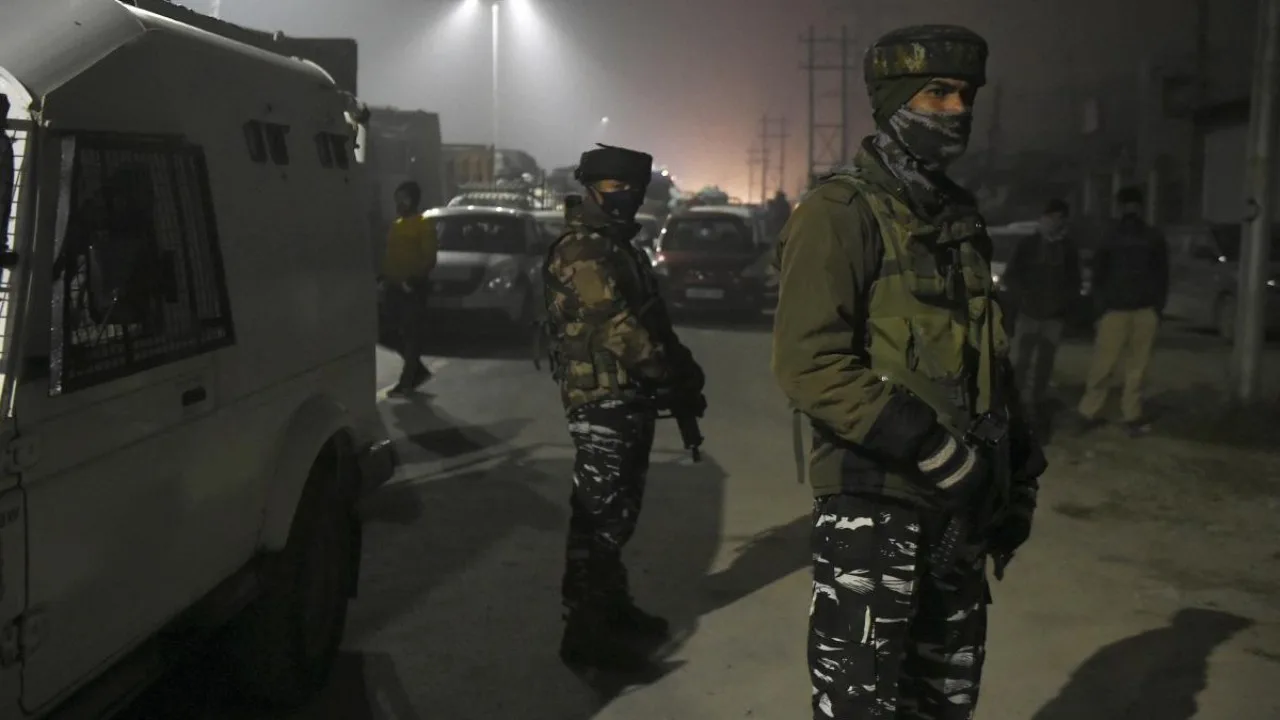
Search operations and interrogations continue across multiple states. Agencies are working to trace absconding accused, dismantle residual cells and identify any sleeper modules connected to ‘Ansar Interim’.