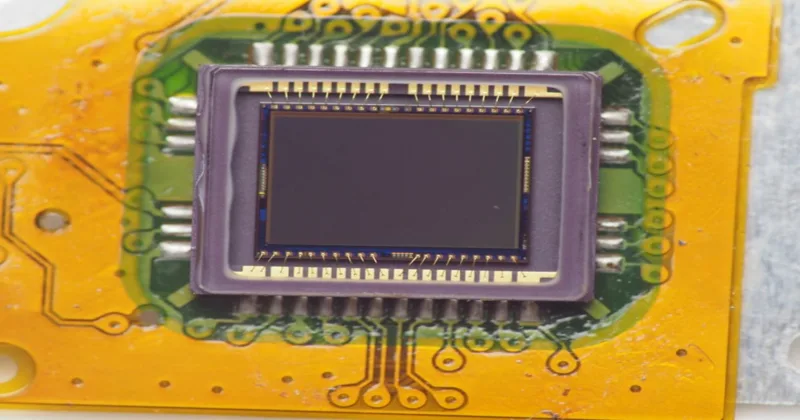
The scientific environment in Bharat is building on green electronics by creating an innovative lead-free photodetector, which is environmentally friendly, reliable and inexpensive to make. The invention made by scientists at the International Advanced Research Centre for Powder Metallurgy and New Materials (ARCI), Hyderabad in collaboration with IIT Hyderabad is an important milestone in the direction of green electronics, self-dependent and sustainable innovation in the country. The device replaces hazardous materials and simplifies the fabrication process which is in line with the country vision of sustainable innovation and self-dependent technology.
Researchers @arci_res_in – @IndiaDST in collaboration with @IITHyderabad developed a lead-free, eco-friendly photodetector based on double perovskite Cs₂AgBiBr₆.
With self-powered operation and stable performance, it offers a sustainable alternative for… pic.twitter.com/lNOEWrSTmF
— DSTIndia (@IndiaDST) February 13, 2026
Photodetectors: The backbone of modern electronics
Photodetectors are crucial semiconductor devices used to transform light into electricity, thereby allowing various applications in consumer electronics, industrial control systems, medical devices and environmental monitoring. Cameras, optical communication systems, wearable electronics and medical imaging devices require photodetectors to effectively decode light signals. With the proliferation of digital technology, there has been a significant increase in the need for highly sensitive, durable and efficient photodetectors.
Most of the high-performance photodetectors used today are lead-based materials, which are good for light absorption and conversion. Despite the good properties, lead-based perovskite has two major shortcomings first is toxicity and other is environmental instability. As lead has negative impacts on human health and the environment and the instability of the perovskite material, which can be affected by humidity and temperature has resulted in the need for alternative solutions.
Lead-free material innovation
In order to solve these problems, Bharatiya scientists developed a photodetector using a lead-free double perovskite compound Cs2AgBiBr6. This compound has the advantage of eliminating the toxicity of lead while maintaining good optical and electronic properties. The photodetector has a new architecture that eliminates the need for costly and complex fabrication equipment.
While other conventional photodetectors are based on costly metal electrodes and require a costly hole transport material, this new device employs inexpensive carbon electrodes and eliminates the need to use a costly hole transport material. This makes the new photodetector simpler to produce and eliminates the need to use costly vacuum processing equipment and controlled glove boxes. This new photodetector is entirely fabricated at room temperature in a single step. This innovation represents the potential of the developments in the field of material science to enhance performance, reduce costs and promote sustainability.
Self-Powered Operation: A leap toward energy efficiency
One of the most impressive aspects of this new photodetector technology is its capacity to function without any external powering. This is due to the unique architecture of this new photodetector, which ensures efficient charge separation upon exposure to light. This makes it highly efficient in situations where there is no continuous supply of power.
Self-powered photodetectors provide the following benefits
- Reduced energy consumption
- Extended operational lifespan
- Lower maintenance requirements
- Improved reliability for remote or portable systems
Such characteristics are essential for next-generation electronic devices such as wearable health monitors, remote sensors and Internet of Things (IoT) devices.
Exceptional stability and long-term reliability
Stability is one of the key factors which influences the usability of photodetectors. Detectors with low environmental stabilities will not be of much practical use. The new photodetector made of Cs₂AgBiBr₆ material has shown promising environmental stability.
The test which was carried out at ambient conditions with temperatures ranging from 25°C to 35°C and humidity levels ranging from 35% to 50%, revealed that the device was able to retain over 90 percent of its efficiency even after 60 days of storage. The device also proved able to switch on and off thus showing its reliability. This level of stability is particularly important for commercial adoption, as it allows for long-term functionality without the need for special protective environments.
Applications across multiple strategic sectors
Such a lead-free photodetector has far-reaching implications for several key industries. In consumer electronics, it has the potential to make smartphones and other devices more efficient and reliable. In industry photodetectors are essential for automation, safety and quality control. Healthcare is another important segment of the market that will benefit from this innovation. The biomedical imaging systems depend on photodetectors for interpreting the signals of light. The new material will help in reducing the risk of toxic exposure and increasing the lifespan of the device.
The systems for security and surveillance may also benefit from the availability of stable and energy efficient photodetectors. The systems for environmental monitoring, which monitor air quality, radiation levels and climate parameters may benefit from the availability of self-powered photodetectors.
Supporting Bharat self-reliance and green manufacturing goals
The development of this photodetector is also closely related to Bharat strategic objectives of technological self-sufficiency and sustainable manufacturing. The development of indigenous materials and manufacturing techniques allows Bhartiya research centres to become independent of foreign technologies.
The use of lead-free materials is in line with the protection of the environment, while the low-cost manufacturing process makes the technology economically viable. These are important factors in the development of the domestic electronics industry.
Department of Science and Technology through organizations like ARCI, is still encouraging research activities that integrate scientific excellence and national development goals. Such innovation will continue to put Bharat at the forefront of global research in sustainable electronics.
Future of sustainable electronic systems
The achievement of a stable and lead-free, self-powered photodetector is a significant milestone in electronic materials research. As the world continues to witness a rise in electronic devices, sustainability will be a key factor in ensuring the success of technology.
Possible areas of future investigation include the development of increased sensitivity, expanded wavelength detection and the integration of these photodetectors into modern electronic devices. With the ongoing investment in advanced materials and semiconductor technology, Bharat has the potential to be at the forefront of the move towards green electronics.
This breakthrough shows how scientific innovations can address environmental issues, technological issues and economic issues simultaneously. By embracing sustainability, efficiency and indigenous innovations, Bharat’s new photodetector technology marks an important milestone for the future of green electronics.