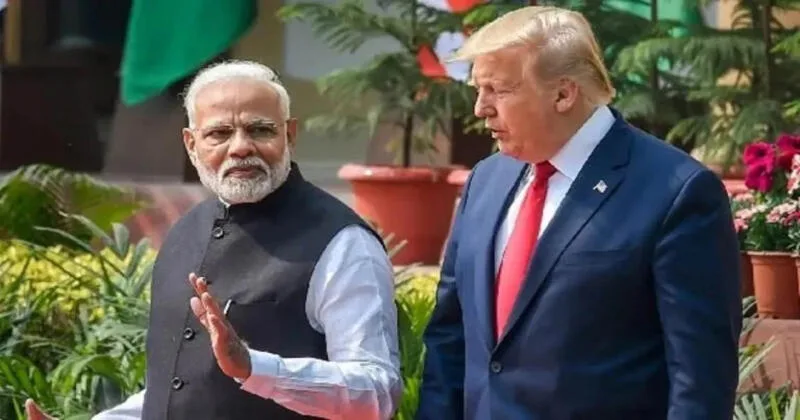
India and the United States have released the interim framework of their long-awaited trade agreement, paving the way for a deal aimed at reducing tariffs, strengthening global supply chains, deepening energy ties and expanding overall economic cooperation. The agreement marks a new chapter in relations between the world’s two largest democracies.
One of New Delhi’s key diplomatic successes in the negotiations has been its ability to resist Washington’s efforts to secure broad access to India’s agricultural markets, including sensitive sectors such as dairy. While India has agreed to reduce certain trade barriers on selected American agricultural products, these concessions do not amount to capitulation under pressure. Instead, the deal has been carefully structured to provide a protective shield for Indian farmers and food producers, balancing market access with domestic safeguards.
Cotton, tea, coffee, spices and fruits
India currently imposes an 11 percent import duty on foreign cotton. The United States is the world’s largest exporter of cotton fibre, and allowing duty-free imports could have severely affected India’s domestic cotton economy. Under the new agreement, however, only long-staple cotton produced in the United States will be permitted for import, and that too within a fixed quota. This ensures that domestic producers remain protected.
Although India is the world’s second-largest cotton producer, it has faced shortages of long-staple varieties, which it imports from countries such as the United States, Egypt, Brazil and Australia. The agreement addresses this specific supply gap without exposing Indian farmers to unfair competition. The move is expected to significantly benefit India’s textile manufacturing and export sectors, which rely on high-quality long-staple cotton.
India is also the world’s fifth-largest apple producer. With rising population and economic growth, domestic consumption of apples has increased sharply, leading to periodic shortages. India imports nearly 500,000 metric tonnes of apples annually from countries such as Iran, Turkey, Afghanistan, the United States and Chile.
Under the new trade framework, the US apples will continue to face a 25 per cent import duty. Additionally, imported apples cannot be sold below Rs 80 per kilogram, effectively keeping retail prices above Rs 100 per kilogram. These provisions are designed to prevent undercutting of Indian growers and ensure that domestic farmers remain competitive. Similarly, consumption of dry fruits such as walnuts, almonds and pistachios has been rising in India. However, domestic production of these items remains limited. Given the supply shortfall, India has agreed to reduce tariffs on certain imported dry fruits. Since these products are already scarce domestically, lower duties are not expected to harm Indian farmers.
Tariff-free access to the US market
Another major diplomatic gain for India is securing tariff-free access for goods worth 46 billion US dollars ( Rs 4 lakh crore) exported to the United States. This includes around 1.4 billion US dollars’ worth of agricultural and processed products such as spices, processed foods, fruits, tea, coffee and edible oils.
Indian farmers engaged in the cultivation and export of tea, coffee, spices and fruits stand to benefit significantly. Farmers in districts such as Idukki and Wayanad in Kerala, as well as those in Karnataka and other states, are expected to be among the biggest beneficiaries.
Additionally, Indian goods will receive “preferential access” to a US market valued at 160 billion US dollars (approximately Rs 15 lakh crore). This expanded access is expected to boost farm incomes and rural employment.
A particularly important breakthrough concerns rice exports. The United States has reduced import duties on Indian rice from 50 per cent to 18 per cent. This move benefits exporters of both basmati and non-basmati varieties. Competing rice-exporting countries such as Thailand (19 per cent), Vietnam (20 per cent), Pakistan (19 per cent) and China (34 per cent) face higher US tariffs than India. Given India’s lower production costs, even if tariffs on competitors are adjusted in the future, India is unlikely to lose its competitive edge.
The marine and seafood sector is also among the biggest beneficiaries. India currently exports to a US seafood market valued at 25 billion US dollars. The agreement opens further opportunities for exports of fish, shrimp and processed marine products. As of 2024, India enjoys a 1.3 billion US dollar (approximately Rs 12,000 crore) trade surplus in agricultural trade with the United States. The new agreement is expected not only to preserve but also to expand this surplus. India has also agreed to reduce or eliminate tariffs on selected US agricultural products such as DDGS (distillers dried grains with solubles), used as poultry feed; corn; almonds; cashews; processed fruits; certain pulses; soybean oil; and wines. DDGS, a by-product of ethanol production, can lower feed costs in India’s poultry industry, where feed accounts for nearly 60–70 per cent of total production expenses.
Energy, technology and strategic purchases
Under the agreement, India intends to purchase more than 500 billion US dollars’ worth of the US energy, information and communication technology products, and coal over the next five years. Importantly, this figure is not a binding annual obligation. The US fact sheet clarifies that India “intends” to purchase these goods, rather than providing a legally enforceable guarantee. On average, this would amount to around 100 billion US dollars per year. India has already placed orders worth 50 billion US dollars for Boeing passenger aircraft, according to Commerce Minister Piyush Goyal. Furthermore, India is expected to require aircraft worth 80–90 billion US dollars over the next five years. Imports of cooking coal and other energy products are also part of existing trade flows. The 500 billion US dollar figure largely comprises energy products, aircraft, aircraft components, precious metals, technology goods and coal, items that India does not produce in sufficient quantities domestically. Therefore, these purchases do not adversely affect India’s agricultural sector.
The strategic undercurrent
Beyond mere buying and selling, the agreement lays the foundation for a stronger and more integrated India–US economic partnership. It supports India’s ambition to emerge as a global manufacturing and supply-chain hub. As US Trade Representative Ambassador Jamieson Greer recently indicated, the US companies increasingly view India as a viable alternative to China for investment and production.
With its vast manufacturing workforce and expanding infrastructure, India is already seen as an attractive destination for US firms seeking supply-chain diversification. Defence cooperation between the two countries is also robust and continues to expand.
As trade tensions with India ease, Washington’s strategic focus is expected to shift more decisively toward China. In that sense, the long-term geopolitical implications of the agreement may pose greater challenges for Beijing than for Indian farmers. In summary, the India–US trade framework strengthens agricultural safeguards while expanding export opportunities, boosts India’s access to the US market, deepens strategic economic ties and positions India more firmly within global supply chains. Far from undermining domestic interests, the agreement seeks to balance protection with opportunity, reinforcing India’s economic and geopolitical standing.