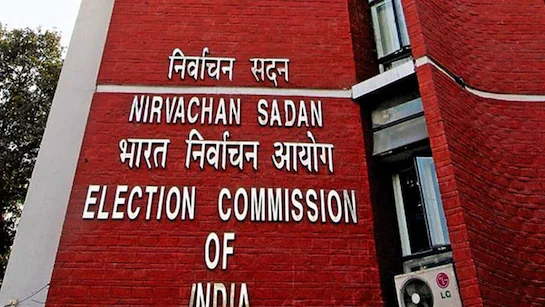
Ahead of the upcoming West Bengal Assembly elections, the Election Commission of India on Tuesday (Feb 10) held a detailed review meeting with the state’s Chief Electoral Officer (CEO) Manoj Kumar Agarwal. The meeting was chaired by Chief Election Commissioner (CEC) Gyanesh Kumar and attended by members of the full bench, focusing on logistical preparedness, security deployment, and the status of electoral roll revision.
According to sources quoted in media reports, the poll panel is likely to announce the election schedule in the first week of March. Once declared, the Model Code of Conduct (MCC) will immediately come into force across the state, regulating political campaigning, official announcements, and administrative conduct.
The meeting is being seen as a critical step in finalising the groundwork before the formal election notification.
A notable feature of this election cycle could be a reduction in the number of polling phases. West Bengal has historically witnessed extended multi-phase elections, at times stretching up to eight phases, primarily due to security considerations and logistical challenges.
However, discussions reportedly indicated that the ECI is examining the feasibility of conducting the elections in a maximum of four phases. This would mark a significant departure from previous cycles and is aimed at ensuring both adequate security deployment and a relatively compact electoral timeline.
Notably, the final decision will depend on ground-level law and order assessments, availability of central forces, and administrative readiness. A shorter schedule is expected to reduce prolonged political tension and administrative strain while maintaining necessary safeguards.
A central agenda of the meeting was the status of the Special Intensive Revision (SIR) of electoral rolls, a process that has been under judicial scrutiny. The revision exercise aims to rectify discrepancies, eliminate duplicate or ineligible entries, and ensure the integrity of the voter database.
Following recent directions from the Supreme Court, the final publication of the electoral rolls has been fixed for February 28. Before that, the process of addressing claims, objections, and “logical discrepancies” is scheduled to conclude by February 21.
The CEO reportedly briefed the Commission on the progress made in resolving pending issues and ensuring that the final list is accurate and legally compliant. The publication of the revised rolls is considered a critical milestone, as the “clean” voter list will form the foundation for the entire polling process.
The 294-seat West Bengal Assembly’s tenure is set to expire in early May 2026, leaving the Commission with a limited window to conduct the elections and complete the counting process within constitutional deadlines.
The anticipated timeline suggests that once the final rolls are published on February 28 and the schedule is announced in early March, polling is likely to be held in April. This would provide sufficient time for counting and government formation before the assembly’s term concludes.
The Commission is reportedly working with a strict calendar to avoid any constitutional vacuum while ensuring compliance with legal and procedural norms.
As part of its preparatory measures, the ECI has already begun briefing central observers who will be deployed across districts during the election period. These include:
General Observers to oversee overall conduct of polling, Police Observers to monitor law and order and security deployment, and Expenditure Observers to track campaign spending and ensure adherence to expenditure limits.
West Bengal elections have traditionally required extensive deployment of central armed police forces due to the state’s political landscape and previous instances of violence. The Commission’s deliberations reportedly included detailed reviews of district-wise vulnerability mapping, force requirements, and inter-agency coordination.
By potentially limiting polling to four phases, the ECI appears to be balancing two competing priorities: ensuring adequate security coverage while avoiding an excessively prolonged election schedule.
The revision of electoral rolls has drawn attention due to its legal implications and the Supreme Court’s involvement. The apex court has monitored aspects of the SIR process and set clear deadlines for completion.
The February 28 publication deadline has therefore become a decisive checkpoint. Any delay could affect the broader election timeline, making adherence to the schedule crucial.
As the political atmosphere in the state intensifies, all major parties are closely watching the Commission’s next move. Once the Model Code of Conduct comes into force, political rallies, public announcements, and campaign activities will operate under strict regulatory supervision.
With less than three weeks remaining for the final electoral roll publication, the state’s election machinery is functioning at full pace. The anticipated early March announcement is expected to formally set the stage for what is likely to be a high-stakes contest.
For now, the focus remains on completing the electoral roll revision within the Supreme Court-mandated timeline. Once that milestone is achieved, the Election Commission is expected to move swiftly toward declaring the poll dates, marking the beginning of West Bengal’s 2026 electoral battle.